
Loading...
Loading...

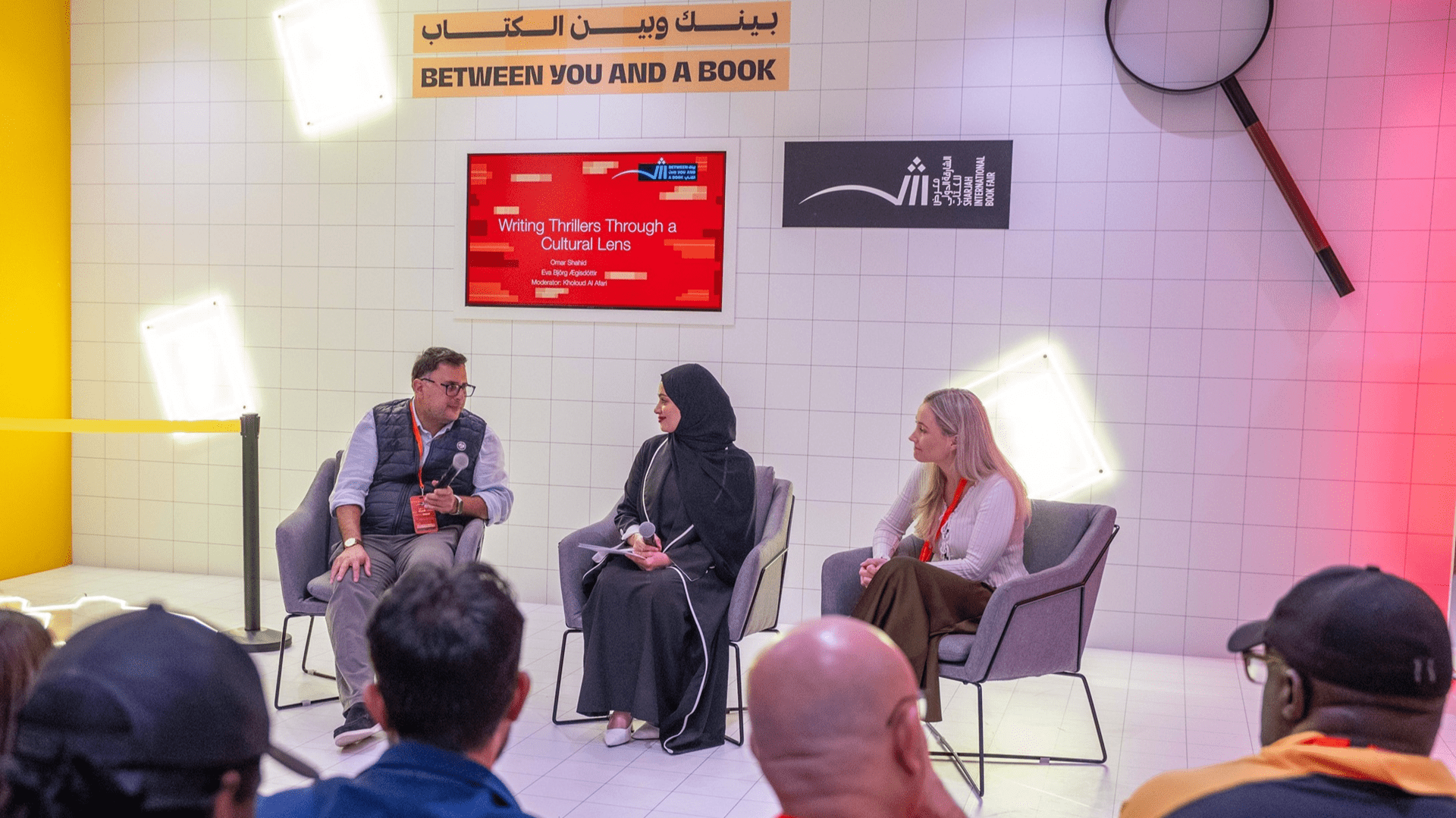
At Thrillerfest, both writers discussed how setting, psychology, and personal experience influence the universal language of crime fiction, demonstrating how stories from vastly different societies can reflect the same moral and emotional truths.
For Omar Shahid Hamid, storytelling was a natural extension of his years in law enforcement.
“As a police officer, we often speak of stories — some so fascinating that only officers share them,” he said. “Most police officers don’t write, but I did. I began jotting down my thoughts, which eventually became the manuscript for The Prisoner.”
Written during a sabbatical from the Karachi Police, The Prisoner (2013) became a bestseller in both India and Pakistan and was long-listed for the DSC Prize for South Asian Literature. The novel is now in development for a film adaptation.
Hamid’s subsequent books — The Spinner’s Tale (2015), The Party Worker (2017), The Fix (2019), and Betrayal (2021) — blend political insight with gritty realism, earning him the Karachi Literature Festival Fiction Prize twice. The Party Worker was also reportedly optioned for a potential Netflix adaptation.
Hamid revealed that his stories often stem from real-life inspiration.
“Newspapers and TV headlines spark ideas,” he said. “I sketch a rough outline that develops over time, but it’s helpful to have a roadmap.”
He described writing as a cathartic outlet following years in the high-pressure environment of counter-terrorism, transforming real experiences into compelling fiction.
On the other side of the world, Eva Björg Ægisdóttir drew inspiration from her childhood in Akranes, a close-knit coastal town of 5,000. "I grew up where everyone knew everyone,” she said. “There was gossip, rumours — and I spent a lot of time in local libraries, absorbing stories." Her curiosity about human behaviour led her to study sociology and criminology, grounding her fiction in psychological realism. Her debut novel, The Creak on the Stairs (2018), became a No.1 bestseller in Iceland, winning the CWA John Creasey (New Blood) Dagger and the Icelandic Blackbird Award in 2021. Her acclaimed Forbidden Iceland series — including Girls Who Lie and Night Shadows — has been translated into over 20 languages, making her a defining voice of modern Nordic noir. "In Iceland, where crime is rare, people couldn’t believe we could write crime fiction,” she joked. “But I’ve always been fascinated by what drives people to commit crimes — what happens inside them before the act." Now read widely across Europe, particularly in France and Germany, Ægisdóttir added: "My stories have travelled more than I have. Being a writer is often lonely, but meeting readers at festivals like SIBF makes it all worthwhile.”
As the session ended, both authors agreed that although thrillers vary in setting and tone, their emotional core is universal.
“Because we don’t write about organised crime, our storytelling always centres on the moral dilemmas faced by those close to the crime,” said Ægisdóttir. “It’s about people — their fears, emotions, and the question of whether justice was truly served.”
Their discussion at SIBF 2025, connecting Karachi’s chaotic streets and Iceland’s tranquil landscapes, highlighted how contemporary crime fiction turns local realities into stories of shared humanity — exploring truth, morality, and justice across different cultures.

 For an optimal experience, please
rotate your device to portrait mode.