
Loading...
Loading...

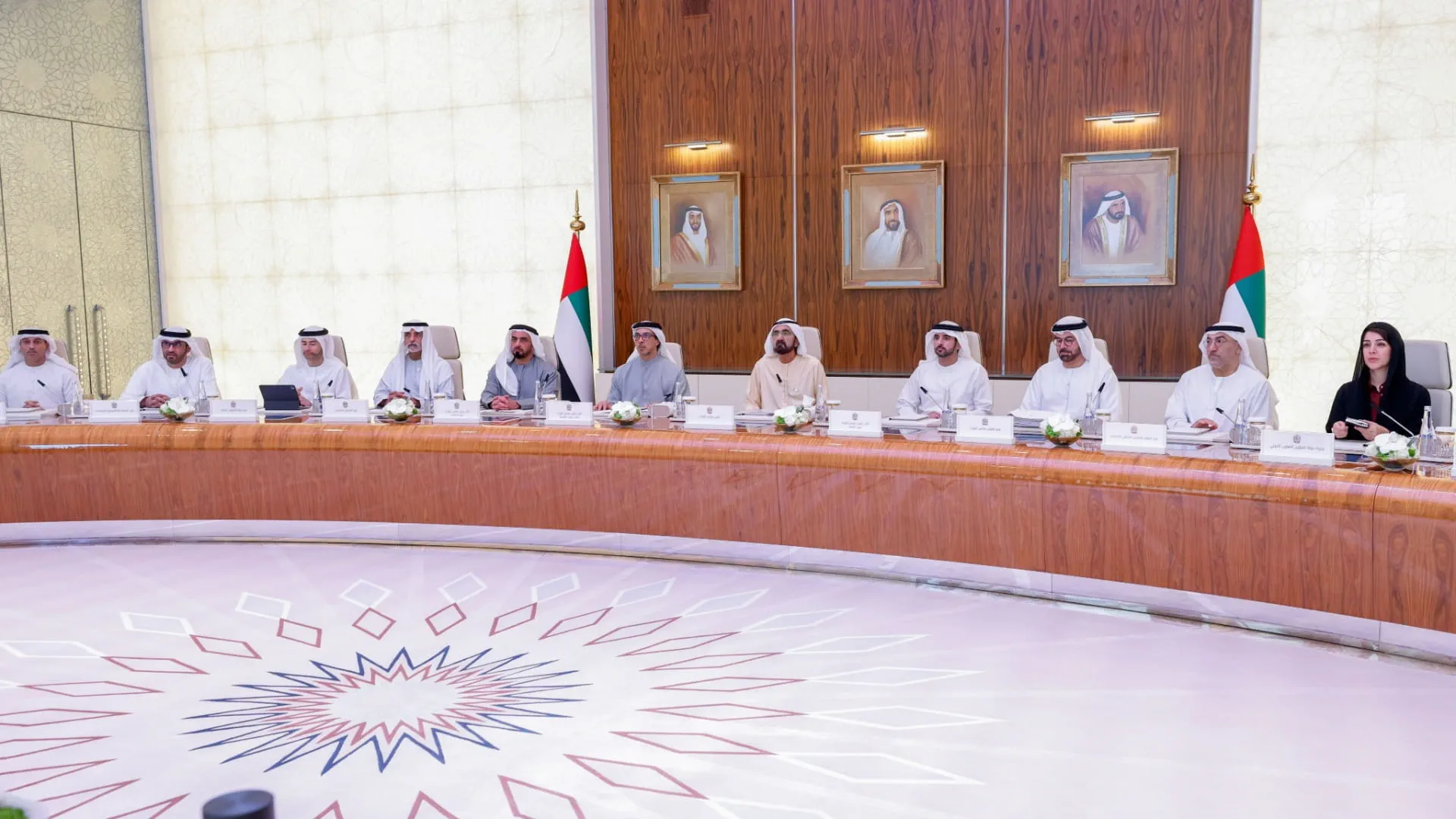
Sheikh Mohammed bin Rashid said: “Today, I chaired the Cabinet meeting at Qasr Al Watan in Abu Dhabi, where we discussed the national transformation strategy, directed by my brother, His Highness the President, to make the UAE government the first globally to adopt Agentic AI technologies across 50% of government services and operations. During the meeting, we defined the general framework for ministries and federal entities for this national project.”
He added: “We launched the largest training programme of its kind across the UAE government, training 80,000 employees, from ministers and executives to new recruits, across all ministries and institutions, on Agentic AI technologies and tools. We also approved the first package of transformational government services using Agentic AI technologies, including service bundles for citizens, residents, businesses, and investors.”
He further stated: “We approved the national policy to enhance AI in the healthcare sector by building a national AI-powered healthcare system, developing digital health infrastructure, and training healthcare professionals in AI skills. The transformation journey towards UAE Government 4.0 has begun. We will hold a national retreat to discuss the transformation strategy, and my brother, Sheikh Mansour, will oversee the process. Our next goal is to become the world’s best government in adopting Agentic AI technologies.”
The Cabinet approved the first phase of government services under the Agentic AI project, covering four main categories: citizen services, resident services, business services, and general public services. The selected services were prioritised according to transaction volume, importance to individuals and investors, and technical and regulatory criteria. Development of these services will begin in the first implementation phase.
The Cabinet also approved a national programme to develop the skills and capabilities of federal government employees in Agentic AI. The programme will train 80,000 employees across all federal government job categories to become Agentic AI experts through continuous specialised training, in collaboration with leading national universities and specialised technology companies.
The programme targets five key job categories, namely leadership positions, technical roles, specialist roles, general administrative jobs, and training-of-trainers roles.
A digital platform powered by Agentic AI tools will also be developed to continuously build employees’ capabilities. The platform will assess employees’ skills and suggest personalised development plans aligned with their roles and competencies, while continuously updating its content to reflect rapid advances in AI.
The Cabinet approved a framework that defines the roles of ministries and federal entities in implementing the Agentic AI project. Each entity will establish dedicated government teams, chaired by the relevant minister or head of the entity and comprising leaders responsible for government services, operations, digital transformation, and AI.
The goal is to transform at least 50% of ministry and entity sectors, services, and operations into solutions based on Agentic AI systems and models, while establishing targets and performance indicators to measure outcomes and improve government efficiency, productivity, and service quality.
The Cabinet approved the national policy to enhance AI in healthcare and to prepare legislation governing this field. The policy aims to build an integrated national healthcare system by using AI systems and models to improve preventive, therapeutic, rehabilitative, and operational healthcare services.
The policy also aims to equip national healthcare professionals with AI skills, ensure the security and ethical use of AI-enhanced healthcare services, strengthen innovation and research capabilities, and improve smart health information systems.
Clear regulations will also be established to govern, develop, license, operate, and use smart health and AI systems in the healthcare sector, including health data governance, safety and quality standards, licensing and accreditation requirements, and the legal roles and responsibilities of all parties.
The policy will protect patients’ rights, encourage the responsible and secure use of smart technologies, and strengthen coordination between federal and local authorities to enhance the UAE’s competitiveness and leadership in smart healthcare and AI, both regionally and globally.
The Cabinet approved the reconstitution of the Digital Wellbeing Council, chaired by His Highness Lt. General Sheikh Saif bin Zayed Al Nahyan, with members comprising the Minister of State for Artificial Intelligence, Digital Economy and Remote Work Applications; the Chairman of the National Media Office; the Chairperson of the Digital Safety Council for Children; the Director-General of the Telecommunications and Digital Government Regulatory Authority; the Chairman of the Cybersecurity Council; and representatives from several ministries and federal and local entities.
The Cabinet reviewed the results of the Industrial Technological Transformation Programme and the Industrial Technology Transformation Index for 2025, as part of the UAE’s national industrial strategy “Operation 300bn”.
The programme aims to support industrial companies in adopting advanced technologies and AI solutions to improve productivity and technological readiness. More than 620 industrial companies were assessed, and transformation roadmaps were developed for them.
The programme also launched incentives, including advanced technology financing, integration with the National In-Country Value Programme, Industry 4.0 Empowerment Centres, and the “Factory of the Future” Award under the “Make it in the Emirates” awards.
The Cabinet reviewed the implementation results of the national electric vehicle policy for 2025, which aims to develop a national roadmap to encourage EV adoption through cooperation between federal, local, and private-sector entities.
The policy contributed to unified charging tariffs, improved EV infrastructure, and increased public charging stations from 360 in 2021 to 1,200 in 2025.
A national EV charging platform is also being developed to improve the user experience and operational efficiency nationwide.
Within the UAE Genome Programme initiatives, the Cabinet reviewed the results of genetic screening for couples planning to marry in 2025.
The programme aims to increase health awareness, prevent genetic diseases, reduce healthcare costs, and improve quality of life.
Approximately 4,000 couples underwent screening, with 3.5% testing positive, helping to reduce the impact of hereditary diseases and supporting family stability.
The Cabinet approved the negotiation and signing of 15 international agreements and memoranda of understanding, including a services and investment agreement with Kazakhstan; academic cooperation between Anwar Gargash Diplomatic Academy and Panama’s Ministry of Foreign Affairs; news exchange cooperation between the National Media Office and Seychelles News Agency; cooperation between the UAE Central Bank and the Central Bank of Kosovo; institutional cooperation with Serbia’s Ministry of Family; investment protection negotiations with Monaco; economic dialogue cooperation with Austria; and meteorological cooperation with Tonga.
The Cabinet also approved hosting several international conferences and reviewed the UAE’s participation in international events and meetings in 2025 and 2026.

 For an optimal experience, please
rotate your device to portrait mode.