
Loading...
Loading...

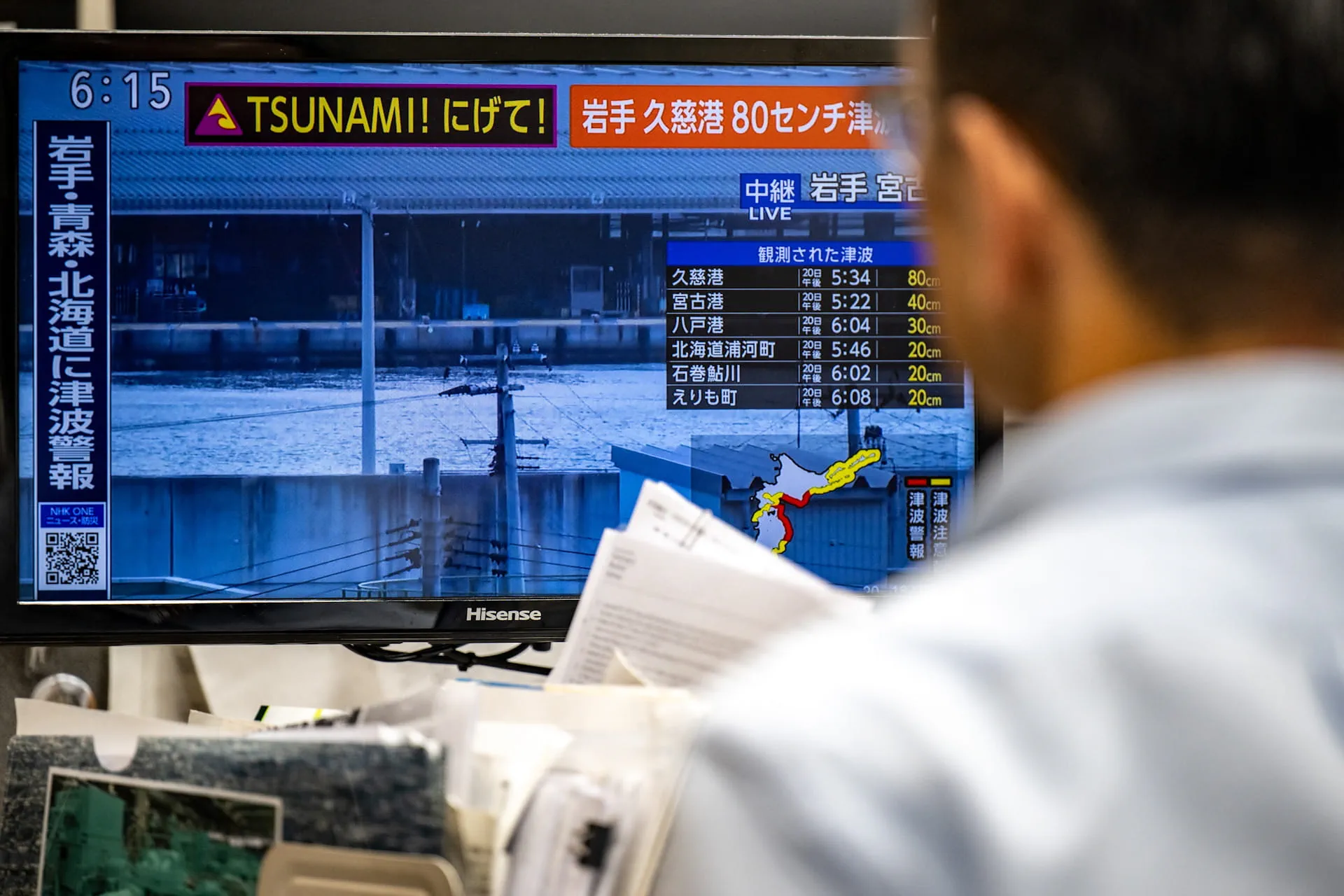
The Japan Meteorological Agency (JMA), which initially recorded the quake at 7.6, said the tremor occurred at 11:15 pm and warned of the risk of similar or stronger quakes over the coming week. Tsunami waves of up to 70 centimetres were recorded, prompting thousands of residents to evacuate in freezing temperatures.
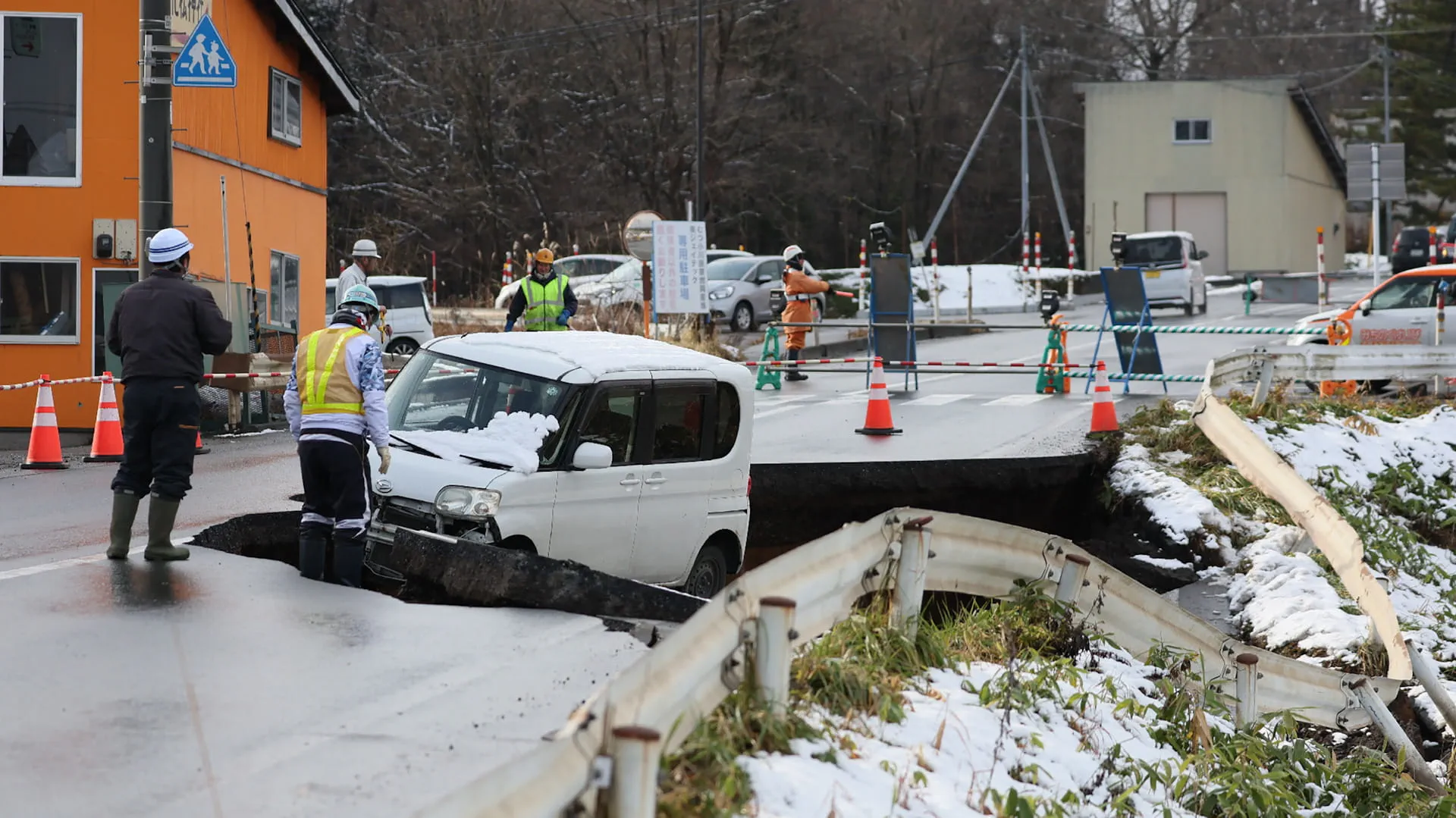
Prime Minister Sanae Takaichi confirmed injuries across the region, including one serious case in Hokkaido. Footage showed crevasses in roads, fallen goods in supermarkets, and shattered glass scattered across streets. About 2,700 homes temporarily lost power, though most had it restored by Tuesday morning. One residential fire was confirmed, and Shinkansen bullet train services were suspended while engineers checked for track damage. No abnormalities were detected at the Higashidori or Onagawa nuclear plants.
The quake reached the upper six level on Japan’s Shindo scale in Hachinohe, making movement almost impossible. Authorities lifted tsunami warnings after several hours as the waves remained below initial predictions. Geologists noted that although strong earthquakes rarely lead to larger ones afterwards, the possibility cannot be dismissed. Japan, situated on four major tectonic plates, remains one of the world’s most seismically active countries.

 For an optimal experience, please
rotate your device to portrait mode.