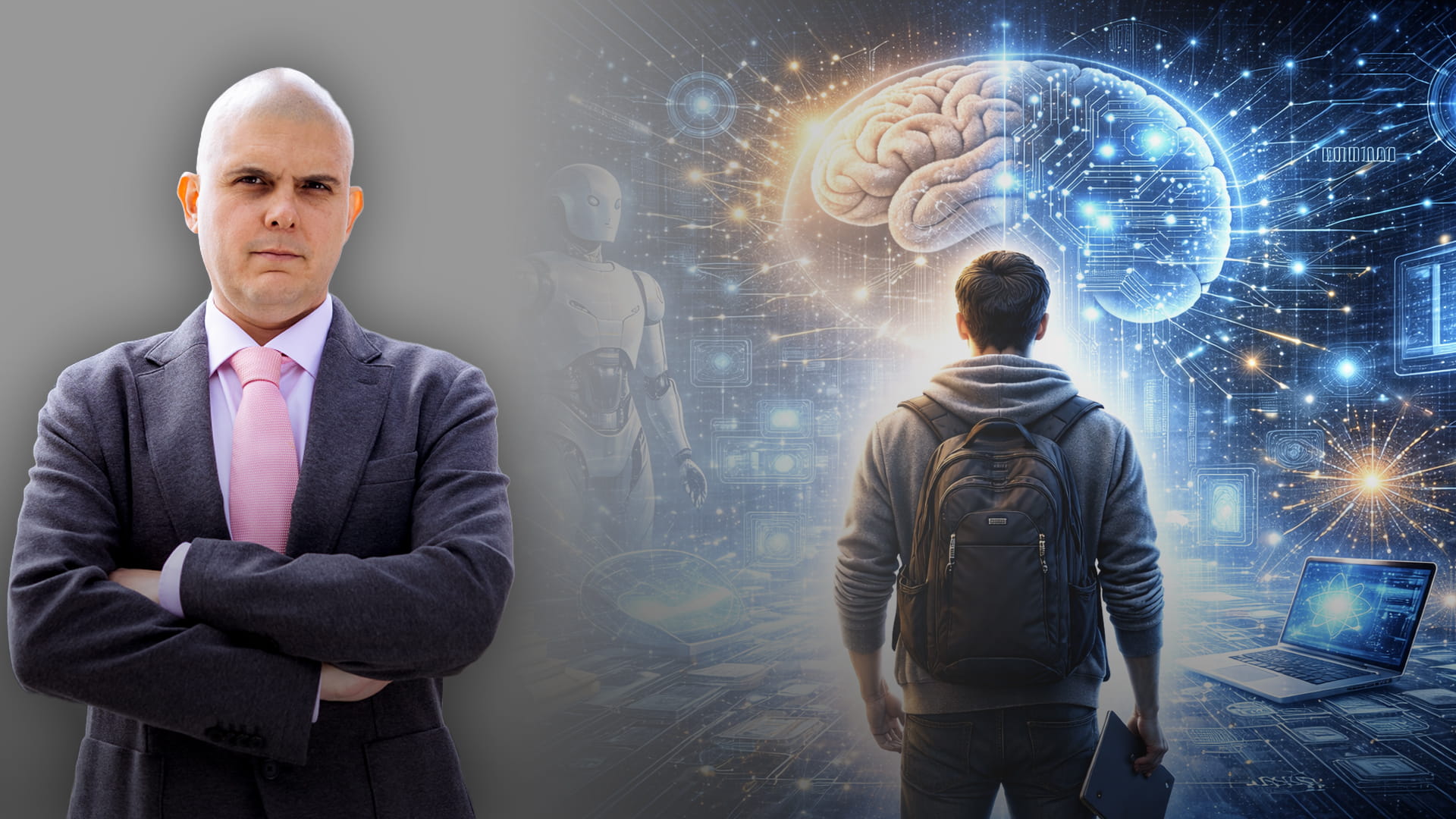
Artificial intelligence, automation, robotization and the so-called Fifth Industrial Revolution are not future scenarios. They are already reshaping how value is created, how work is organized and how knowledge circulates. Skills become obsolete in years, sometimes in months, while entire professions mutate or disappear. Learning is therefore no longer a phase of life but a permanent condition. Yet, much of higher education still operates as if knowledge were stable, scarce and slow to change.
Universities are expected to prepare students for radical uncertainty, global competition and continuous reinvention. This requires speed, flexibility and permanent curricular adaptation. Programs should evolve almost in real time, and teaching should focus less on content accumulation and more on meta-competencies: learning how to learn, critical judgment, ethical reasoning, creativity, systems thinking and the intelligent use of technology.
Paradoxically, the global trend is moving in the opposite direction.
Across regions, universities are becoming increasingly bureaucratized. Accreditation agencies, ministries, quality assurance systems and international rankings demand extensive documentation, standardized procedures, evidence matrices, indicators, rubrics, reports and platform compliance. Each requirement may appear reasonable in isolation. Together, they generate institutional inertia and oversaturated faculty. The result is a slow, rigid system operating in a fast and volatile world.
Worse still, the system often penalizes innovation instead of encouraging it. Any meaningful change—updating a syllabus, modifying learning outcomes, redesigning a program or introducing new content and methodologies—triggers additional layers of paperwork, approvals, audits and reporting. Innovation becomes administratively costly, so the implicit message is clear: stability is rewarded, while change is discouraged.
This turns bureaucracy into a powerful disincentive. When innovation means more forms, more meetings and more compliance obligations, the rational response is to avoid it. Over time, institutions drift toward minimal change, even when the external environment demands rapid adaptation.
Faculty time is a finite resource. An increasing share of it is consumed by filling forms, uploading evidence, aligning outcomes, feeding dashboards and responding to administrative requests. Time that should be invested in staying intellectually current, doing research, learning new tools, understanding emerging industries, redesigning courses and experimenting with pedagogy is absorbed by compliance and procedures.
This is not a marginal issue. When professors fall behind the frontier of knowledge and practice, students inevitably follow.
Educational innovation does not emerge from checklists. It requires intellectual space, trust in academic judgment and room to experiment, fail and iterate. Quality assurance should enable responsiveness and relevance, not immobilize curricula in procedural amber.
Artificial intelligence sharpens this tension, as it already performs in seconds tasks that curricula allocate weeks to mastering. This does not make universities obsolete, but it forces them to clarify their purpose. If machines execute procedures, human education must focus on interpretation, responsibility, ethics and strategic thinking.
Universities have fulfilled their mission in the past. The challenge today is ensuring that existing structures allow institutions to remain relevant, responsive and socially useful in a context of accelerated change globally.



 For an optimal experience, please