
Loading...
Loading...

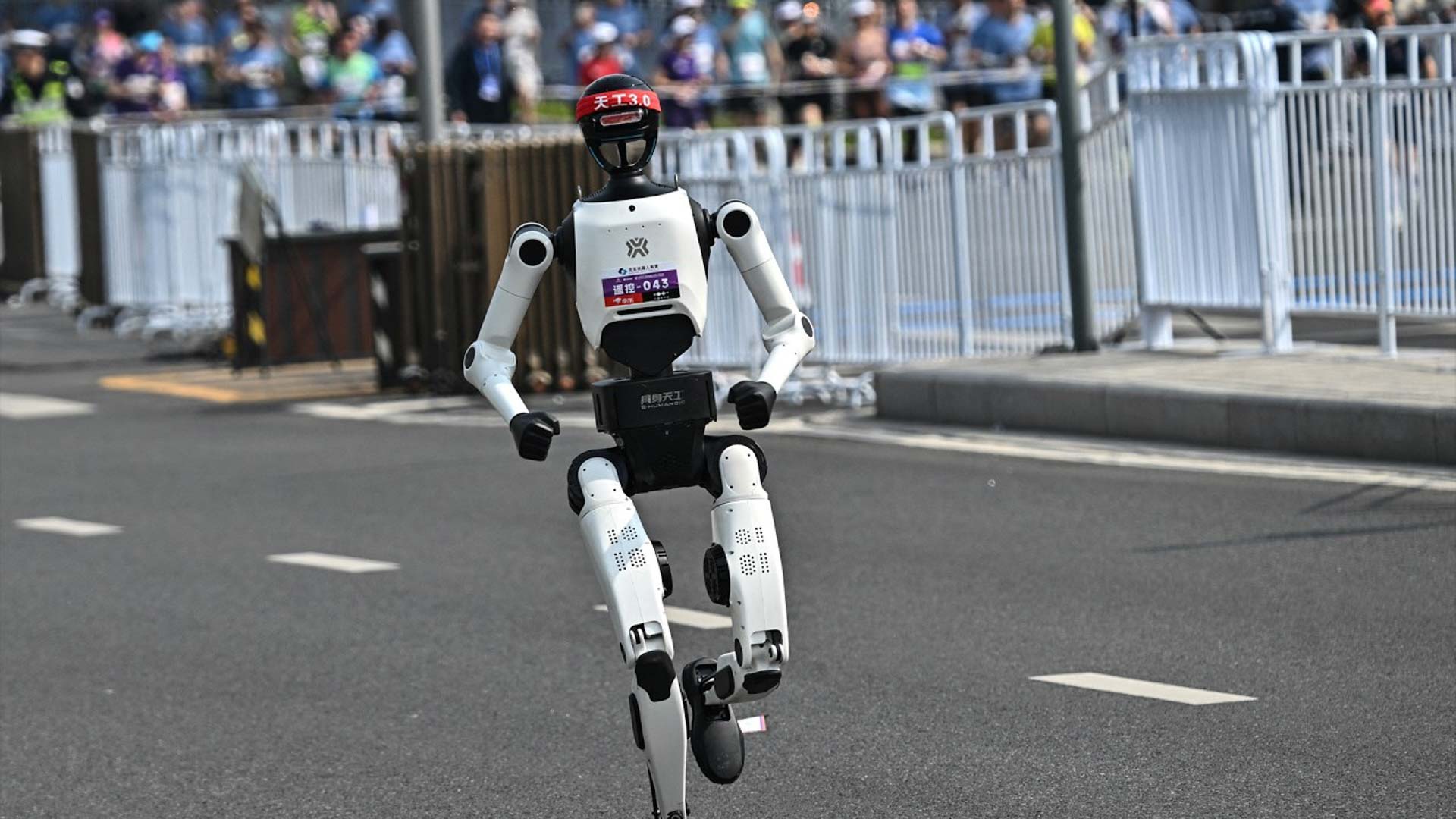
Spectators gathered in Beichuan, south of the capital, to watch robots and human athletes compete, with separate tracks assigned to prevent collisions or accidents. Some robots displayed impressive agility, while others moved more steadily.
The winning robot, equipped with an autonomous navigation system and developed with participation from Chinese smartphone company Honor, completed the 21-kilometre course in 50 minutes and 26 seconds, averaging 25 km/h, according to state broadcaster CCTV. The time surpassed the fastest human finish on the day.
The result marks a major improvement from last year, when humanoid robots struggled to complete the course, with the fastest taking more than two hours and forty minutes. This year, participation also surged from around 20 robots to over 100.
Spectators expressed both amazement and concern, with some noting that robots are becoming fast enough to rival human performance. While many welcomed the innovation, others voiced worries about the potential impact of rapid technological development on jobs.
Observers and participants noted that humanoid robots are increasingly visible in China and are expected to play larger roles in everyday life, including household tasks, elderly care, and hazardous work such as firefighting.
The event reflects China’s push to advance robotics and embodied artificial intelligence, with investment in the sector projected to reach 73.5 billion yuan ($10.8 billion) by 2025, according to government estimates.

 For an optimal experience, please
rotate your device to portrait mode.