
Loading...
Loading...

Processing 1,500 tonnes of batteries in 2026
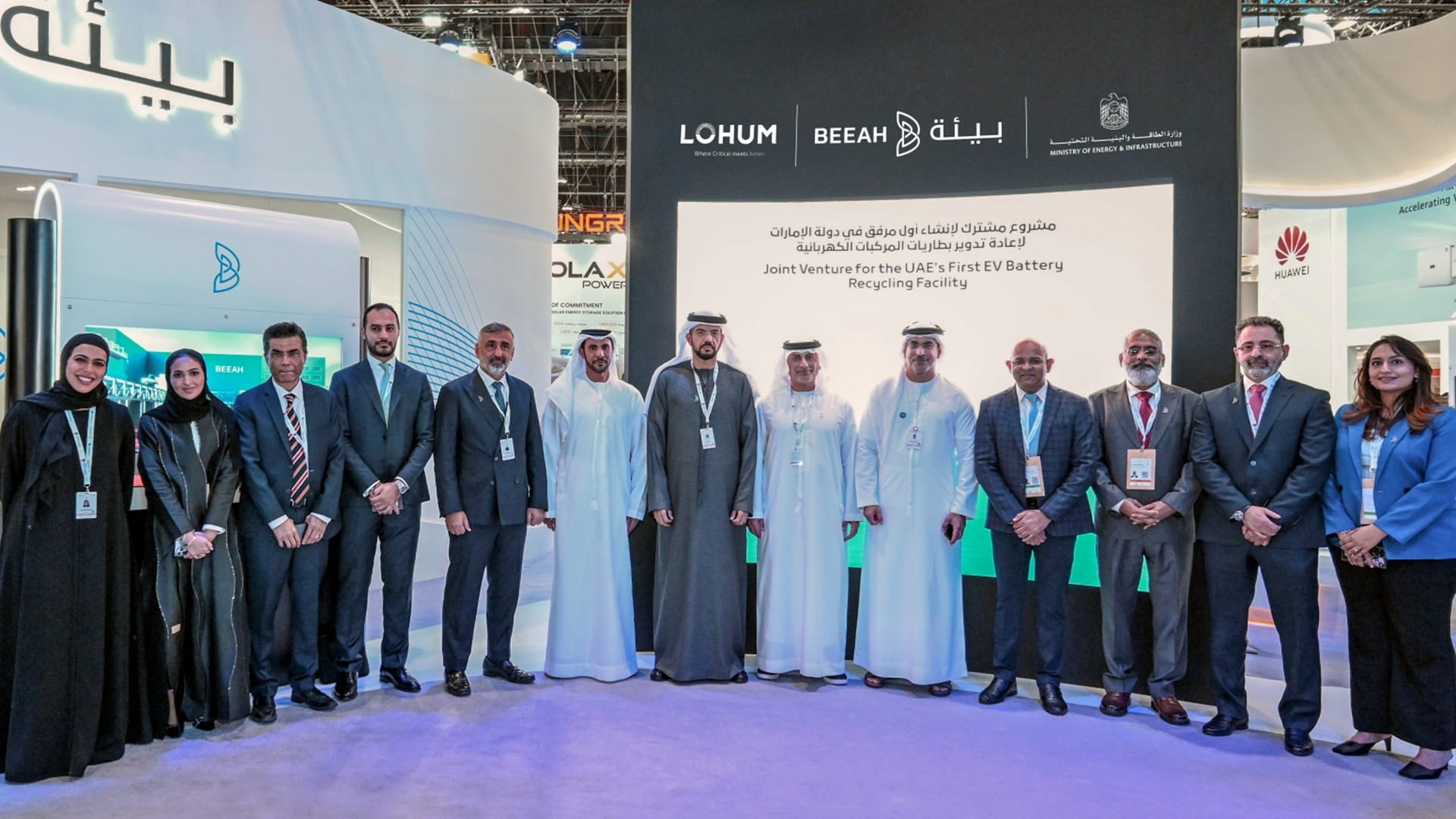
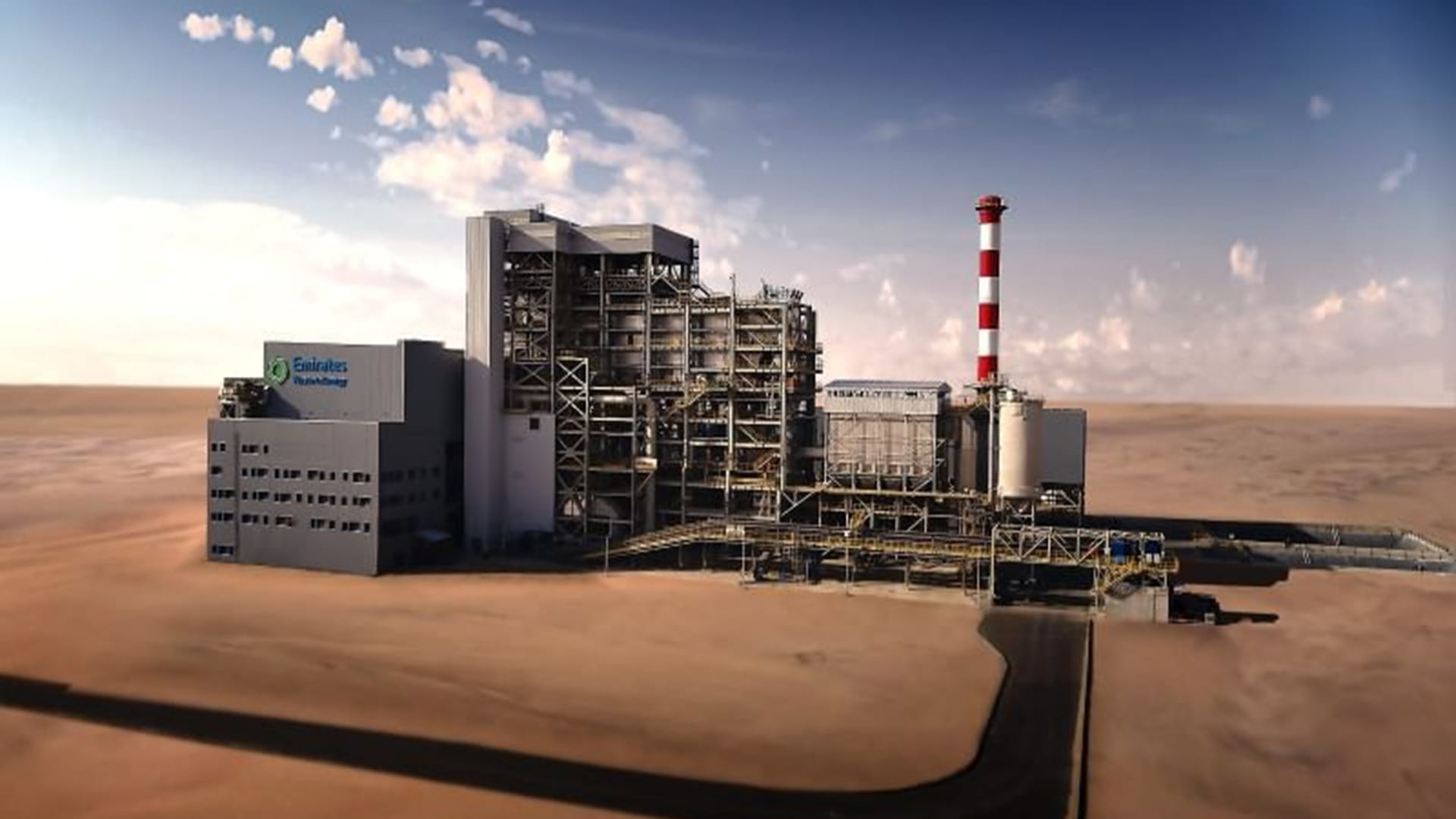
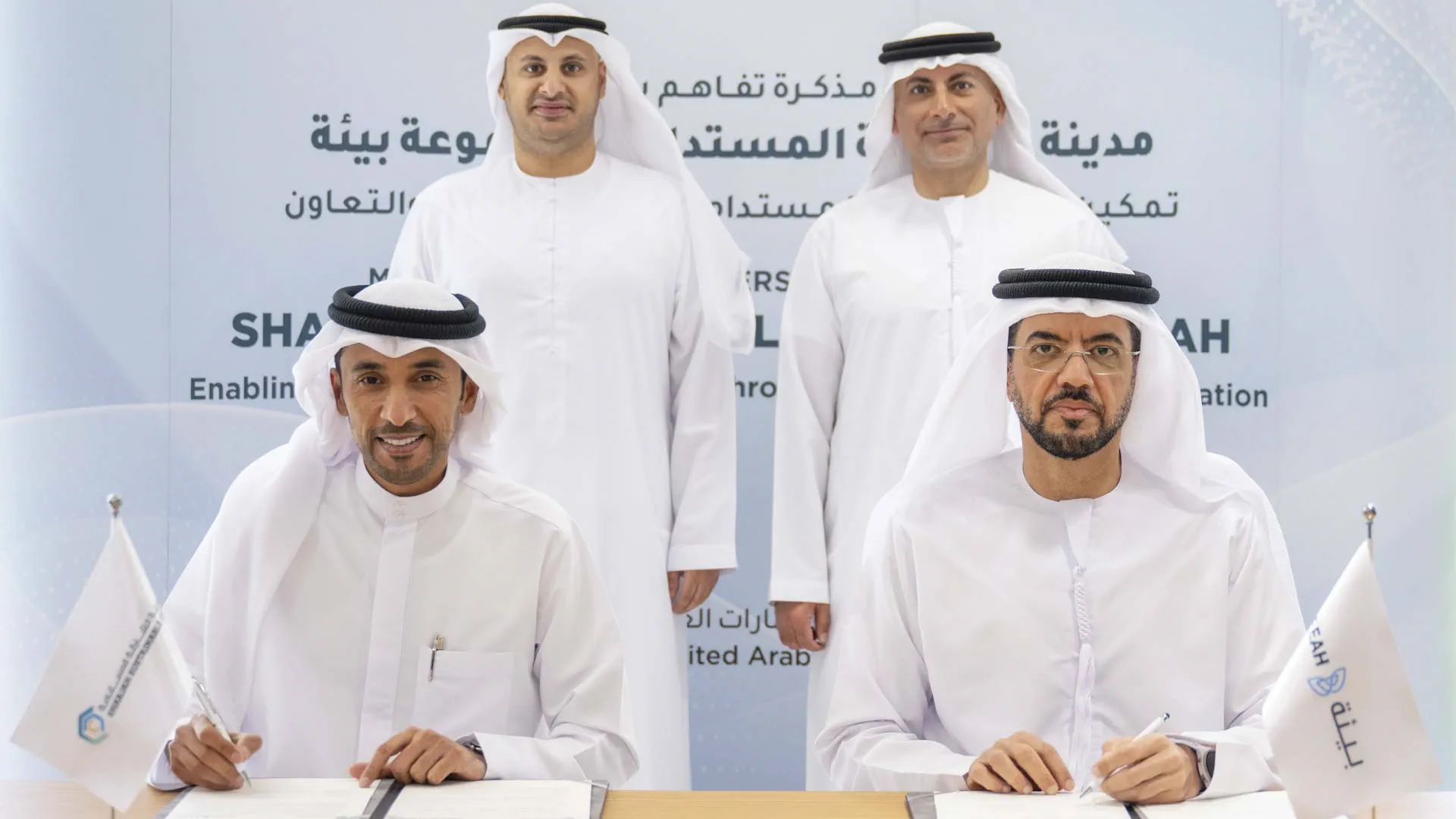
The project builds on a previous agreement between Bee'ah and Lohum to work together, with support from the government, to bring new lithium-ion battery recycling technology to the UAE. The plant will be built at Bee'ah's integrated waste management complex in Al Sajaa, Sharjah, and it will be able to recycle EV batteries and other lithium-ion batteries. By 2026, it should be able to process about 1,500 tonnes of batteries, and by the third year, its operational capacity should treble. This venture will strengthen the country's ability to handle this important industry in a sustainable way.
The World Future Energy Summit 2026 was held during Abu Dhabi Sustainability Week, where the agreement was announced. It wants to build the UAE's first large-scale plant for recycling electric vehicle batteries and giving them new uses.
Integrated digital platform
The project will be connected to a full digital platform that lets you track lithium-ion batteries from when they are collected after use to when they are sorted and processed and then recycled or reused. This technology will enable producers follow the rules, take part in take-back programs, and be a part of the circular economy.
Localising EV battery solutions
Engineer Sharif Al Olama, the Ministry of Energy and Infrastructure's Undersecretary for Energy and Petroleum Affairs, said that the agreement shows a clear national goal to provide sophisticated EV battery management solutions to the UAE. He said that the specialised facility will meet the highest technical and environmental standards, which will improve the UAE's preparation for rapid sectoral expansion and strengthen the principles of circular economy.
Key to reinforcing the UAE’s position
Al Olama said that the project is a key part of the UAE's aspirations to become a worldwide EV market, with the goal of having electric and hybrid vehicles make up 50% of all vehicles by 2050. He went on to say that the programme helps reduce carbon emissions from transportation, builds up local industries, creates long-term economic opportunities, and solves problems with batteries at the end of their lives through an integrated national system that makes critical battery materials more sustainable, competitive, and resilient in the supply chain.
New ways to add value in future industries
Khaled Al Huraimel, the Group CEO and Vice Chairman of Bee'ah, said that the project is a natural next step in the group's overall plan for a circular economy. He said that sustainability creates new value opportunities in future industries. He also said that working with the ministry and Lohum allows for proactive lifecycle management of EV batteries, reduces the need for landfills as demand for electric mobility grows, and helps Bee'ah reach its goal of zero waste in Sharjah.
Reintegrating raw materials into the supply chain
Rajat Verma, the CEO and founder of Lohum, said that the company is happy to work with Bee'ah even more and to have the Ministry of Energy and Infrastructure join the project. He said that Lohum's recycling and repurposing solutions are meant to make lithium-ion batteries last as long as possible while also recovering important components with no waste, lowering carbon footprints, and putting raw materials back into supply chains.
Full-cycle approach
The plant will use a full-cycle recycling method. This means that it will first find new uses for used EV batteries, such as in energy storage systems, and then safely take apart the batteries to get the materials back.
Instead of throwing away or bringing back resources from global supply chains, the factory will use Lohum's unique technology to recover valuable elements like lithium, cobalt, nickel, and graphite and put them back into the circular economy. Research shows that putting reuse ahead of recycling cuts down on the emissions and resources used to make and throw away new batteries by a large amount.
Enhancing Sharjah and UAE's position in waste-to-value
As more people in the Middle East want electric vehicles (EVs) and ways to store energy, the joint venture is likely to become a regional hub for battery lifecycle services. This will strengthen Sharjah and the UAE's position as leaders in waste-to-value businesses.

 For an optimal experience, please
rotate your device to portrait mode.