Loading...
Loading...

Eight chapters, eight points of view
The show is divided into eight sections, each of which looks at a different theme instead of following a traditional chronological order. Tacla asks viewers to think about how geography and history overlap, how memory builds on image, and how political events affect people over time. The pieces challenge the audience to step beyond simplistic concepts of victim and offender, exposing how violence may reach across generations and societies.
The art of being absent
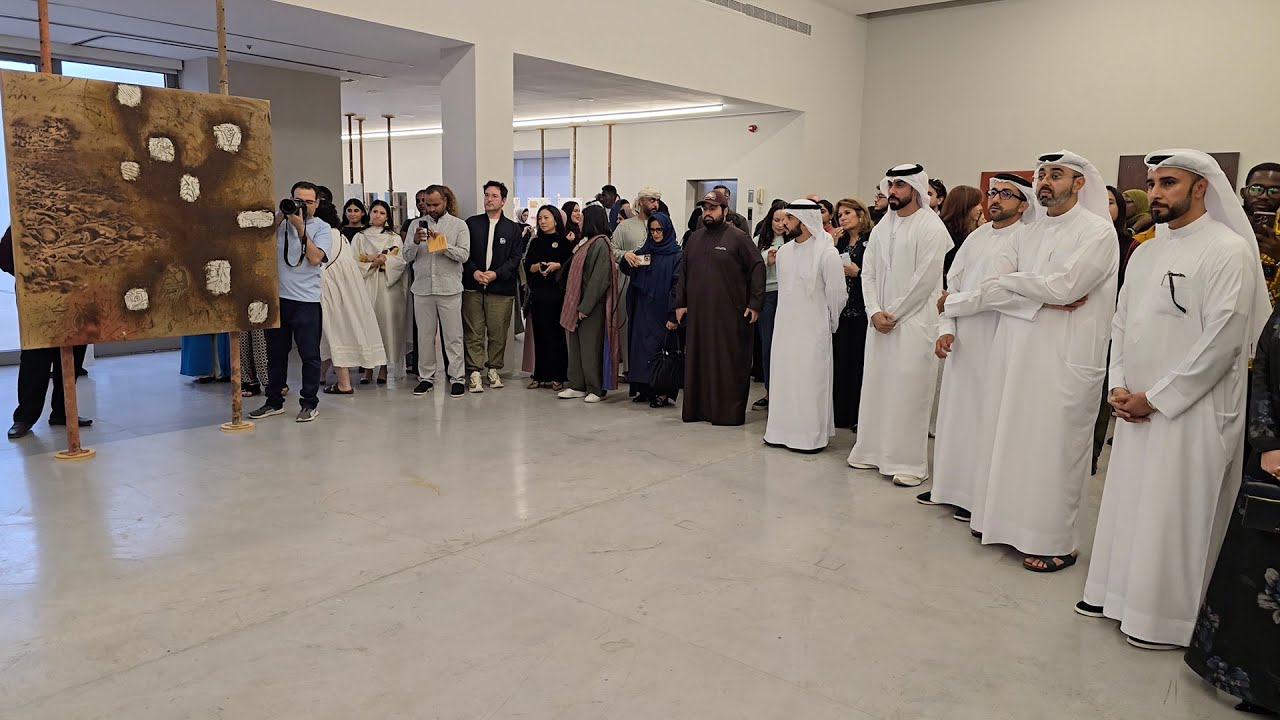
One of the most important parts of Tacla's work is what he terms "negative imagery." Instead of painting landscapes or buildings in a usual fashion, he often hints at their presence by leaving off shapes that come from empty space. This method makes people think about how trauma is stored, remembered, and internalised, which makes his canvases more like places to think than just places to write down what happened.
A life full of history
Tacla was born in Chile. He was young when the coup in 1973 ousted President Salvador Allende. The political turmoil and the repression that followed had a big effect on his artistic perspective. He is of Palestinian and Syrian heritage and has worked in Santiago and New York since 1981. With this two-sided view, he could look at the complicated political and cultural ties between the US, Latin America, and West Asia. His work has dealt with changes in visual culture around the world over the years, especially when it comes to recording human rights abuses and institutional violence.
From New York to the Atacama Desert
The show looks back at Tacla's work from the 1980s in New York, a time when news media were becoming more and more common and people were seeing more and more pictures of war and calamity. The next parts are about landscapes like the Atacama Desert, which turn places that have been called empty in the past into places that hold memories, exile, and grief. Tacla also looks at famous buildings like Santiago's La Moneda Palace, Istanbul's Hagia Sophia, and Washington D.C.'s Pentagon. He points out that they are both emblems of power and weakness.
Cultural memory and resistance
Tacla also looks at cultural violence, like book burnings under Chile's dictatorship, and how the destruction of ideas is connected to larger patterns of physical oppression. Later works show protests and resistance movements in Chile and around the world, focusing on moments of bravery and strength instead than exaggerated images of pain. The show concludes with cityscapes devastated by political and natural disasters, including Aleppo, Beirut, Gaza, Santiago, and Oklahoma. These images show how people can bounce back from calamity.
Curator’s Vision
Hoor Al Qasimi, Director of SAF, and Abdulla Aljanahi, the Assistant Curator, worked together to put up the exhibition. They want visitors to think about the long-term impacts of violence, the passage of time, and how people survive and deal with disaster. The exhibition promises to be an immersive experience that puts audiences right in the middle of the problems. Tacla's work questions memory, trauma, and how fragile life is.

 For an optimal experience, please
rotate your device to portrait mode.