
Loading...
Loading...

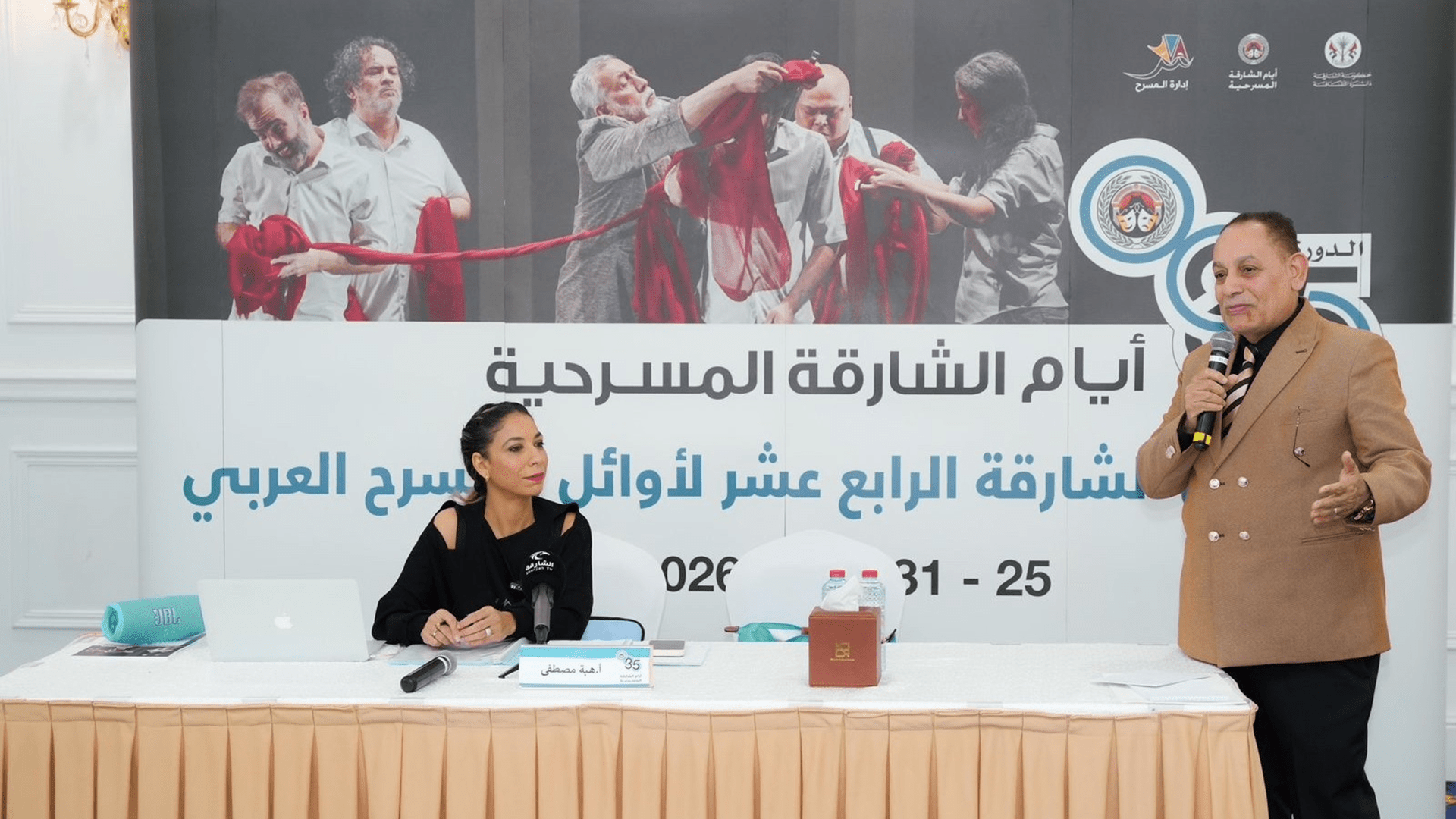
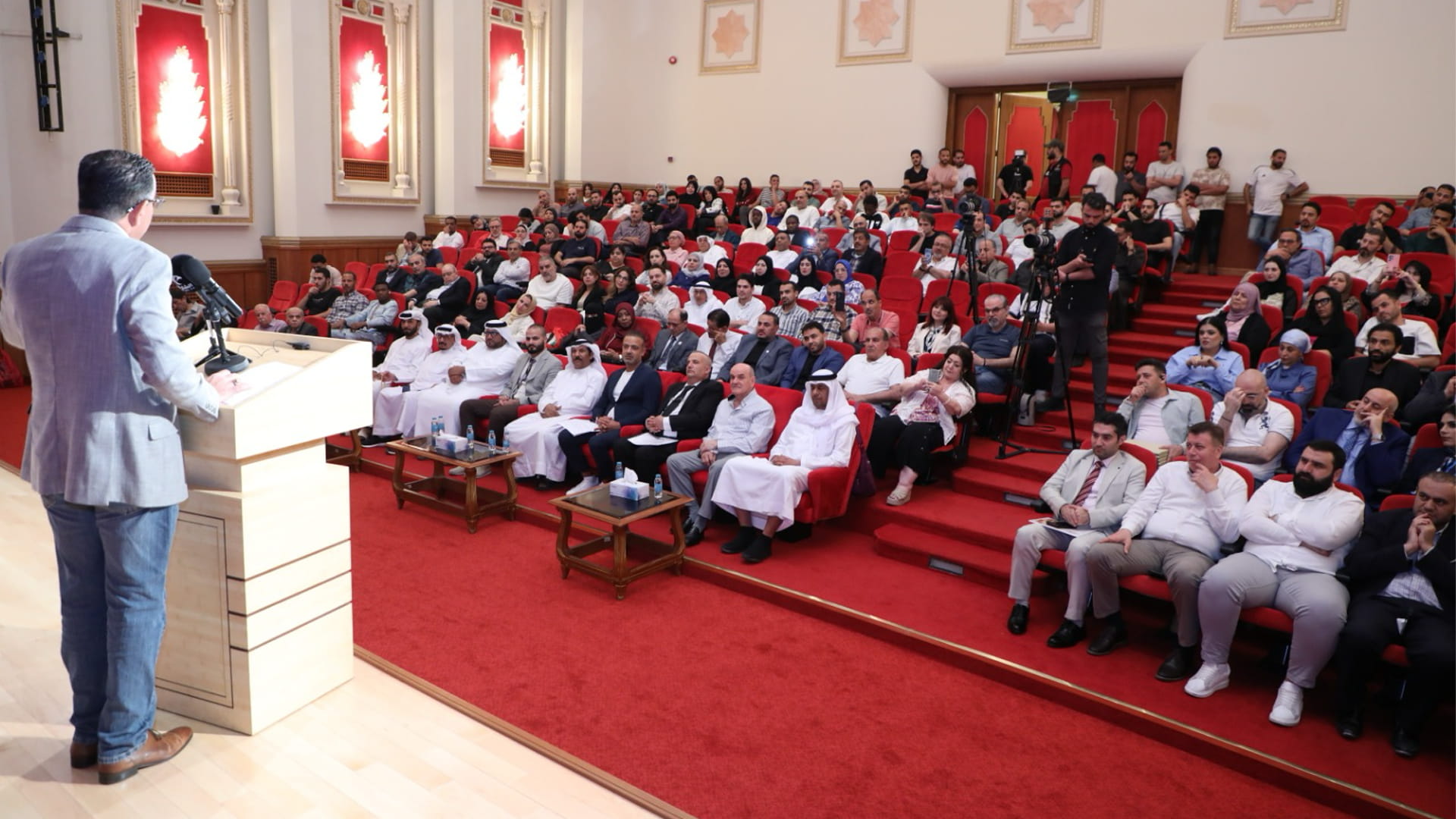
Mostafa began by outlining her journey, from graduating at the Academy of Arts in Egypt to completing a master’s degree in Serbia. She also spoke about her long-standing collaboration with Emirati director Mohammed Al Amiri, with whom she has worked on over twelve productions. Rather than launching straight into instruction, she opened with a simple question to the room: what do we mean by physical expression? After hearing from the students, she gradually guided the session into a series of exercises, all centred on one idea—that an actor must first understand their body before attempting to perform.
The session started with warm-up exercises aimed at loosening the body and encouraging free movement. At this stage, Mostafa emphasised that there is no need to “act” in the conventional sense. The goal is simply to become aware — to feel how the body moves and responds. Voice work and attentive listening to music were also introduced early on as methods to awaken internal rhythm. She explained that, when working on a production, she always begins by reading the script in full. Movement, she said, should develop naturally from the text and sit comfortably within the director’s vision. For her, it is integral to the drama itself.
A key focus of the workshop was what she described as the actor’s “inner rhythm”. This, she suggested, functions as a kind of compass, helping performers control their movements and avoid unnecessary exaggeration. The same gesture, she noted, can have very different meanings depending on its rhythm, such as conveying excitement when performed quickly or calmness when executed slowly. Afterwards, the students were asked to undertake a series of practical activities. One of them had to move from chair to chair in a circle without sitting in the same place twice. The task required them to make quick decisions and stay focused, which helped them stay mentally and emotionally stable. Some people said they felt uncomfortable when others were watching them, which Mostafa said was perfectly normal and even helpful. Being aware of that tension, she said, is part of developing stage presence. She encouraged students to clear their minds before going on stage, suggesting a short period of quiet concentration to settle nerves and sharpen focus.
Further exercises focused on concentration and responsiveness, including word-based drills designed to keep participants mentally alert. Afterwards, the session shifted to movement work set to music with different tempos, from slow to fast. The emphasis was on allowing rhythm to come from within rather than copying what is heard. At the end of the workshop, students worked in pairs to create short movement pieces based on a piece of music. They used only gestures and body language to express a wide range of feelings, from fear to joy to sadness. The outcome was an energetic and engaging session, where students offered diverse interpretations, each driven by their intuition and creativity.

 For an optimal experience, please
rotate your device to portrait mode.