
Loading...
Loading...

The winning projects include three films: "We Return in Pieces" by the Anti-Archive Collective, "Oxygen" by Rajan Katheet, and "Mila in the Mountains" by Nadeem Al-Karimi. Despite their diverse geographical and narrative contexts, these works share a common interest in exploring the complex relationship between the individual and the larger structures that surround them, whether political, social, or familial.
The film "We Return in Pieces" presents a collective cinematic experience that begins by deconstructing and reinterpreting colonial archives from a contemporary perspective. Based on materials held in the British National Archives concerning the Malayan Emergency (1948–1960), the Counter-Archive group reconstructs these documents through performative and imaginative practices, blending historical research with filmmaking. The film does not merely reenact events; it seeks to question the very nature of the archive itself, as an instrument of power that conceals as much as it reveals. This is achieved by incorporating imagined dialogues with oppressed figures and evoking moments absent or marginalised in the official narrative. Thus, the film becomes a space for reflecting on memory as a political act and on cinema as a medium capable of producing an alternative history that challenges dominant narratives.
On the other hand, the film "Oxygen" takes a more intimate approach, starting with a simple, everyday event to reveal deep psychological and emotional layers. During a trip to repair a vital medical device, the complex relationship between a father and his son unfolds, reflecting an unspoken gap between two generations living under the pressure of economic and social circumstances. Director Rajan Katheet employs a gradual narrative style, allowing tension to build indirectly, where silent gestures and unspoken moments become the essence of the experience. Here, "oxygen" becomes more than just a therapeutic element; it transforms into a metaphor for the need for psychological respiration and a space for lost human connection in a world that seems suffocating on both physical and emotional levels. Through this structure, the film offers a subtle reflection on the fragility of family relationships and their simultaneous resilience.
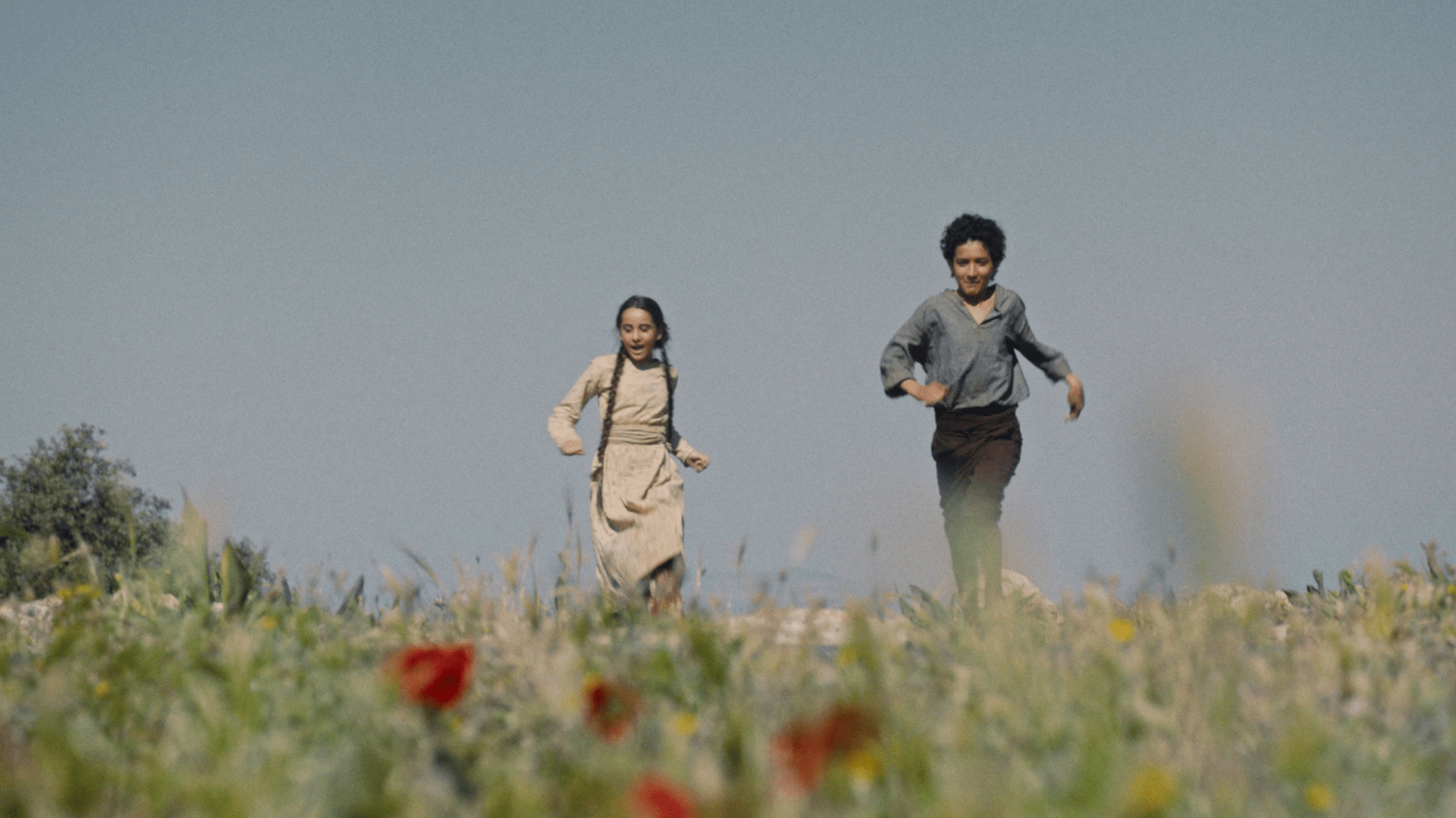
The film "Mila in the Mountains" transports viewers to the rich visual landscape of the Hunza Valley, where breathtaking nature intersects with a turbulent social reality. The story revolves around the relationship between a young boy named Numan and his dog, Mila, a bond that transcends mere emotion to become a gateway to a broader understanding of the local community's structure. By tracing this relationship, the film exposes a system of dysfunctions, including administrative corruption, violence against animals, and a lack of legal accountability, in a context where justice falters before the influence of power. Director Nadim Al-Karimi employs a visual language that blends poetic sensibility with stark realism, so that the mountains, despite their silence, bear witness to the contradiction between natural beauty and human vulnerability. The work also poses an open question about the possibility of change within a reality that seems fixed and resistant to transformation.
The CounterArchive Collective is a flexible and ever-evolving community of artists, filmmakers, and researchers united by shared interests related to the omissions and fabrications embodied in colonial records. The group was founded in Kuala Lumpur in 2024 through the Collective Filmmaking Lab, which included Ali Al-Asri, Anthony Nguyen, Ben Yao, Chen Yi Wen, Dahong Hongxuan Wang, Eddie Wong, Jacob Van Klang, Joshua Cook, Julian Chen, Kevin Pathman Shi Jin, Yao Saw Bin, and Yvonne Tan. Artists and filmmakers Michelle Williams Gamaker and Sabine Groenugen served as directors and mentors, while curator Ju-Lin Ong was the producer and research consultant.
Based on an examination of documents held in the UK National Archives relating to the Malayan Emergency, viewed as a proxy war within the context of the Cold War, the group conducted experiments in reconstruction, collective composition, and performative research, culminating in the short film "We Return in Pieces."
Director Rajan Katheet is based in Kathmandu and works in both feature and documentary filmmaking. He is a graduate of the European Masters program (Doc Nomads), the Berlin International Film Festival's Talent Programme, and a Global Media Masters Fellow. His films have screened at prestigious festivals in Lima, Mumbai, Seattle, Sheffield, Tampere, Toronto, and other cities, and have garnered numerous awards, including the Industry Award at the Hong Kong International Film Festival, the DMZ Documentary Film Festival Grant, and the Doc Age Kolkata Award for Emerging Asian Directors for his film "No Winter Holidays" (2023), co-directed with Sunir Pandey. The film also won the Nativa Award at the 2023 Alterativa Film Festival in Kazakhstan. Katheet collaborates with local and international filmmakers through his production company, Salba.
Director and multidisciplinary artist Nadeem Karimi hails from the indigenous Hunza Valley in Gilgit-Baltistan. His lens captures the fragile interplay between humanity, heritage, and a rapidly changing world. Blending narrative storytelling with documentary realism, his films aim to highlight marginalized voices and vanishing ways of life. His work has garnered critical acclaim at festivals in the UK, Brazil, India, Iran, and Dubai. In 2019, his film "Pedero" won the Jury Prize and the Best Short Film Award at the Arab International Film Festival, while his film "The Last Chapter" won the Karachi Biennale of Arts Award in 2024. Al-Karimi co-founded "Cinema Circus" in 2016, the first feature film festival in Hunza dedicated to promoting participatory storytelling.

 For an optimal experience, please
rotate your device to portrait mode.