
Loading...
Loading...

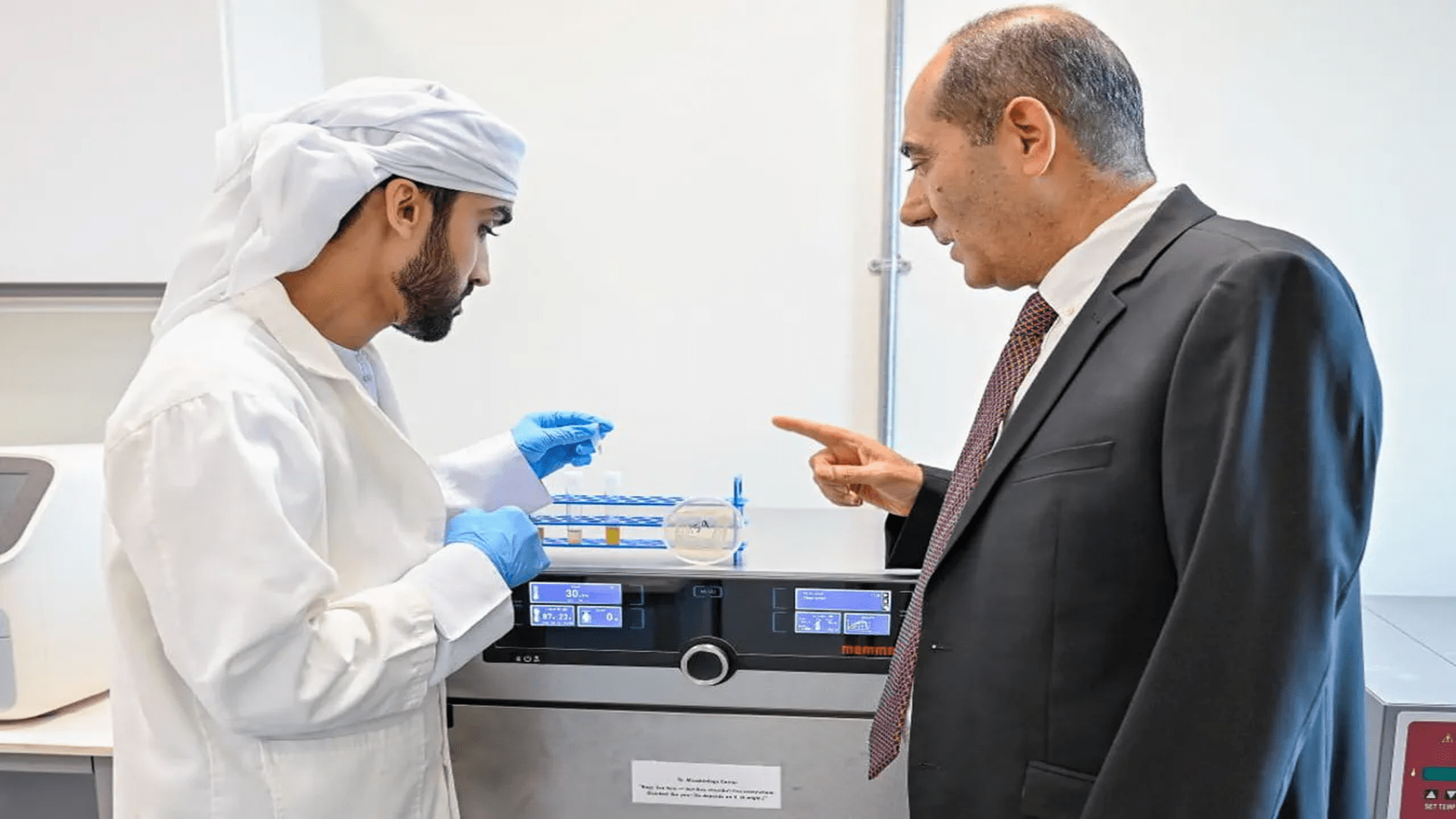
The patent, co-invented by Prof. Khaled Masmoudi and PhD student Mughair Abdul Aziz, describes a novel biopesticide composition that combines an endotoxin protein with a late embryogenesis abundant (LEA) protein, specifically a LEA2/dehydrin protein. This combination significantly enhances heat resistance, allowing the biopesticide to remain effective at temperatures up to 42°C—a major advancement for agriculture in regions with extreme heat.
“This achievement reflects UAEU’s commitment to addressing real-world challenges in agriculture and food security, particularly in arid and semi-arid environments such as the UAE,” said Prof. Khaled Masmoudi, Vice Dean of the College of Agriculture and Veterinary Medicine and co-inventor of the patented invention. “By pioneering climate-resilient agricultural solutions, our researchers are advancing sustainable farming practices and strengthening the UAE’s leadership in innovation and food sustainability.”
On the other hand, the patented method involves isolating genes for LEA proteins from native plants and over-expressing them in an expression vector to produce recombinant proteins. When combined with biopesticides, these proteins confer enhanced stability and thermotolerance under high temperatures, ensuring consistent pest control in climates where conventional biopesticides often fail.
This innovation is particularly relevant to the UAE and the wider region, where rising temperatures and water scarcity are challenging traditional farming methods. The heat-resistant biopesticide offers farmers a sustainable, effective, and environmentally friendly tool to protect crops, reduce reliance on chemical pesticides, and safeguard food production in line with the UAE’s National Food Security Strategy 2051.
With this milestone, UAEU reinforces its standing as a hub for pioneering research and innovation, supporting the nation’s vision for sustainable development and agricultural resilience.

 For an optimal experience, please
rotate your device to portrait mode.