
Loading...
Loading...

This period marks the first phase of heat and dryness. It is followed by the more intense heat season, which begins with the reappearance of the Pleiades and lasts until the rising of Canopus—a period associated with extreme heat, aridity, and harsh desert conditions.
Ibrahim Al Jarwan, Chairman of the Society and a member of the Arab Union for Astronomy and Space Sciences, explained that this initial period—lasting about 40 days—is traditionally known by several names, including the Pleiades' disappearance.
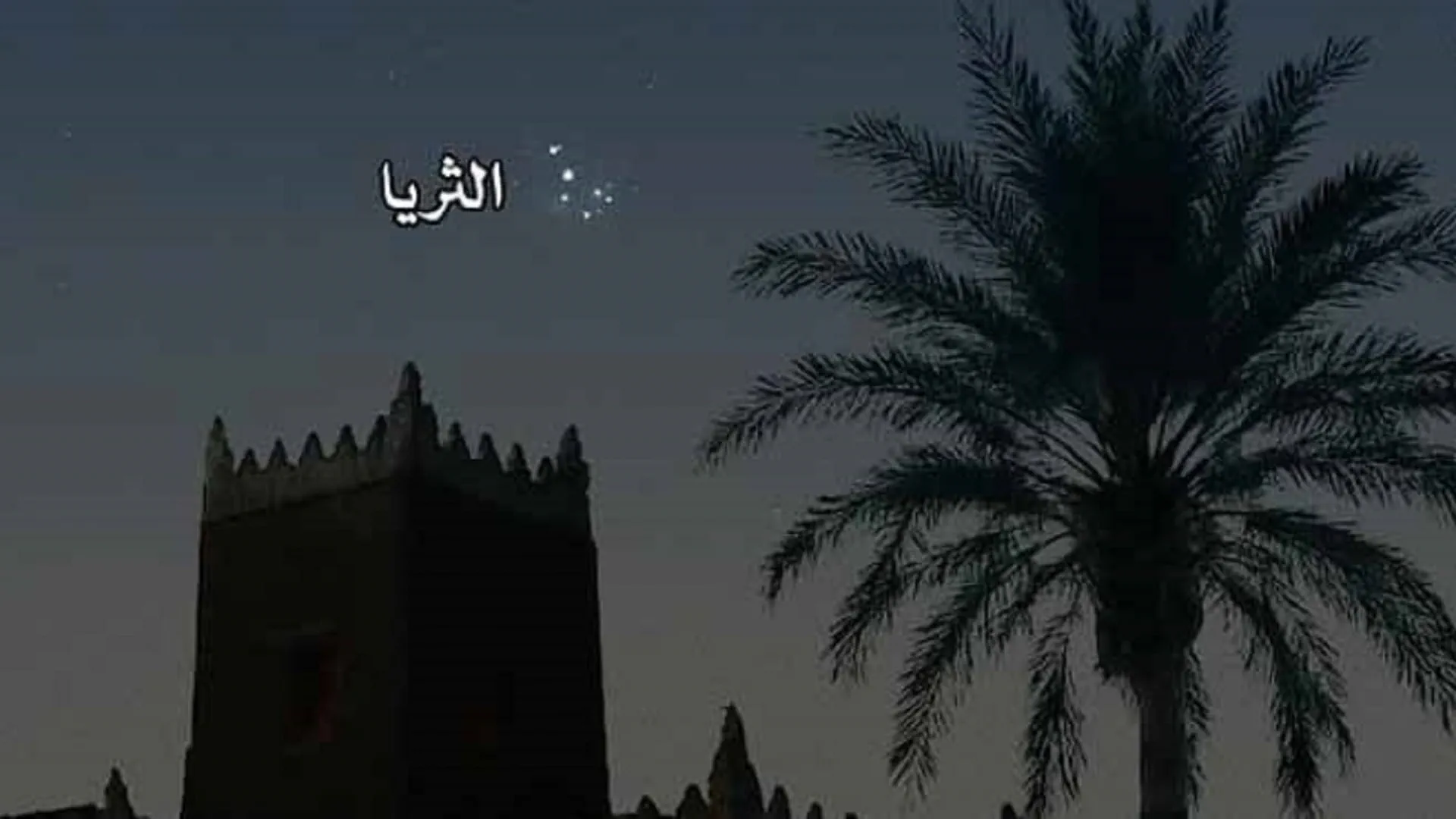
He noted that during this time, the Pleiades align with the sun and are invisible in daylight. Before this phase, the Pleiades cluster can be seen low on the western horizon after sunset, gradually moving closer to the sun. Once this period ends, the cluster re-emerges in the eastern sky just before sunrise, steadily advancing ahead of the sun.
Al Jarwan added that as the Pleiades approach their disappearance, seafarers traditionally warn of sudden, powerful weather disturbances known as “Bawlat Al-Thurayya”, believed to occur roughly ten days before the stars vanish. In Arab folklore, the appearance of the Pleiades in the evening sky has long been associated with rainfall, as reflected in the saying: “When it shines at dusk, it brings the rains.”
Historically, people also avoided certain practices during this period, such as cupping therapy and animal branding, and took care not to overwork their camels. If a camel fell ill, it was often said that it had been strained during this period.

 For an optimal experience, please
rotate your device to portrait mode.