
Loading...
Loading...

Importance of the Ghaf Tree
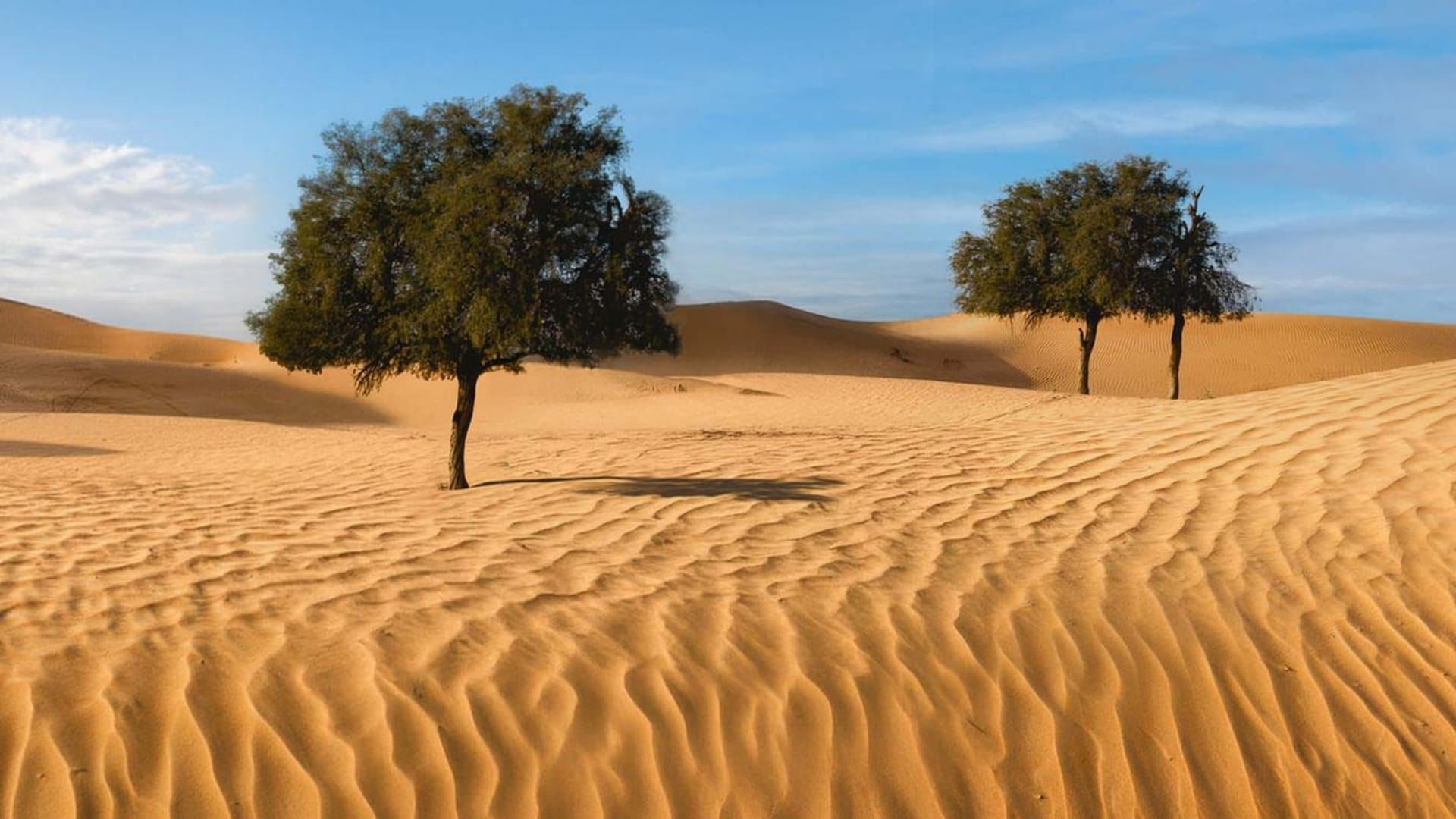
As the national tree of the UAE, the Ghaf is valued for its ecological, cultural, and symbolic significance. It stabilizes sand dunes, enriches soil, and supports biodiversity in arid environments. Despite its importance, little was previously known about its genetic variation or evolutionary history—knowledge now illuminated by this study.
Study methodology and findings
Specialists from the EAD Plant Genetic Resources Centre and ICBA conducted whole-genome re-sequencing of Ghaf populations collected from coastal plains, valleys, sand dunes, and mountain slopes across the UAE. The study identified four genetically distinct groups.
One group, located in the foothills of the Hajar Mountains and Jebel Hafeet National Park Reserve, represents a genetically unique lineage, potentially evolutionarily distinct from other populations.
Implications for conservation
The findings provide essential data to guide seed banking, rehabilitation, and restoration efforts, including national Ghaf planting initiatives. Insights into environmental adaptation and stress response will support assisted gene migration and climate-smart restoration, particularly in desertified or saline-affected areas.
Digital tools and genomic mapping
The project developed digital tools, including an interactive genomic map illustrating genetic relationships among Ghaf populations. These tools will help EAD experts, conservationists, and policymakers plan long-term strategies for sustainable conservation using evidence-based science.
Expert statements
Ahmed Hashmi, EAD Executive Director of Terrestrial and Marine Biodiversity, said: “The Ghaf tree is a powerful symbol of our natural heritage… We have unlocked vital genomic data that will shape the future of Ghaf conservation in the UAE and strengthen its resilience in the face of climate change.”
Dr Tarifa Alzaabi, ICBA Director-General, added: “By decoding its genetic blueprint, we are equipping policymakers and conservationists with the knowledge needed to ensure its preservation for generations… This research sets a precedent for how genomic tools can inform conservation strategies in arid and saline environments.”
Advancing biodiversity and climate resilience
The publication of the study marks a milestone for desert ecology in the Arabian Peninsula and demonstrates how genomic science can be integrated into national conservation planning, strengthening biodiversity stewardship and climate resilience in arid and semi-arid regions.

 For an optimal experience, please
rotate your device to portrait mode.