
Loading...
Loading...

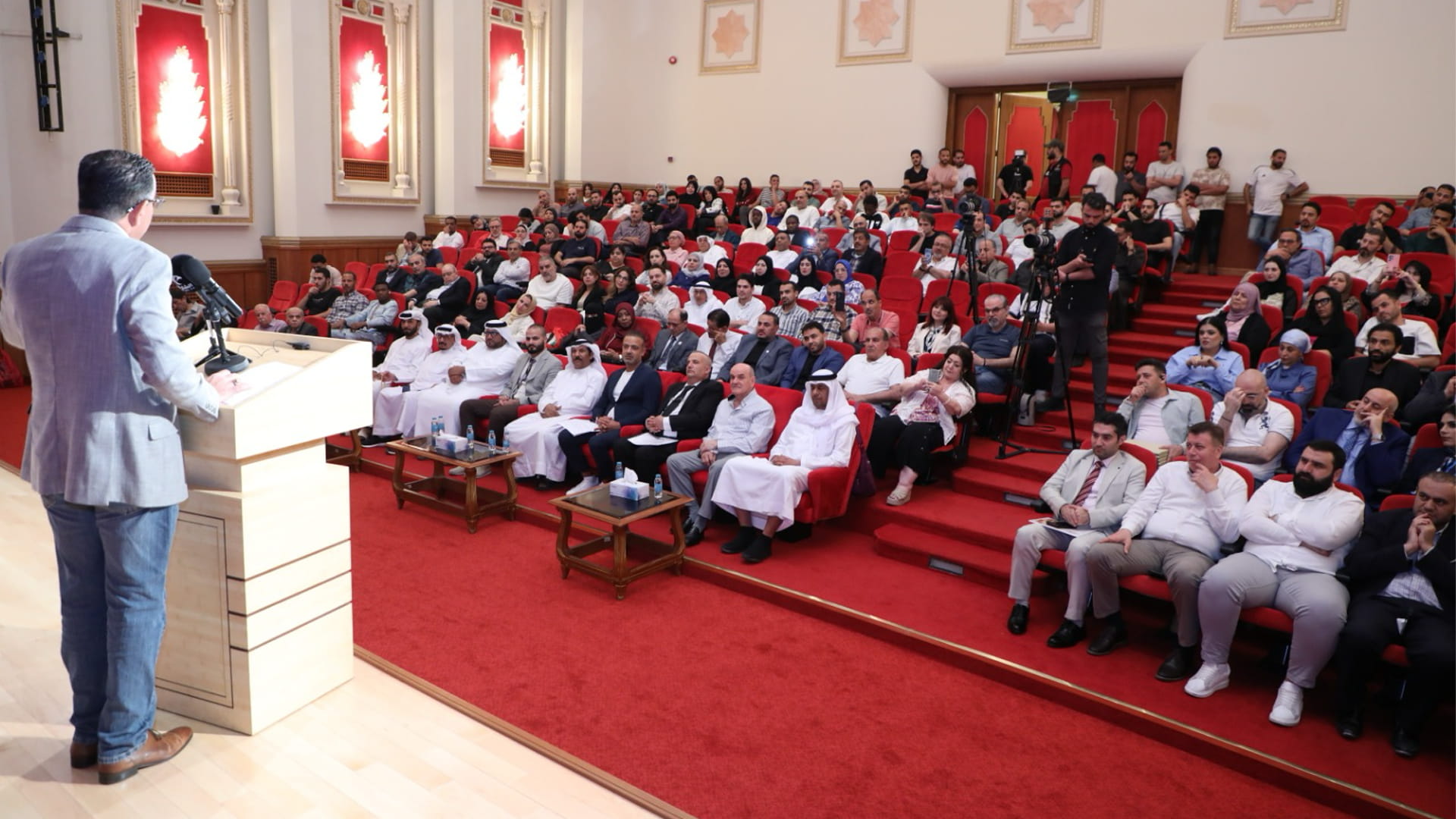
The first session, chaired by Egyptian critic Dr Mohammed Mustafa Abu Al Shawarb, included Dr Saeed Bakkour (Morocco) and Dr Ahmed Al Joua (Tunisia). Dr Bakkour presented his paper “Emotional Poetry: A Melody on the Scale of Wounds and a Journey on the Wings of Emotional Memory”, discussing how the concept of emotion in Arabic poetry serves as an inner force shaping self-awareness, thought, and feeling. He explained that emotional poetry conveys human inner experiences across time, creating a living memory and a shared human space that transcends time and place. According to Dr Bakkour, emotional poetry focuses on common human experiences, expressing personal experiences in ways that resonate across generations and cultures.
Dr Ahmed Al Joua followed with his study “The Emotional Trend in Arabic Criticism”, examining emotion as a driving force in shaping psychological states within texts. He traced how classical and modern Arab critics engaged with this concept, noting that emotional trends often originate in poetry and are later reflected in criticism. He argued that poetry is inherently emotional, capturing a broad range of feelings and representing them in diverse poetic forms.
The second session, chaired by Tunisian critic Lamia Al Aqrabi, featured Dr Mahmoud Al Dabb’a (Egypt) and Dr Omar Al Amri (Jordan). Dr Al Dabb’a presented “Emotionality and the Formation of Cultural Identity”, examining how emotions interact with identity through artistic expression. He highlighted the influence of history and geography in shaping collective values, showing that emotions are more than transient experiences—they are shared societal forces. He emphasised that Arab emotional expression cannot be understood separately from Arab identity, including language, customs, self-expression, and collective historical experiences.
Dr Omar Al Amri concluded the seminar with “Manifestations of Nature in Emotional Poetry”, defining emotionality as a central symbolic and aesthetic element in poetry. He explained how Arab poets throughout history used nature to express selfhood, feelings, and psychological interactions with life, integrating these elements into poetic identity and imagery. He noted that studying nature in Arabic poetry provides insight into the development of creative taste and artistic vision, enabling poets to engage with and symbolically transform natural elements to enhance both the aesthetic and thematic dimensions of their work.
The seminar emphasised the centrality of emotional expression in Arabic poetry, its enduring influence on literary criticism, and its role in shaping both cultural and poetic identity throughout history. It highlighted how emotions, identity, and nature converge to create rich, timeless poetic works that resonate across generations.

 For an optimal experience, please
rotate your device to portrait mode.