
Loading...
Loading...

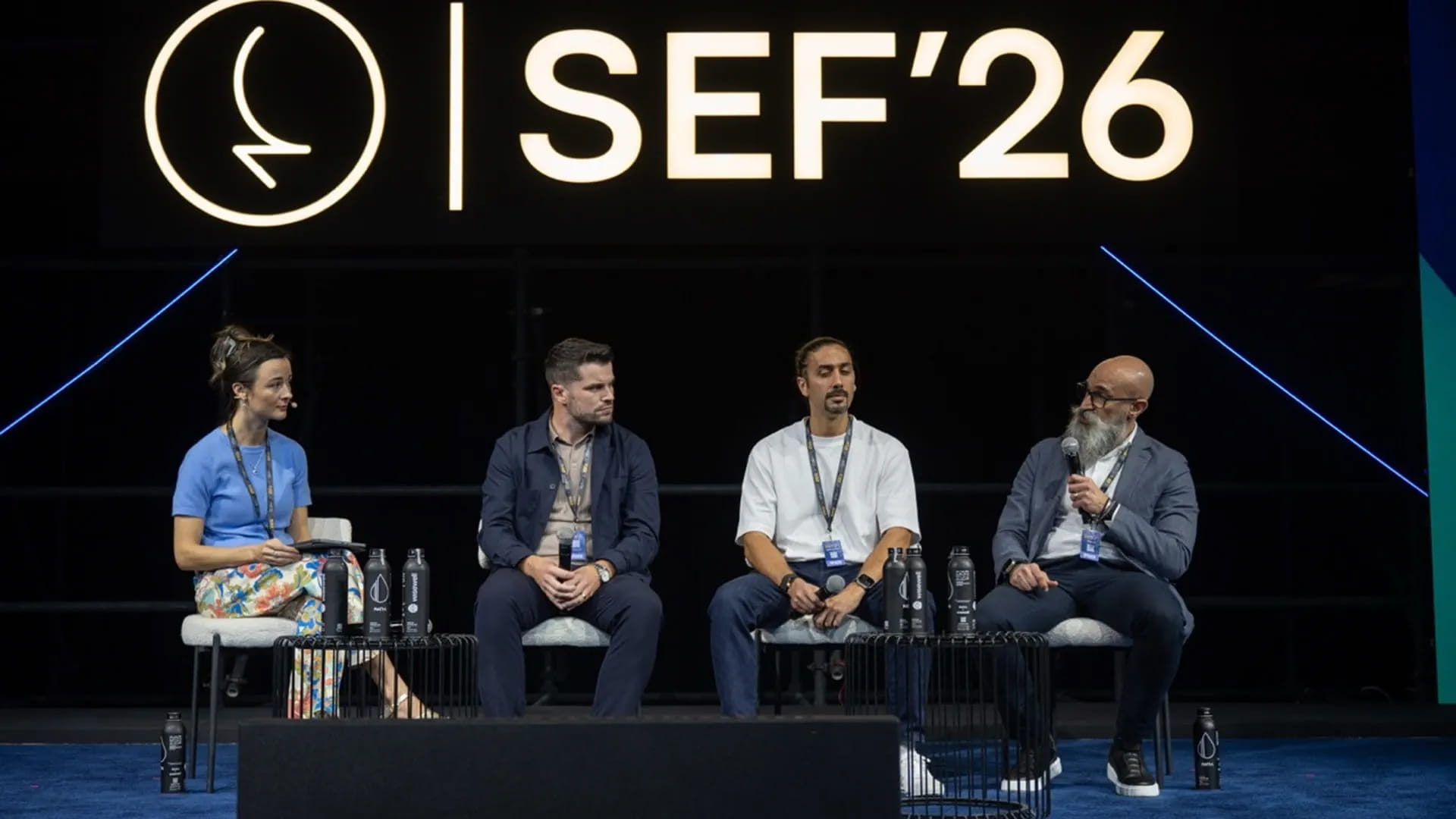
During the session “Lessons Startups Can Borrow from the Giants”, executives cautioned against treating scale as a linear sprint. Instead, they framed it as a series of deliberate trade-offs shaped by judgment, discipline, and an unflinching assessment of what actually works. The session brought together Ryan Restell, Chief Commercial Officer at Yango Play; Saman Darkan, Chief Technology Officer at Kitopi; and Shukri Eid, VP & GM for the Gulf, Levant and Pakistan at IBM, and was moderated by serial entrepreneur and startup advisor Olivia Dufour.
Restell spoke candidly about the pressure founders face to expand every part of their business at once. Drawing on experience across entertainment, mobility, music, and subscription platforms at Yango, he said this instinct often creates noise rather than momentum. “Some parts of a business are built to grow long term. Others exist to serve a short purpose,” he noted, warning that the mistake lies in treating everything as permanent.
At Yango, he explained, decisions are guided daily by customer behaviour, usage patterns, and basic economics rather than emotion. “You cannot afford sentiment,” Restell said. “You have to be honest about what is working and what is not.”
For Darkan, those lessons arrived early and under financial pressure. He recalled how Kitopi burned through its initial funding within weeks, forcing the founding team to reassess how the company operated. “When you run out of money, you learn very quickly,” he said. “You either adapt or stop.”
That moment reshaped Kitopi’s approach to technology. Early reliance on third-party systems failed to support its complex operating model, where multiple brands run simultaneously from shared kitchens. Progress only came once the company began building its own internal systems. “Nothing off the shelf was designed for how we worked,” Darkan said.
Eid cautioned founders against confusing complexity with maturity. Drawing on decades of experience across global organisations, he observed that many large companies slow themselves down by creating layers that dilute accountability. “Most complexity is created internally,” he said. “It comes from too many priorities and too many people trying to protect them.”
He stressed that scale is not defined by hierarchy, but by capacity. Larger organisations can pursue several paths at the same time. Smaller companies, he noted, must choose carefully, because they rarely get many second chances.
Across the discussion, the speakers returned to a less visible but decisive factor: relationships. Darkan pointed out that founders often underestimate the strain of working closely with partners over long periods. “You spend more time with your co-founder than almost anyone else,” he said. “Yet very few people prepare for that.”
The session concluded with a reminder that growth brings responsibility. As companies become more embedded in daily life, leaders must be ready to carry the consequences of that dependence.
A second Day 2 session turned the focus to what happens after startups achieve product–market fit, with serial entrepreneurs warning that PMF is not a moment to slow down, but one that demands sharper execution.
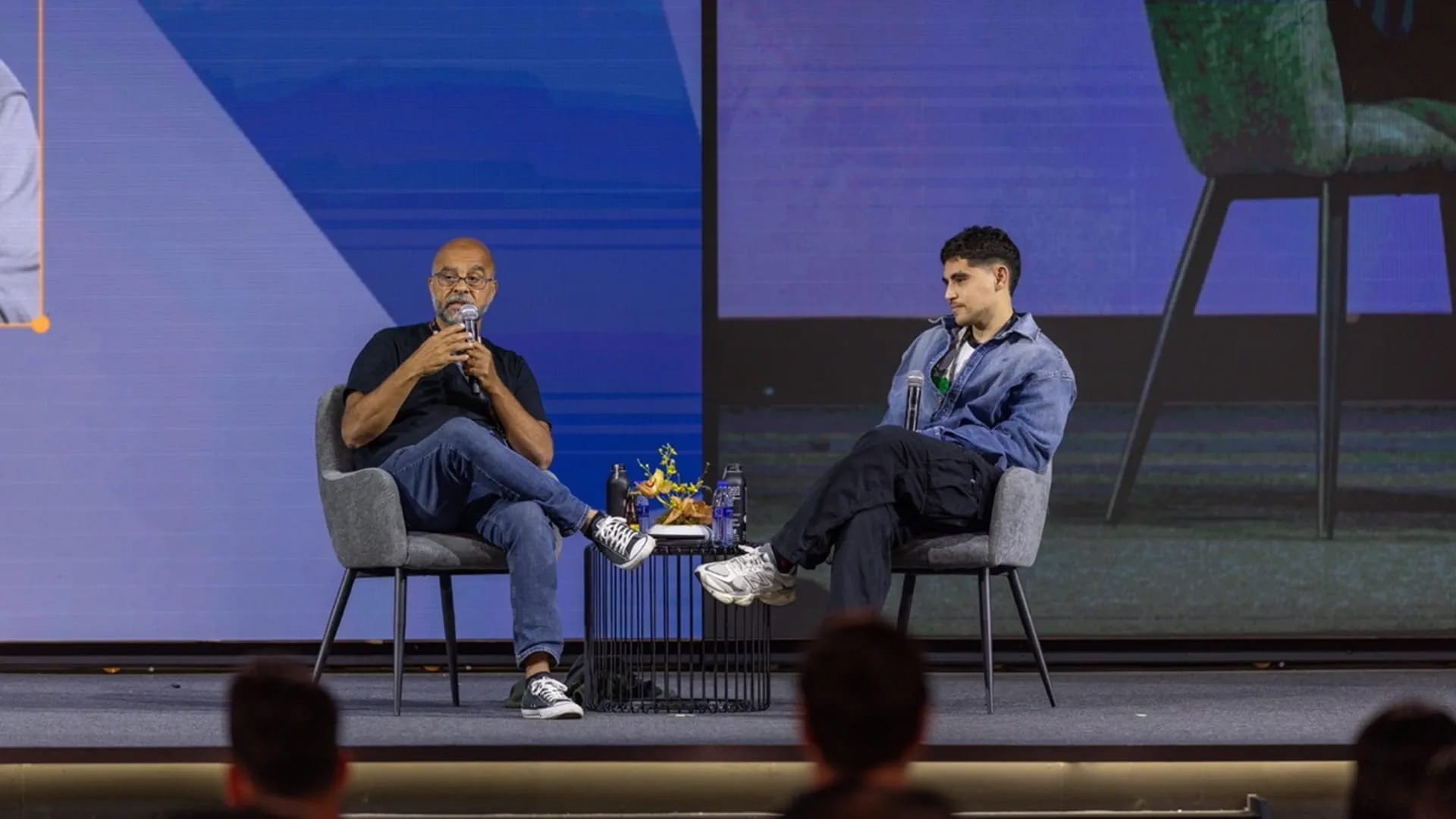
The panel How Do You Know You Found Product-Market Fit? was held at the Founders Stage within the Startup Town zone, powered by du Business, and moderated by Rakhil Fernando, Head of CE Creates. Speakers included Sundeep Sahni, Co-Founder and CEO of Valeo; Bunty Monani, Founder and CEO of Zofeur; and Anuscha Iqbal, Co-Founder and CEO of Qanooni AI.
Sahni urged founders to act decisively once PMF is clear. “Doubledown everything,” he said. “Find investors, hire people who believe in you. Your startup will die if you don’t doubledown, because competition is going to come in and kill your startup anyway.”
Monani reinforced the urgency, while emphasising people over pace. “You’ve found PMF, and now’s the moment to scale; hire the right people,” he said. “Doubledown in scale while maintaining what got you to PMF in the first place.”
Iqbal focused on operational discipline, warning that growth exposes weaknesses as quickly as it creates opportunity. “After PMF, don’t forget to ensure your own house is in order,” she said. “Compliance, accounting, HR — the boring stuff that happens in the back is what allows you to go from startup to scale-up.”
Together, the two sessions reflected SEF 2026’s theme, Where We Belong, positioning entrepreneurship as a long-term commitment shaped as much by restraint and responsibility as by ambition.
SEF 2026, organised by the Sharjah Entrepreneurship Center (Sheraa), was held from January 31 to February 1 at the Sharjah Research, Technology and Innovation Park (SPARK). The festival brought together more than 14,000 attendees, over 5,000 founders, and more than 300 speakers across 250 sessions.

 For an optimal experience, please
rotate your device to portrait mode.