
Loading...
Loading...

Inside the vision behind Emma
A four-time bestselling author and co-founder of emma.love, Unstressable, and One Billion Happy, Gawdat used the platform to explain how Emma was built, why firm boundaries were embedded into its design, and what accountability means when technology engages with people on an emotional level.
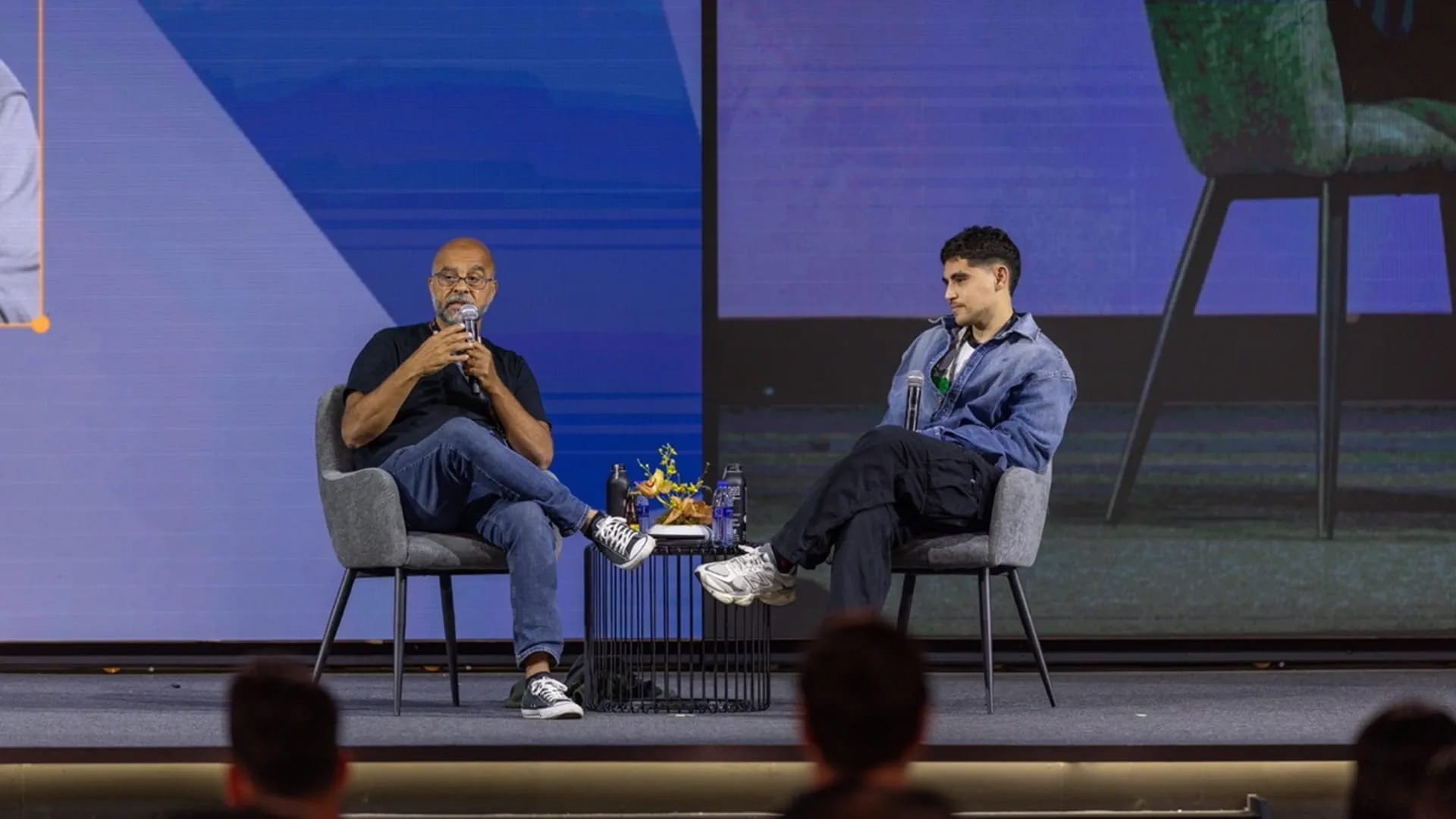
Speaking on the festival’s Impact Platform during a session titled “The future with artificial intelligence and its impact on human connection”, moderated by Sanad Yaghi, co-founder of DTEK.ai and emma.love, Gawdat delivered a balanced assessment of both opportunity and risk.
AI, power, and ethical intent
“Most people are worried about the future of humanity in the age of artificial intelligence. There is nothing inherently good or evil about AI itself. The danger comes from allowing powerful intelligence to serve greed and the pursuit of power. That will not serve humanity,” Gawdat said.
He explained that Emma was created to encourage self-awareness and healthier relationships, while deliberately avoiding any role that could resemble a human replacement or therapist.
Privacy as a non-negotiable principle
Privacy, Gawdat stressed, is foundational rather than optional. He noted that users often share more with Emma than with people close to them because the system feels non-judgemental.
“That makes protecting those conversations an ethical obligation,” he said, explaining that no human can access user conversations. Instead, internal AI-led monitoring systems identify issues without exposing personal data.
Designing personality with boundaries
Challenging common assumptions, Gawdat addressed how AI “personality” is formed. Rather than emerging naturally, he said it is the result of intentional behavioural and linguistic constraints.
“Personality in AI comes from carefully designed instructions that define how the system responds and stays within its limits,” he said. “Emma is designed to feel supportive without being mistaken for a human coach or therapist.”
Speed, governance, and responsibility
Comparing today’s rapid AI development with earlier software cycles, Gawdat warned that faster iteration makes ethics and governance more critical than ever.
“When iteration becomes this cheap and this fast, governance and ethics matter more,” he said.
Advice to founders
Turning to entrepreneurship, Gawdat urged founders to adopt AI thoughtfully rather than delay its use.
“If you are building a business today and not using AI, your competition will be faster, more efficient, and will eventually overtake you,” he said, encouraging founders to prioritise usefulness, iteration, and responsibility over polish.
AI as a tool for connection, not replacement
Gawdat closed by linking his message to SEF 2026’s theme, “Where We Belong”, positioning AI as a tool that should strengthen human connection rather than replace it.
SEF 2026, organised by the Sharjah Entrepreneurship Centre (Sheraa), was held from January 31 to February 1 at the Sharjah Research, Technology and Innovation Park (SPARK).

 For an optimal experience, please
rotate your device to portrait mode.