
Loading...
Loading...

SDAD plays a vital role in this regard. The session reviewed the department's general policy framework and its achievements in several areas, including raising awareness, promoting a culture of community engagement, and highlighting its role in contributing to the preservation of security, tranquility, and human dignity within society. It also addressed the department's efforts in fostering community partnerships between schools, families, and the wider community.
Opportunity to exchange viewpoints
The session provided an opportunity for members to raise questions and offer their observations in a parliamentary dialogue that reflected their commitment to supporting the department, the suburban councils, and the parents' councils in serving the community.
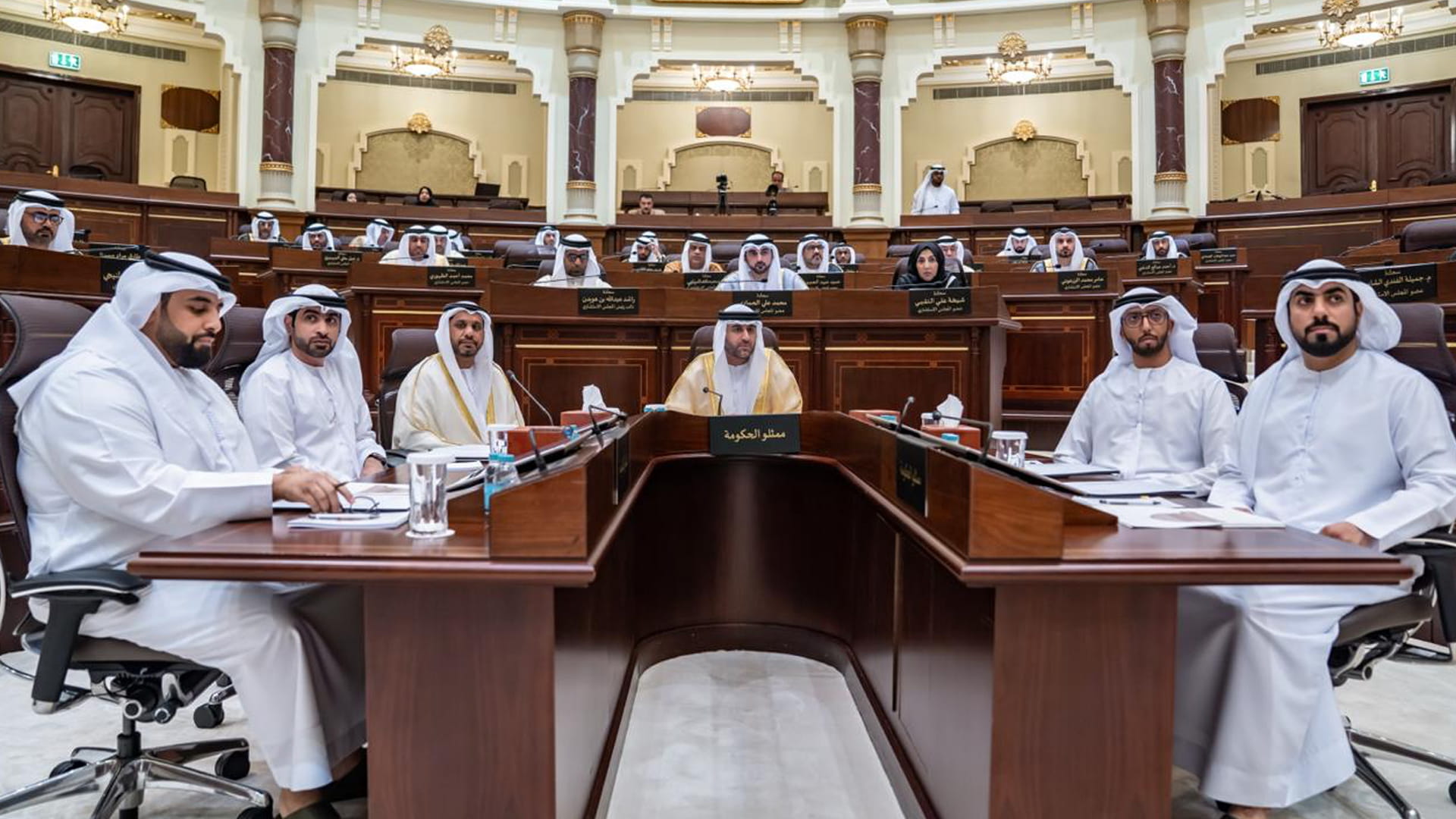
The session, held this morning to discuss SDAD policy, was attended by Sheikh Majid bin Sultan Al Qasimi, Member of Sharjah Executive Council (SEC) and Chairman of SDAD, His Excellency Dr Abdullah Suleiman Al Kabouri, Director of SDAD, and their assistants from various departments and sections.
Emergency, Crisis and Disaster Management teams excellent response
At the beginning of the session, Her Excellency Halima Humaid, Chairperson of the Council, expressed her gratitude to the Emergency, Crisis and Disaster Management teams in the Emirate of Sharjah, saying: “At the start of our session, we extend our sincere thanks and appreciation to the Emergency, Crisis and Disaster Management teams in the Emirate of Sharjah, all local and federal authorities, and private sector institutions, for their outstanding efforts in dealing with the recent weather event, the ‘Depression of Azm.’ Indeed, thanks to their cooperation and solidarity, the Emirate was able to effectively address the challenges and ensure the safety of citizens and residents. We thank them for their rapid response and dedication in providing essential services, whether in relief efforts, infrastructure maintenance, or providing necessary support to those affected. We commend the high level of coordination and integrated roles among them, which contributed to the success of proactive plans and enhanced preparedness and effective response. We also appreciate the commitment of community members, both citizens and residents, to the instructions and guidelines, and their positive cooperation with the relevant authorities, which had a significant impact on overcoming these circumstances efficiently and effectively. We wish everyone continued safety, security, and well-being, and we ask God to protect the UAE and its people from all harm.”
Human Resources Department's policy
Following this, the Secretary-General of the Council, Mira Khalifa Al Muqarrab, addressed the general topic of discussing the Human Resources Department's policy, stating: "SDAD established by Emiri Decree No. (10) of 2011, oversees the proper functioning of suburban councils and organises community initiatives and activities. This includes following up on the affairs of the families of deceased citizens in the Emirate and studying social phenomena affecting residents of residential neighbourhoods to ensure their voices and needs are heard in various service, educational, health, cultural, and social fields, in coordination with relevant government entities."
Al Muqarrab continued: "Given the importance of the Department's responsibilities in organising community work, the applicants wish to discuss this topic in the interest of the public good and to serve the community." Then, Sheikh Majid bin Sultan Al Qasimi, Member of SEC and Head of SDAD, delivered a speech in which he praised SCC interest and keenness to invite SDAD to attend and discuss the department's roles. He emphasised that the department, with all its departments, sections, and councils, strives to serve the community in accordance with the directives of His Highness Sheikh Dr Sultan bin Mohammed Al Qasimi, Supreme Council Member and Ruler of Sharjah.
SCC members’ inquiries
Following this, members of the council raised their questions and inquiries. His Excellency Saeed Matar bin Hamed Al Tunaiji asked about the future strategic role of the Department of Suburbs Affairs in light of urban expansion and the increasing number of suburbs in the Emirate of Sharjah. He also inquired about the department's plans to transform suburb councils into community development platforms that contribute to enhancing quality of life and social cohesion. Furthermore, he asked about the mechanisms adopted by the department to convey the needs and observations of suburb residents to other service providers, and whether there is a unified system for following up on the requests and suggestions of suburb residents in coordination with the relevant government entities.
His Excellency Rashid Ghanem Al Shamsi inquired about the programmes and initiatives offered by SDAD to empower youth in the suburbs. He asked how suburb councils could be utilised to identify young and community leaders and support youth-led community initiatives. He also inquired about the Department's plan to launch an annual index to measure the quality of life in the suburbs of the Emirate of Sharjah. This index would measure several factors, including social cohesion, sense of security, resident satisfaction, community participation, volunteer work, community activities, and the level of services in the suburbs.
An annual report would be issued detailing the results of this index and contributing to the development of initiatives and services provided to suburb residents.
His Excellency Mohammed Ahmed Al Alawi Al Dhaheri also inquired about the Department's current and future plans for the maintenance and development of suburb councils across the Emirate. This included both routine maintenance and internal upgrades such as furniture and equipment, ensuring the sustainability of these councils and enhancing their operational efficiency, particularly for those councils that have not undergone development in the past, such as the Dibba Al Hisn City Council.
His Excellency Mohammed Ahmed Al Alawi Al Dhaheri also inquired about the Department's current and future plans for the maintenance and development of suburb councils throughout the Emirate. He then inquired about the department's plan to establish sub-councils or suburb councils affiliated with the main councils, particularly in areas with large areas.
The vast geographical area or high population density contributes to easing the pressure on existing councils and enhancing their capacity to accommodate various community events. What is the expected timeline for establishing the Al Khrouss Suburb Council, given the growing community need for a council to serve residents and provide a platform for communication and organising events?
His Excellency Hamid Obaid Al Hamoudi inquired about the coordinating role of suburb councils in managing crises and emergencies (such as rain, health crises, and humanitarian cases), and whether there is a clear framework for this role.
His Excellency Abdullah Salem Al Kaabi inquired about the latest developments in expansion plans to establish new suburb councils across the emirate, and the expected timeframe for their implementation according to community priorities and needs, especially given the significant community importance of these councils and their tangible successes in strengthening community bonds and meeting residents' needs. Families and citizens in these areas eagerly anticipate their establishment due to their vital role in serving the community.
Her Excellency Jamila Mohammed Al Fandi asked whether SDAD possesses a clear institutional governance framework that defines the powers and responsibilities of the councils. The suburbs, ensuring no overlap in roles with other government entities, and what oversight and performance measurement mechanisms are in place to guarantee tangible results that benefit the community. Are there specific performance indicators and periodic reports used to evaluate the efficiency of the councils' work and the transparency of coordination with relevant authorities?
His Excellency Salem Mohammed Al Rashidi inquired about the foundations and principles for achieving community partnership between schools, families, and the community, and SDAD role. He asked about SDAD main role in community initiatives, particularly regarding coordinating and supporting senior citizens and people with disabilities in their interactions with government departments and hospitals, and how these efforts contribute to facilitating their access to government and healthcare services.
The question was raised about the mechanisms for monitoring and measuring performance to ensure tangible results that benefit the community. His Excellency Rashid Saleh Al Hammadi inquired about the coordinating role these councils play with the Department of Islamic Affairs in Sharjah to ensure mosque construction achieves a balance between the number of mosques and the population in each area. He cited Al Suyoh and Raqiba 6 as examples of areas lacking mosques. He also asked about efforts to rationalise household spending, address various family issues and neighbourly disputes, and promote the conservation of electricity and water. Furthermore, he inquired about fire safety awareness, including the proper use and maintenance of fire extinguishers, their different types, and home maintenance practices in coordination with relevant departments to achieve sustainability, stability, and family well-being.
Her Excellency Sheikha Ali Al Naqbi inquired about the Department's work in empowering student parent councils, their organisational and supervisory roles, coordination mechanisms with educational authorities, and the impact measurement tools used to evaluate these councils' contribution to supporting students and strengthening the bond between school, family, and community.
His Excellency Mohammed Abdullah Al Balushi asked about the Department's financial sustainability model and whether there are institutional partnerships with the private sector or civil society to support programs and expand their impact. Her Excellency Sheikha Khalfan Al Dhanin Al Naqbi inquired about the future vision guiding SDAD in enhancing the role of suburban councils. She asked how this vision is translated into measurable performance indicators that reflect its real impact on the community, and how innovation is employed in designing initiatives and projects. She further inquired about the criteria used in selecting members of suburban councils, and how these criteria ensure balanced and effective representation of various segments of society. This, she explained, would enhance community participation, reflect the needs of residents, and align with the Department's direction to expand the Suburbs Festival to encompass all cities and regions of the Emirate. This expansion would comprehensively achieve the festival's community objectives and amplify its impact across the Emirate as a whole. His Excellency Mohammed Saleh Al Ali asked whether the Department has a study or plan to establish an office or service unit within the suburban councils. This unit would be dedicated to providing comprehensive services to the families of the deceased, in coordination with relevant authorities. It would complement existing government services, unifying efforts, streamlining procedures, and expediting responses to the needs of bereaved families. Furthermore, it would provide community and humanitarian support to families during these circumstances, in line with the Emirate's vision for progress. With regard to community services and the promotion of social solidarity and cohesion,
Her Excellency Dr Hind Saleh Al Hajri inquired about the department's approved timeline for transitioning from fragmented forms and services to a unified digital platform. This platform would enable residents of the suburbs to submit and track applications, monitor their progress, and evaluate service levels. She also discussed the department's plan to create a comprehensive digital profile for each suburb, including demographic characteristics, needs, challenges, and resident satisfaction indicators. This profile would be displayed through interactive dashboards to support strategic planning.
Members Q&A
The council Speaker then opened the floor for questions. Her Excellency Dr Fatima Al Muqarrab asked about the department's vision for adopting the concept of productive families and the councils' involvement in organising and ensuring community engagement with these family projects and the marketing of their products. She also inquired whether, in light of current changes and crises, there is a plan for volunteer teams to provide the necessary response in coordination with relevant authorities to encourage suburb residents to participate.
His Excellency Dr Ahmed Saleh Al Naqbi asked about resolving family disputes and addressing the increasing number of divorces to prevent them from reaching the courts or police. He suggested resolving these disputes amicably before they escalate.
His Excellency Hamad Abdulwahab Al Qawadi addressed the phenomenon of family problems and the challenge of the department's inability to resolve them, as well as the necessary measures to follow up on family cases. In response to inquiries and questions from members of the council, Sheikh Majid bin Sultan Al Qasimi, Head of SDAD, and his assistants affirmed their commitment to addressing these issues.
SDAD exerted efforts around the clock
The department emphasised that there are communication channels with the community through 24/7 phone numbers and electronic communication, in addition to organising the "Yalsatna" initiative in all councils to listen to community members' opinions on all services.
The department noted that it has 18 suburb councils, which welcome all members of the community, especially youth. Regarding the harvest and the standard of living of citizens, the department publishes an annual report. Each quarter, the community's conditions and needs are studied and presented to the Executive Council, then published after approval.
Regarding the expansion of the councils, the department head stated that the department has submitted its proposals to His Highness the Ruler of Sharjah regarding expansion and is awaiting his directives. Concerning maintenance, the department is in constant communication with the Public Works Department to carry out maintenance work. Maintenance requirements are monitored through the department's main office and branches, and then the Department of Public Works is contacted to study and implement the maintenance according to their plan.
As for the Al Kharous suburb council, the building project has been approved, and the Department of Public Works has been contacted to implement it according to their plan.
The role of the department's divisions in studying the expansion of suburban councils was discussed, along with addressing problems that may arise from suburban residents, whether through the department or the councils themselves. This includes resolving family issues within households, and the indicators published by the department are positive.
Regarding the department's efforts in coordinating with crisis and emergency teams and the Sharjah Police General Command (SPGC), the department and the suburb councils maintain direct communication. Furthermore, the councils have previously played a role in providing vaccinations to all members of the community and in sheltering those affected by the rains.
In response to an inquiry about overlapping jurisdictions between the department or the councils and other departments, the department affirmed that the department and the councils have their own distinct responsibilities without any overlap. The department also maintains reports that highlight the transparency and cooperation of the councils with relevant authorities. They confirmed that SDAD has established a Parents' Councils Administration, which was created under the directives of the Ruler of Sharjah. An agreement has been signed with the Ministry of Education, and preparations are underway for future agreements. The Administration and the Parents' Councils work to mitigate certain student issues, which fall under the purview of SDAD, stemming from a commitment to student safety. The Department has also implemented awareness initiatives for parents to encourage their participation in the Parents' Councils.
SDAD has five councils located in Sharjah city and the Central Region, and three councils in the Eastern Region (Kalba, Khorfakkan, and Dibba Al Hisn). These councils offer school programs and activities in coordination with the Ministry of Education, working to identify issues, conduct workshops in schools, and empower students and parents. These efforts have yielded positive results. The Department also conducts an online survey to gather feedback on the programs and workshops and utilise the results.
SDAD and its councils are dedicated to the well-being of the elderly and people with disabilities. Regular visits are made to families, and a database of families, particularly those with elderly members, is maintained within the councils. Coordination is ongoing to provide services for the elderly through collaboration with relevant departments. The department conducts community and resident surveys regarding various services in different areas and assesses the needs of these areas. This includes mosques, where coordination takes place with the Department of Islamic Affairs. All public feedback received through the application, website, or direct communication is taken into consideration.
The department's Community Affairs Division also offers distinguished awareness and guidance programmes in coordination with various departments within the department and other relevant entities. This division also conducts studies, provides social education, and helps resolve disputes among residents.
The selection of council members is based on merit, considering their place of work and other criteria such as experience, the member's role, communication skills, leadership qualities, and familiarity with the residents of the area.
Regarding the annual Suburbs Festival, the department affirmed that it is a leading annual event and a shining example of community programmes in the Emirate of Sharjah. It embodies a social message reflecting the vision of His Highness Sheikh Dr Sultan bin Mohammed Al Qasimi, Supreme Council Member and Ruler of Sharjah, in enhancing quality of life, strengthening family bonds, and building a cohesive society. It is worth noting that the Suburbs Festival combines purposeful entertainment, education, and family interaction in a safe and vibrant environment that has attracted families from across the emirate.
SDAD is responsible for providing condolence services and related support to the families of the deceased. The department and the Suburbs Councils work with relevant departments to coordinate directly in serving the bereaved families. A 24-hour toll-free number has been launched to facilitate communication with families regarding the provision of condolence tents. These tents, which are 10 meters by 20 meters in size and can be expanded upon request, offer various services. The Councils also monitor the status of condolence gatherings and the booking of tents. The department works to assess the deceased's financial hardship to settle their debts through the Debt Settlement Committee in the Emirate of Sharjah.
Regarding the public services provided by the department, there is an application for receiving requests from families. A service will be added to the application to display condolence locations in the emirate and to categorise condolences, specifying the duration, times, and name of the deceased. The department indicated that, through its councils, it supports productive families in hosting initiatives, particularly at the Suburbs Festival. The department also has volunteer teams and coordinates with the universities to which the volunteers belong to implement programs. Furthermore, the department has reconciliation committees to resolve family and marital disputes amicably, relying on the cooperation of the families.
At the end of the session, Her Excellency Mira Khalifa Al Muqarrab, Secretary-General of SCC, announced that the next session, the fourteenth, will be held on Thursday, April 16, 2026, and will discuss the draft law regulating the University of Arts.

 For an optimal experience, please
rotate your device to portrait mode.