
Loading...
Loading...

Suhail Al Mazrouei stated that the continued efficiency of the UAE’s transport and supply chain system reflects strong resilience in addressing regional challenges and ensuring the smooth flow of goods. This has been enabled by flexible infrastructure, sustainable supply chain support, and the integration of maritime, land, and rail transport networks.
Since recent developments began, container handling has exceeded 262,000 units, with around 4,800 trucks operating daily to enhance port connectivity. Approximately 1,200 vessels have also been monitored in UAE waters for supply and service operations.
Connectivity between Gulf coast ports and the eastern coast has been strengthened through an integrated trucking network, supported by facilitations such as lifting movement restrictions and exempting fees. These measures, along with strong regional and international cooperation, have ensured uninterrupted goods flow.
The system is managed through the Supply and Transport Committee under a comprehensive national framework that involves collaboration with the private sector and coordination among more than 20 federal and local entities. This framework ensures efficiency, sustainability, and direct connectivity between ports, land borders, and the railway network.
A national team oversees operations through specialised units focused on logistics, data, and flow management. A 24/7 operations room monitors shipments in real time, prioritises vessel movement, resolves challenges immediately, and adjusts routes based on operational pressures in coordination with relevant entities.
Infrastructure enhancements have greatly boosted capacity, with eastern coast ports expanding twentyfold, daily truck movement increasing thirtyfold, cooling points rising from 490 to over 2,400 outlets, and crane numbers exceeding 30. Over 7 million square metres of storage space have also been developed, alongside dedicated facilities at Fujairah Port handling more than 2.8 million metric tons of bulk cargo.
Al Mazrouei highlighted strong societal awareness and confidence in the national system, reflecting effective collaboration between the community and government. This partnership supports service sustainability and strengthens social cohesion.
He praised the UAE community’s sense of responsibility and solidarity, noting that the nation’s strength is rooted in the unity and awareness of its people.
Mohammed Al Mansoori, Undersecretary for Infrastructure and Transport Affairs, confirmed that flexible measures—such as alternative routes, removal of truck movement restrictions, and coordination with local authorities—have improved logistics efficiency and ensured smooth goods flow.
Additional measures included waiving gate fees, activating customs corridors, simplifying vehicle entry procedures across GCC countries, and allowing empty vehicle entry. Port operations since early March demonstrate strong readiness, supported by scalable capacity, integration with rail and land borders, and proactive contingency planning.
Al Mansoori emphasised that these efforts enhance coordination among entities and strengthen the UAE’s position as a global logistics hub.
Khalid bin Abdullah bin Sultan Al Qasimi noted that seamless logistics operations reflect strong national integration, improving port efficiency and ensuring continuous goods flow. Eastern coast ports play a strategic role in diversifying supply routes and reinforcing the UAE’s global trade position.
Mohamed Juma Al Shamisi highlighted the importance of national carriers in maintaining supply chain continuity through strong maritime capabilities and integrated logistics solutions, ensuring stable operations even during emergencies.
Abdulla bin Damithan stated that the UAE’s strong operational indicators demonstrate its ability to respond efficiently to rapid global trade changes, supported by resilient supply chains and enhanced connectivity.
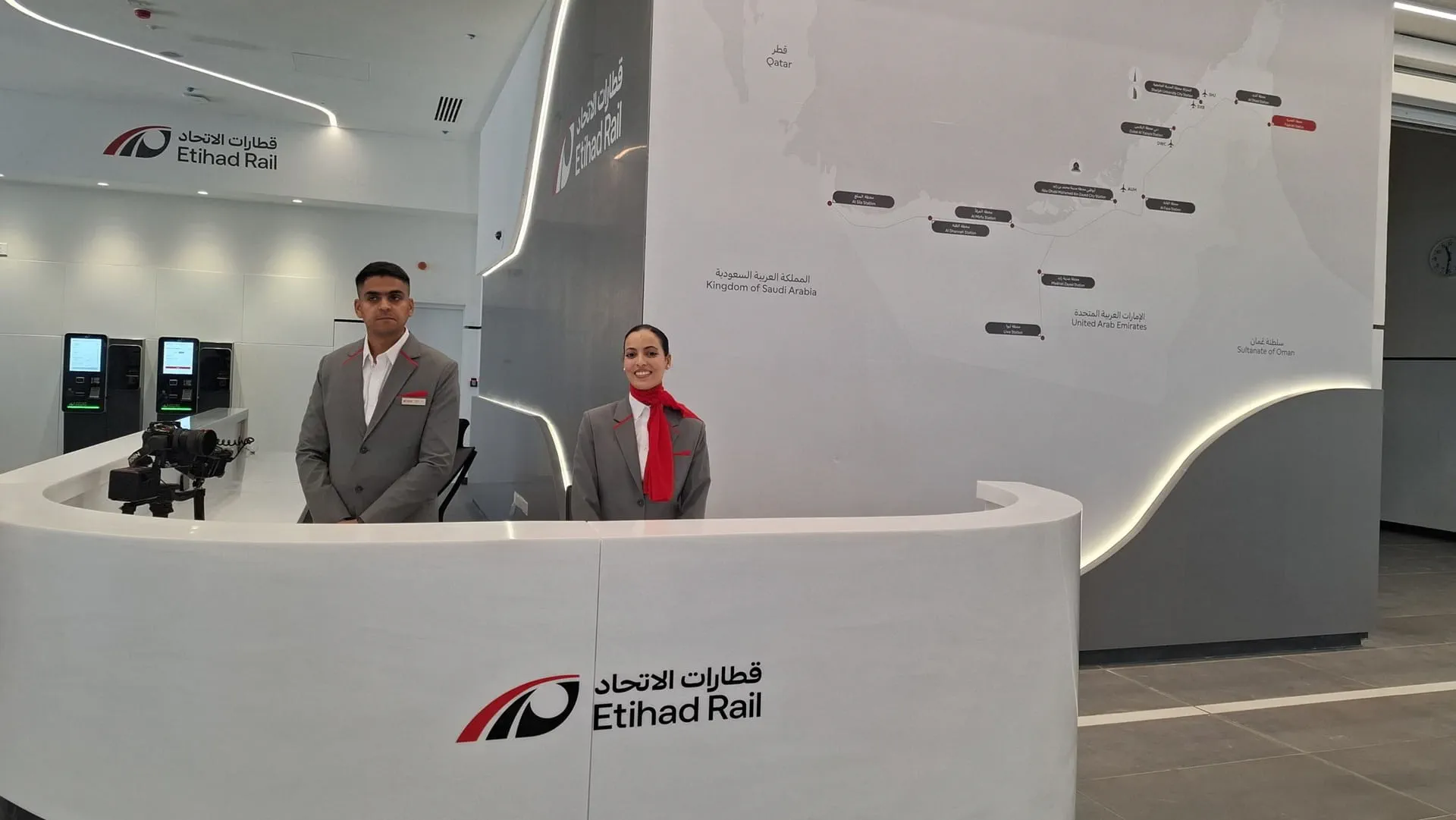
Shadi Malak emphasised that the national railway network plays a key role in integrating the transport system by linking ports, borders, and logistics zones. Since freight operations began in February 2023, it has boosted trade and economic growth, with expanding capacity to meet increasing demand.

 For an optimal experience, please
rotate your device to portrait mode.