
Loading...
Loading...

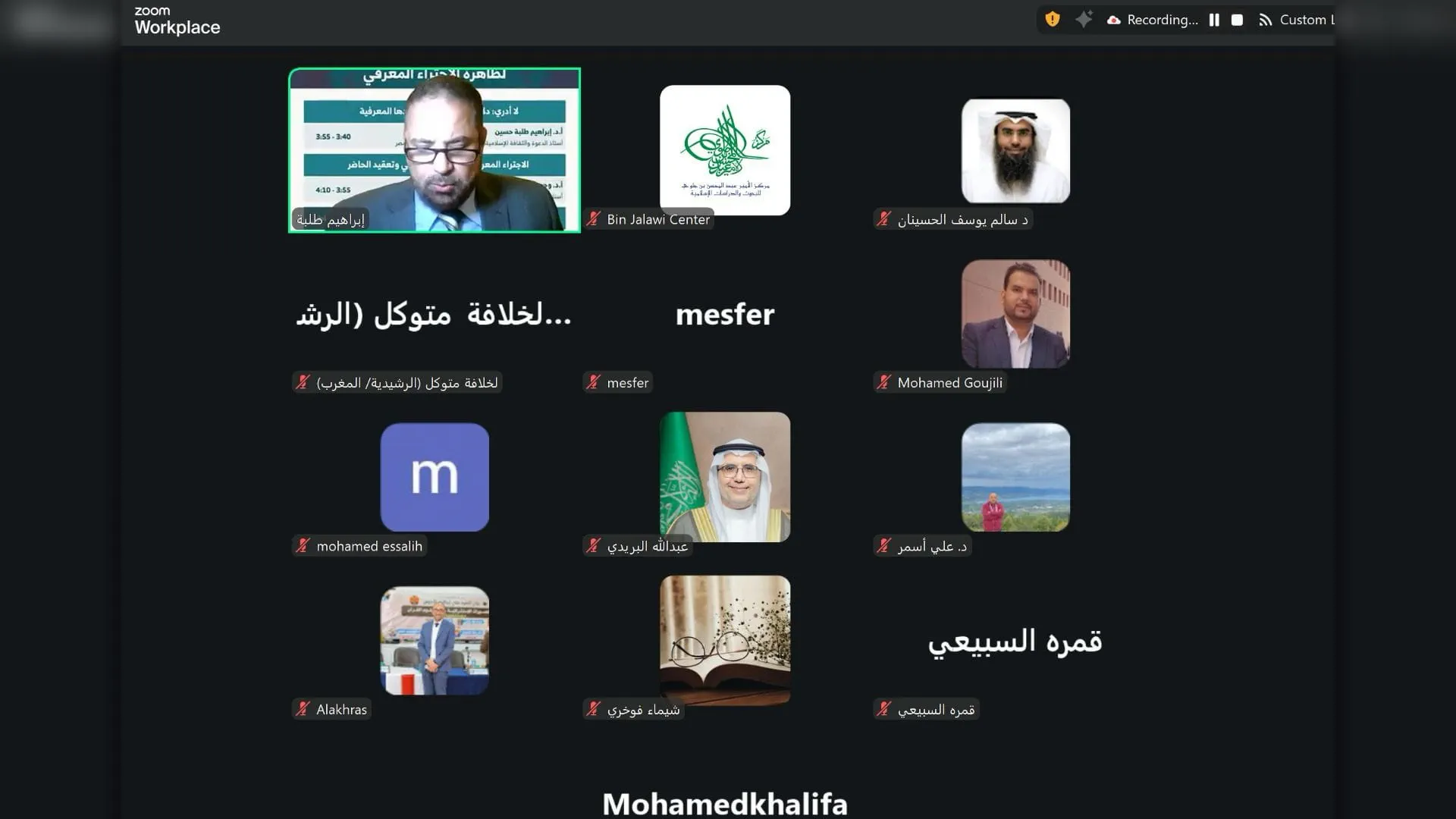
Participants adopted a set of concise recommendations aimed at enhancing knowledge ethics, strengthening value-based and intellectual resilience, promoting disciplined scholarly courage, and encouraging linguistic pride, alongside prudent engagement with the digital world and responsible use of generative artificial intelligence.
The symposium called for defining the concept of cognitive overreach and distinguishing it from legitimate scientific boldness. It recommended compiling a glossary of common religious and intellectual terminology to safeguard originality and prevent misuse. It also urged reviewing curricula in the humanities and Islamic sciences to enhance critical thinking and embed values, while incorporating digital and AI-related issues into student and scholar training.
Participants emphasised directing academic research towards studying cognitive overreach in media and digital spaces and assessing its impact on societal values and knowledge identity. They called for legal frameworks that prevent impersonation of expertise and the spread of misinformation, and for strengthening the role of fatwa bodies, fiqh academies, and academic institutions in safeguarding terminology and protecting religious discourse.
The symposium emphasised the importance of fostering a culture of “I do not know” as a form of scientific humility, and encouraged mindful engagement with virtual spaces through expert teams monitoring and correcting content. It highlighted that generative AI should serve as a supportive tool, not a substitute for established human expertise. It also called for strengthening linguistic pride by supporting Arabic in education, media, and research, and reducing narratives that weaken linguistic identity.
The recommendations, widely endorsed by participating scholars, serve as an open appeal to scientific, research, and media institutions, as well as decision-makers, to adopt practical programmes that translate these principles into policies that uphold knowledge ethics, safeguard values, and protect the intellectual domain from oversimplification and cognitive overreach.

 For an optimal experience, please
rotate your device to portrait mode.