
Loading...
Loading...

Introducing the speaker
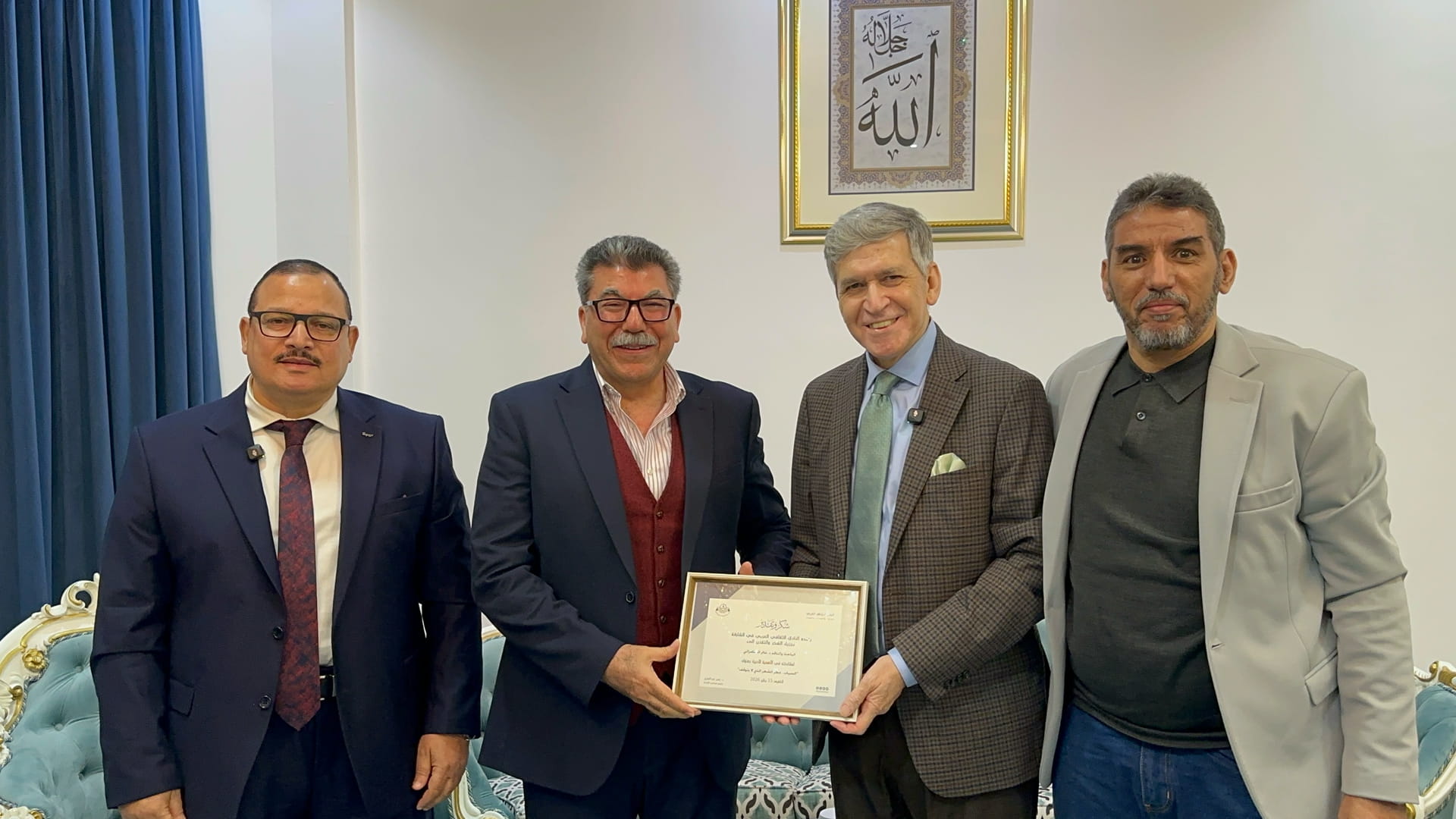
In his opening remarks, Faraj highlighted Dr Al Samarrai’s academic background in comparative literature and literary translation, noting his PhD from the University of Portsmouth and his extensive contributions to poetry, drama, translation and literary research.
Why Al-Sayyab today?
Dr Al Samarrai argued that revisiting Badr Shakir Al-Sayyab today is not an act of nostalgia, but a reawakening of an ongoing poetic condition. He said Al-Sayyab represented the beginning of a crisis of meaning, one that contemporary culture now fully inhabits, marked by fragmentation and anxiety.
Poetry, myth and rhythm
He explained how Al-Sayyab transformed imagery and symbolism into complete mythic structures, citing “Rain Song” as an example. He also noted that Al-Sayyab’s shift to free verse was a psychological and existential necessity rather than a purely aesthetic choice.
Key moments in Al-Sayyab’s life
Dr Al Samarrai discussed decisive moments in Al-Sayyab’s life, including his academic choices, his rejection of Western exile, and his spiritually elevated poem “The Book of Job”, written amid illness.
A call for re-reading
He concluded by stressing the need to reread Al-Sayyab deeply and to re-employ his creative anxiety within contemporary Arab culture, seeing his modernity as an existential stance rather than a technical innovation alone.

 For an optimal experience, please
rotate your device to portrait mode.