
Loading...
Loading...

The UAE has been ahead of many global markets in developing regulatory frameworks that allow start-ups to experiment and grow. Over the past few years, companies based in the UAE have launched advanced business models, reaching markets on four continents, supported by strong digital infrastructure and business-friendly legislation.
Challenges of going global
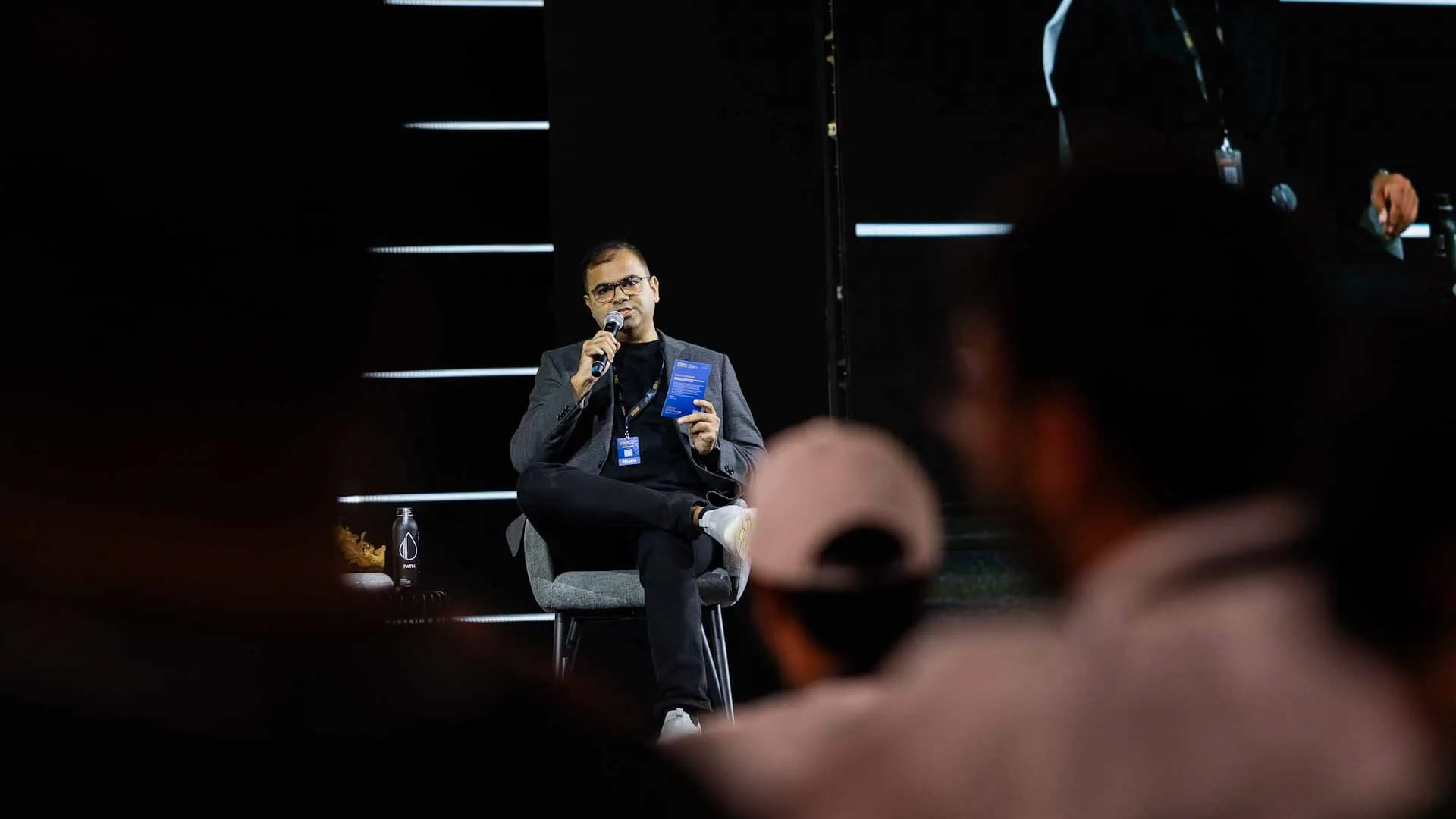
In a session titled “Scaling tech champions in the Middle East”, Hamad Al Khayal, Vice President of IT Solutions at Emirates Petroleum, and Akif Gadit, co-founder of Disrupt.com, discussed the obstacles start-ups face when expanding internationally. Shaden Khalaf, head of public policy at the International Communication Institute for North Africa and the Caribbean, moderated the discussion.
Al Khayal explained that many entrepreneurs assume all markets have the same digital maturity. “Start-ups often begin in environments with fully integrated digital platforms, as if on a fast lane,” he said. “They then discover that many other markets have limited connectivity or underdeveloped infrastructure.” He added that a product built for perfect internet conditions may succeed locally but is unlikely to scale globally. Flexible, adaptable technology layers are essential.
He also stressed that moving from personal networks to data-driven decision-making is crucial for global growth. Many start-ups overlook building scalable data systems at an early stage, which later limits expansion.
AI as a tool, not a replacement
Addressing concerns about AI, Al Khayal said its goal is not to replace humans but to enhance their work. Automating repetitive tasks allows staff to focus on roles that require human skills, such as communication and relationship building. “AI is first and foremost a business project,” he said. “Only 20 per cent of its success is technology; the rest comes from changing mindsets and organisational practices.”
Culture and agility give start-ups an edge
Akif Gadit, highlighted that start-ups, despite lacking the resources of large corporations, have speed and culture on their side. “Organisational culture is now the main competitive advantage,” he said, especially when technology is widely accessible. Gadit, also noted that founders must maintain momentum by setting new challenges regularly, even after financial stability, to avoid complacency.
From the UAE to the world
Disrupt.com has launched four global companies from the region, each exceeding $100 million in revenue, with two successfully acquired by publicly listed American firms. Gadit, described the UAE as “the ideal environment to build global companies from day one,” thanks to its capital, talent pool, strategic location, and ambitious culture.
He added that clear regulations in areas such as Web3 during 2023–2024 enabled the launch of an AI-powered, Sharia-compliant investment platform, demonstrating how proactive legislation can support innovation. “The UAE has become a global example of government and private sector collaboration, helping companies anticipate trends and seize opportunities,” he concluded.

 For an optimal experience, please
rotate your device to portrait mode.