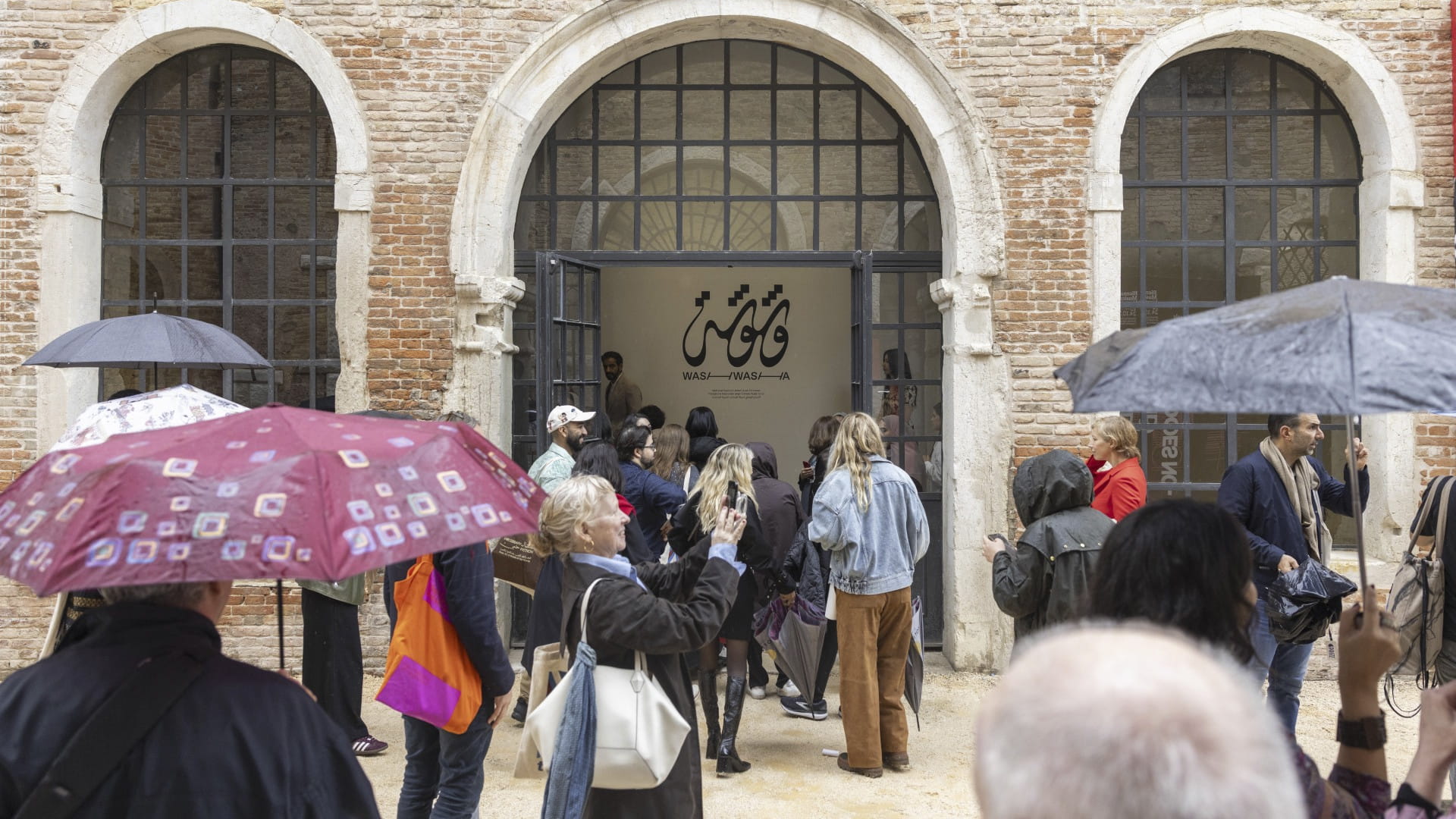
Sharjah24: Coinciding with the opening of the 61st International Art Exhibition at the Venice Biennale, the UAE National Pavilion has officially opened its doors to visitors in Venice following preview days held from 6 to 8 May. Its latest exhibition, Whispers, is curated by Bana Kattan and Tala Nassar and brings together works by six artists: Alaa Edris, Mais Albaik, Jawad Al Malhi, Farah Al Qasimi, Lamya Gargash and Taus Makhacheva.
A global invitation to listen
Leila Bin Breik, Director of the UAE National Pavilion, described the exhibition as “a global invitation to listen to the memory of the UAE’s creative community”. She said the exhibition goes beyond presenting artworks, instead tracing the journey of a society that has preserved its identity and oral history amid rapid technological and architectural transformation.
Bin Breik added that the exhibition celebrates six artists whose practices reflect the depth of the UAE’s cultural landscape, including creatives who began their journeys through the pavilion’s training programme and are now presenting their work on one of the world’s leading art platforms.
Exploring sound, memory and identity
Rather than a conventional exhibition tour, Whispers offers an immersive exploration of sound, memory and social connection. The exhibition examines hidden voices, untold stories and forms of communication that shape both personal and collective identity.
Among the highlights are Alaa Edris’ wooden animatronic sculptures with rotating electronic eyes and white-noise soundscapes reflecting the anxieties of modern life.
Revisiting communication and collective memory
Jawad Al Malhi revisits the living memory of Jerusalem through recordings of elderly men recounting rituals linked to the historic Hammam Al Ain bathhouse in East Jerusalem. Farah Al Qasimi explores evolving methods of communication, from carrier pigeons and traditional tribal vocal calls to the use of artificial intelligence in translation.
Lamya Gargash documents Emirati majlis spaces in all their diversity, revealing how hospitality and memory remain embedded within these social environments. Taus Makhacheva, meanwhile, examines gossip as a performative and social act through choreography, costumes and an installation of 52 3D-printed loudspeakers broadcasting overlapping apology emails.
Architecture shaped by sound
The exhibition’s architectural design by B–KD transforms the pavilion into an acoustic journey, guiding visitors from moments of quiet listening to immersive layers of noise and sound.
Whispers also revisits the history of broadcasting in the UAE, including the establishment of Ajman’s first radio station in 1961 through the programme Sawt Al Bilad, connecting archival voices with contemporary everyday sounds.
Cultural diplomacy through art
The UAE’s continued participation in the Venice Biennale reflects the country’s long-term commitment to cultural diplomacy, offering artists an international platform to engage global audiences through contemporary artistic expression.
The pavilion has become a strategic cultural platform showcasing both established and emerging talent, reinforcing the UAE’s position as a leading regional and global centre for creativity and innovation.




 For an optimal experience, please