
Loading...
Loading...

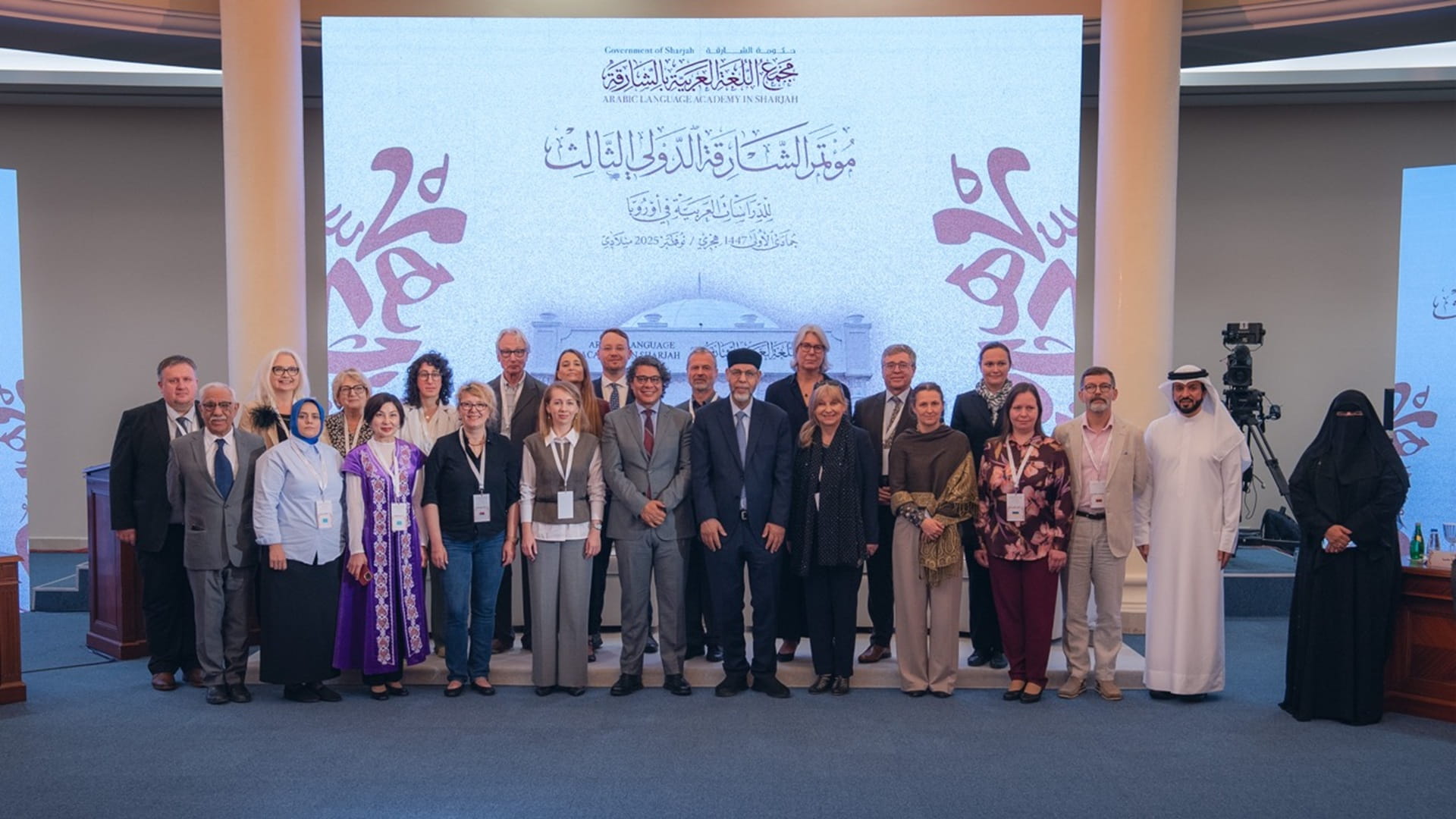
The conference, held under the patronage of His Highness Sheikh Dr Sultan bin Mohammed Al Qasimi, Supreme Council Member and Ruler of Sharjah, and President of the Sharjah Arabic Language Academy, featured 24 researchers and academics from 19 European countries. The studies addressed the conference's main themes: the migration of Arabic words into other languages, methodologies for teaching Arabic to non-native speakers, the translation of Arabic literature and its impact on the dissemination of the language, and the critical edition of Arab and Islamic heritage texts.
The conference was inaugurated under the patronage of His Highness Sheikh Dr Sultan bin Mohammed Al Qasimi, Supreme Council Member and Ruler of Sharjah. The third edition aims to highlight the origins of European languages and their relationship to Arabic, uncover the linguistic, social, and human heritage of nations, focus on translation methodologies and ways of communication between civilizations, examine European literature influenced by Arabic and its impact on the dissemination of the language, utilise human resources and research skills to serve Arabic in Europe, and draw attention to Arabic and Islamic manuscripts hidden in European library archives.
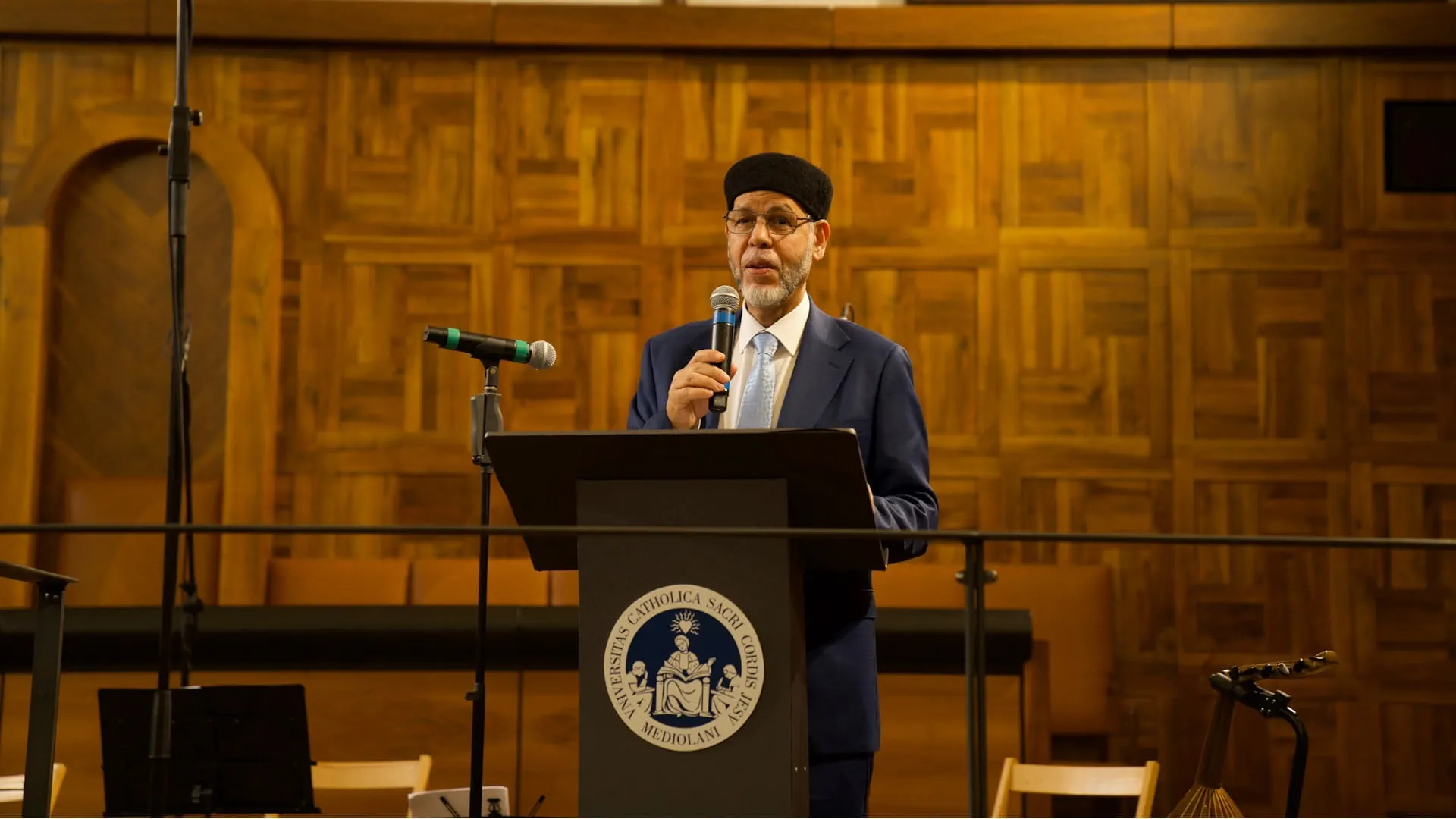
During the opening session, Mohamed Safi Al Mosteghanemi, Secretary-General of Arabic Language Academy in Sharjah, welcomed participants, emphasising that these scholarly gatherings have become a landmark in promoting the Arabic language globally. He highlighted the conferences’ role in bringing together leading Arabists and researchers from East and West, offering a platform for knowledge exchange that contributes to Arabic’s continued presence in academic research. Dr Al Mosteghanemi also pointed to the value of sharing experiences to promote Arabic and its civilizational and humanistic significance.
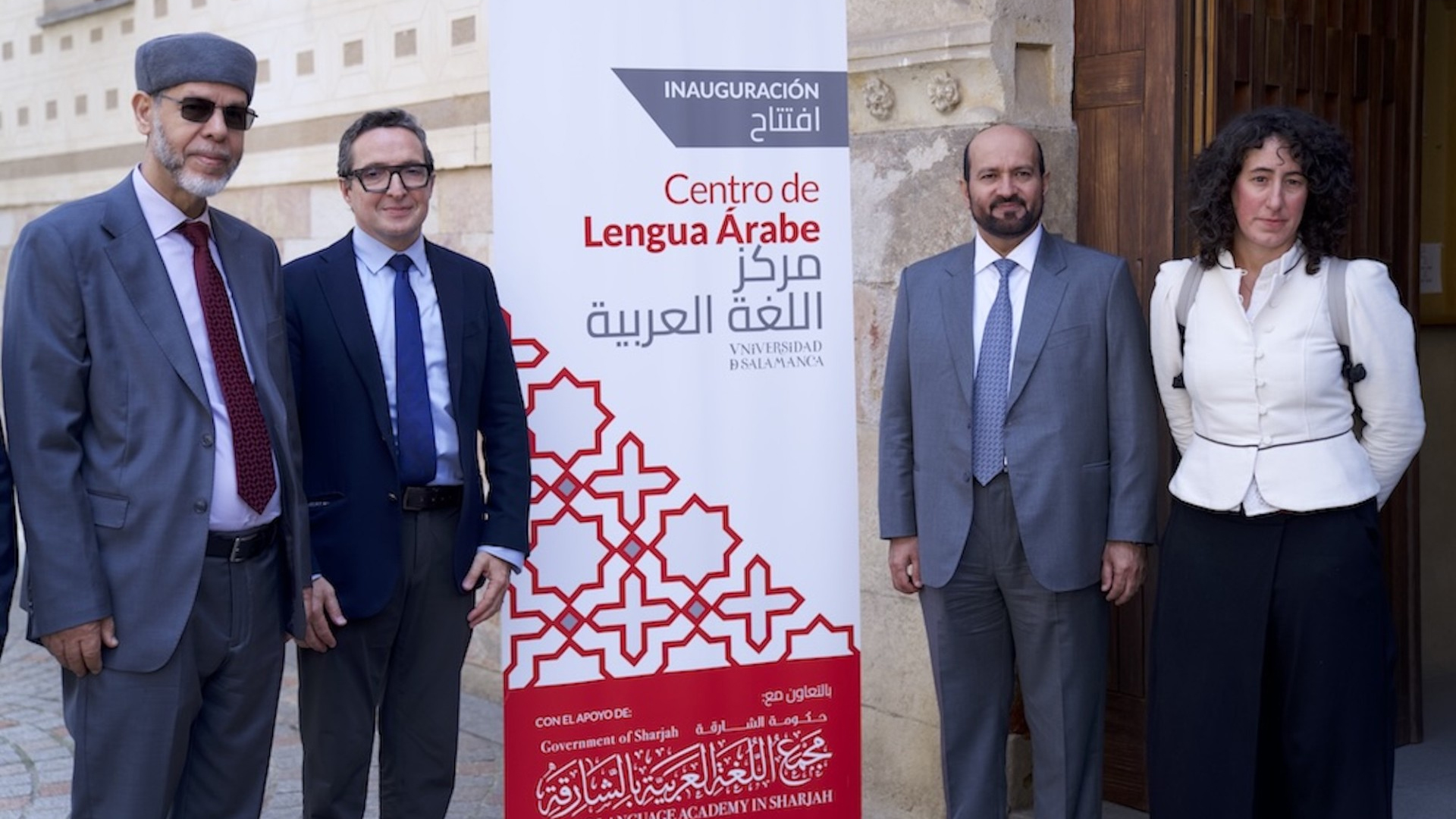
The conference began with two panel discussions entitled "The Migration of Arabic Words into Other Languages." Participants included Dr Khairuddin Hodžić from Bihać, Bosnia and Herzegovina; Dr. Petra Sebastián from Leiden University, Netherlands; Dr Smal Tuleubaeva from Eurasian National University; Dr Peter Zimanek from Carl University Prague, Czech Republic; Dr Wael Farouk from the Catholic University of the Sacred Heart in Milan, Italy; and Dr Laura Gago from the University of Salamanca, Spain. The first session was moderated by Dr Mariam Balajid and the second by Dr. Issa Al-Hammadi.
The first session featured presentations on the transmission, phonetic adaptation, and semantic change of Arabic words in Bosnian, the use of medieval Arabic texts to teach daily life in Abbasid Baghdad at Leiden University, and the trajectory of Arabic words in the Kazakh language. The second session focused on Arabic words in Czech and other Central European languages, the Arabic origins of scientific terminology, and the influence of Arabic on Spanish throughout history.
The third session, titled "The Translation of Arabic Literature and Its Impact on the Spread of Arabic," featured Professor Arben Chichi, Vice-Rector of the Mediterranean University of Albania; Professor Igdonas Rachos; and Dr Elisabeth Foti, Professor Emeritus at the University of Lyon III. The research presented covered the translation movement of Arabic literature in 21st-century France, the role of Arabic translation as a tool of cultural diplomacy and in shaping cultural diversity in international relations, and the translation of the Qur’an into Lithuanian, examining whether it focused on literary meanings or literary translation of meanings.
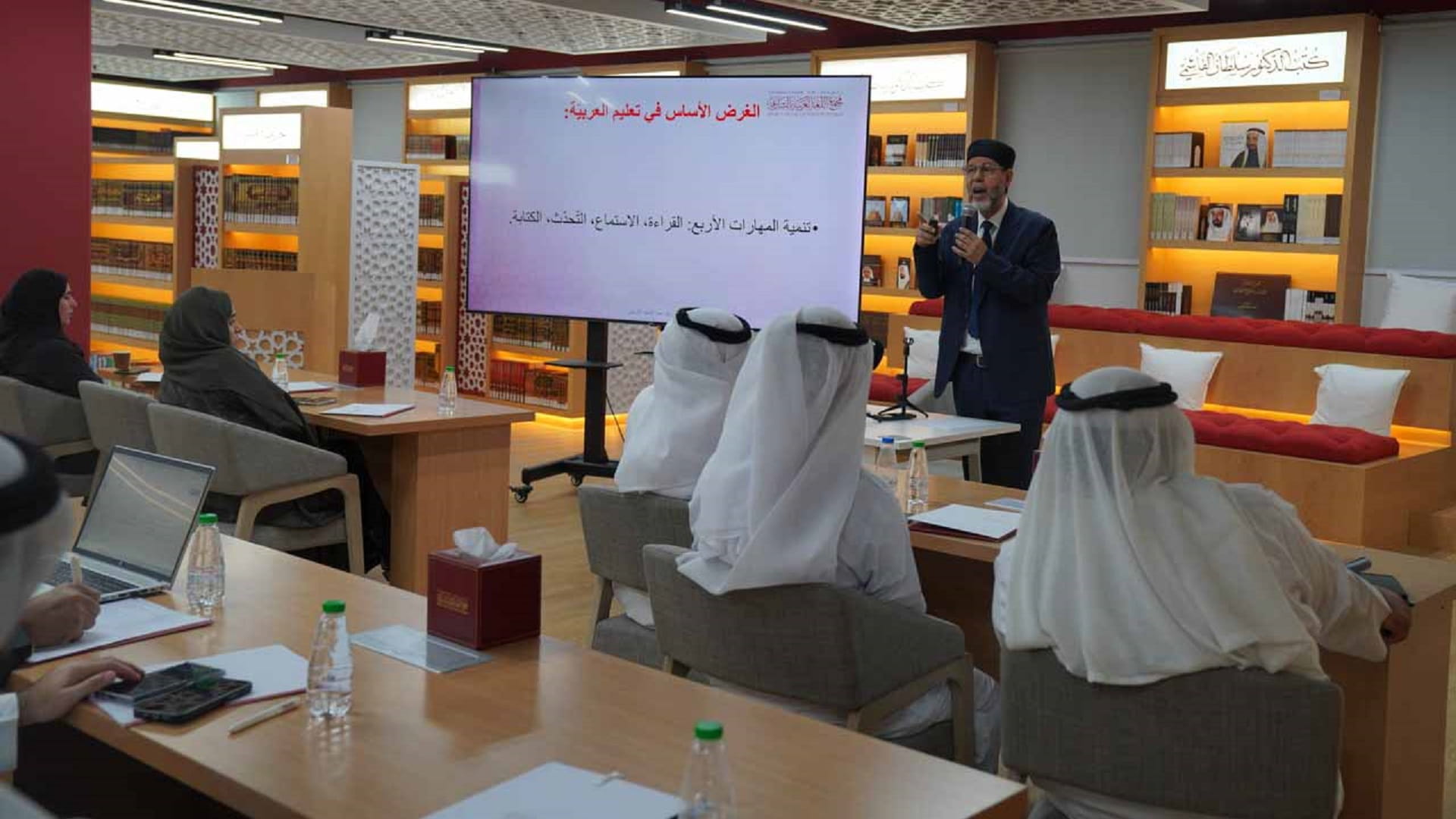
The first day concluded with a panel discussion titled "Methodologies for Teaching Arabic to Non-Native Speakers," featuring Dr Sebastian Günther from the University of Göttingen, Germany; Dr. Magdalena Levitska; Dr Mariana Massa from the Catholic University of Milan; and Dr Fatima Mamedova from Al-Farabi University, Kazakhstan. The session was moderated by Heba Hisham.
Speakers presented studies on teaching classical Arabic literature to non-Arabic speakers, prospects for teaching Arabic in Kazakhstan, and the role of mobile applications in Arabic education. They also discussed the importance of Islamic-referenced terms and expressions in shaping cultural competence and intercultural communication through Arabic teaching.

 For an optimal experience, please
rotate your device to portrait mode.