
Loading...
Loading...

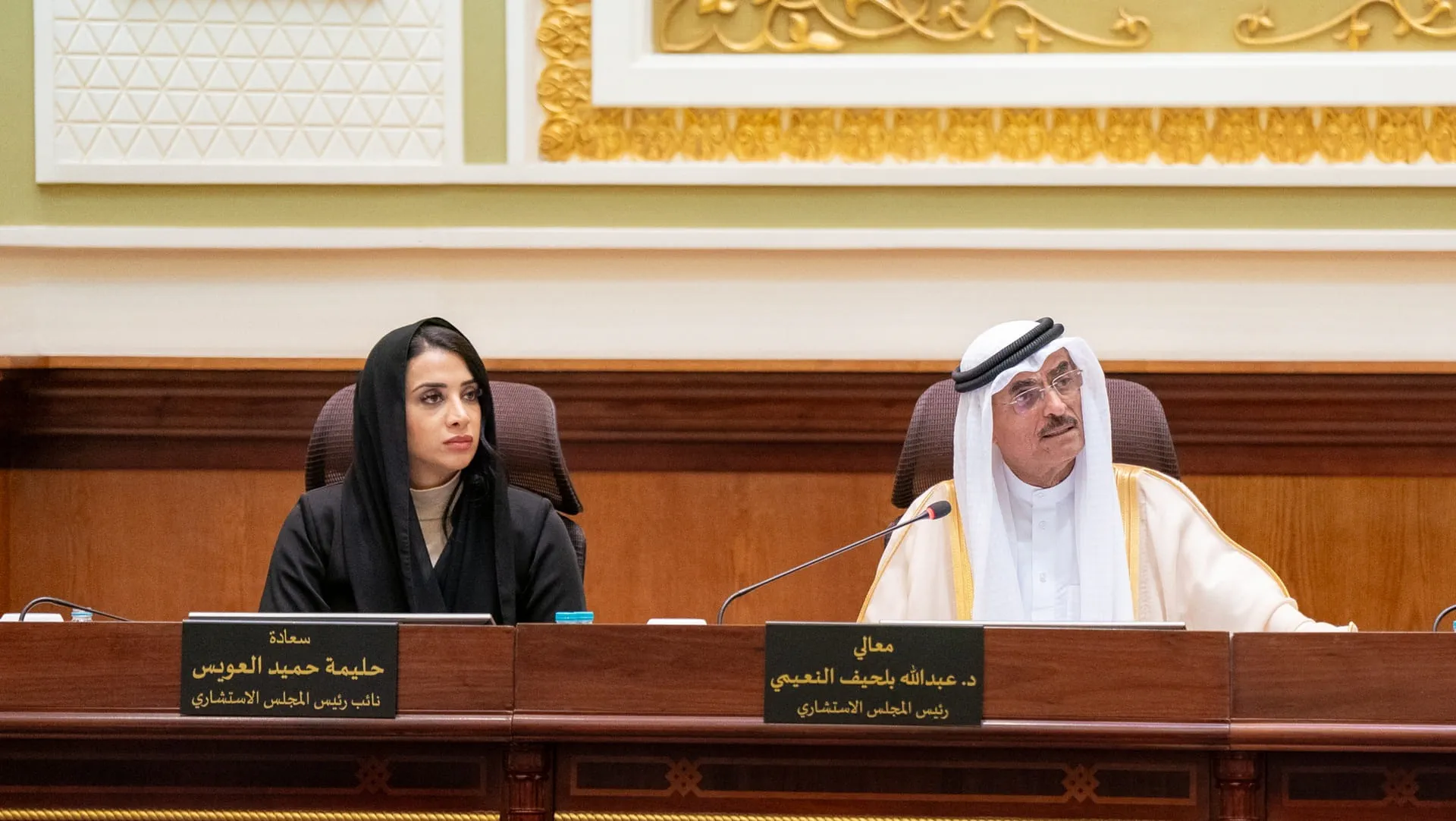
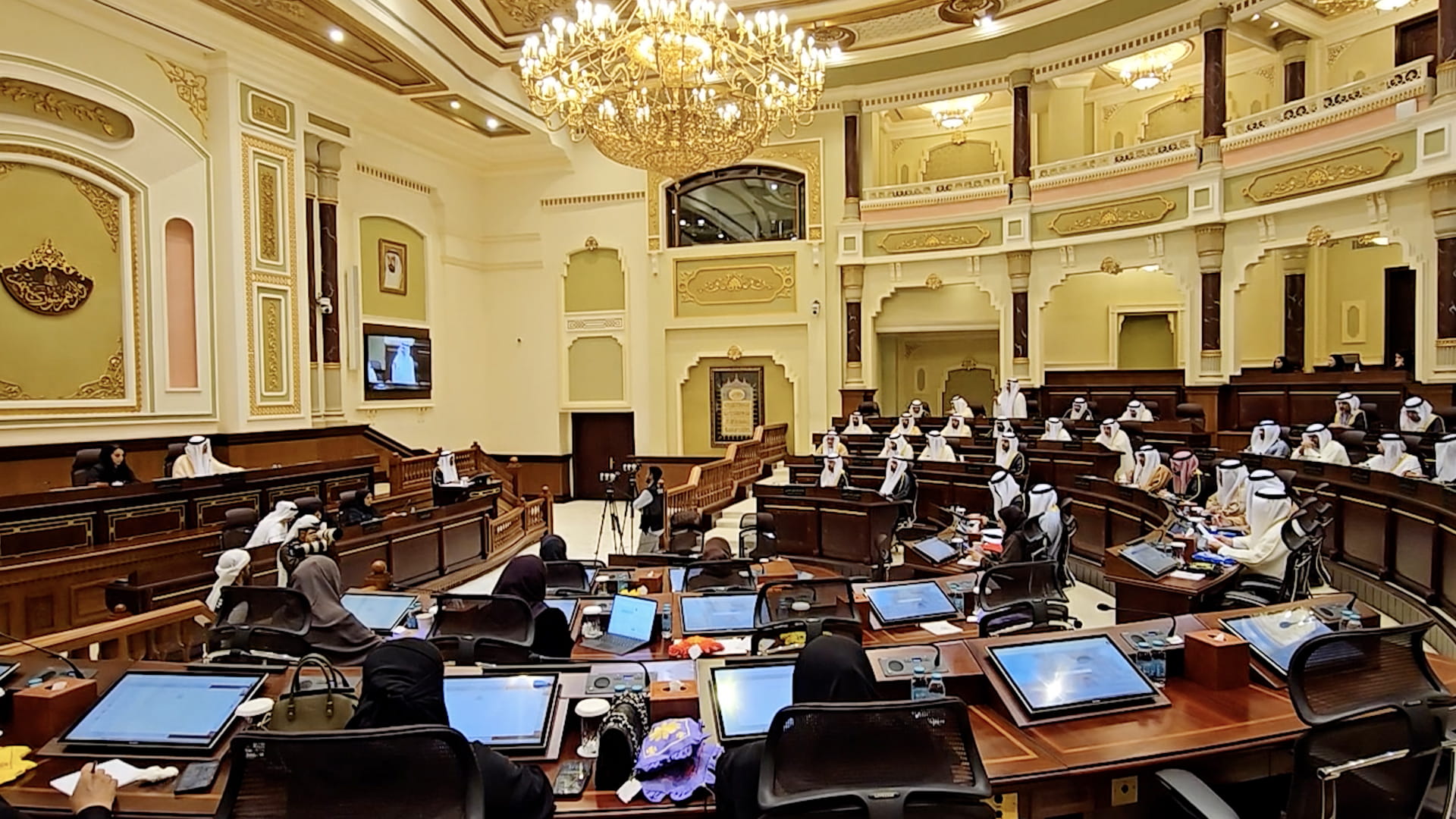
During its ninth session of the third ordinary session of the eleventh legislative term, held yesterday morning at the Council's headquarters in Sharjah under the chairmanship of His Excellency Dr Abdullah Belhaif Al Nuaimi, Chairman of the Council, the Sharjah Consultative Council called for continued support for integration and the development of work mechanisms to serve the citizens and residents of the Emirate of Sharjah, in line with its recommendations, which it approved.
During the session, the Council discussed the recommendations received from the Committee's Draft Recommendations on the Policy of the Department of Public Works, and then the recommendations received from the Committee for the Preparation of the Council's Draft Recommendations on the Policy of the Sharjah Department of Human Resources, which was read out by Dr Sultan Khamis Al Zaabi, Rapporteur of the Committee.
The session was chaired by Her Excellency Halima Humaid Al Owais, Vice Chairman of the SCC, and attended by the Council to discuss its recommendations on the Department of Public Works' policy. The Committee's rapporteur, Dr Sultan Khamis Al Zaabi, said during the reading of the draft recommendations: The Sharjah Consultative Council discussed the policy of the Sharjah Department of Public Works (SDPW) at its seventh plenary session on Monday, 16 Rajab 1447 AH, corresponding to January 5, 2026, as part of its work for the third ordinary session of the eleventh legislative term, in the presence of His Excellency Engineer Ali Saeed bin Shaheen Al Suwaidi, Member of the Executive Council of the Emirate of Sharjah and Chairman of the Department of Public Works, and his accompanying attendees, after the Council discussed all the axes that support the work system in the Department.
The members reviewed the summary of the plenary session, which was dedicated to discussing the public works policy and the axes it included that support the work system in the Department and enhance its aspirations to achieve the desired development goals. The Sharjah Consultative Council issued a package of important recommendations to enhance the performance and effectiveness of the policies and the role of the Department of Public Works in the Emirate, with the aim of supporting the sustainable development process and raising the level of services provided to the community.
In its recommendations, the Council emphasised strengthening institutional coordination between the Department of Public Works and the relevant government agencies through the adoption of clear, binding coordination mechanisms at all stages of projects, from planning and design through to implementation. This aims to improve completion efficiency, reduce duplication and overlap, and achieve integration with the emirate's comprehensive urban plan, thereby supporting efficient government spending and enhancing the sustainability of urban development.
The Council also recommended adopting a comprehensive and sustainable quality system by enhancing technical and supervisory standards in the implementation of government projects. The recommendation included the development of preventive maintenance policies to extend the lifespan of facilities, while maintaining service quality and adhering to the highest standards of safety and security at all stages.
The recommendations also emphasised the need to accelerate the development of critical infrastructure projects, particularly sewage projects and stormwater drainage networks, through an effective partnership with the private sector. This is to ensure the integration of infrastructure, reduce environmental impacts, and achieve the highest standards of public health and sustainability across all regions of the Emirate.
The recommendations also called for the adoption of sustainable construction techniques and the use of environmentally friendly materials in all government projects, while rationalising energy and water consumption, improving the operational efficiency of buildings, and optimising the use of the emirate's natural resources. On another axis, the Council stressed the importance of promoting digital transformation within the Department to raise transparency and efficiency in the management of projects and tenders. It also recommended ensuring the readiness of vital facilities for emergencies to ensure the continuity of service delivery, support occupational safety, and protect lives and property.
These recommendations were discussed within the Consultative Council for the Policies of the Department of Public Works, based on its role in supporting the development process and serving the public interest in the Emirate of Sharjah.
The Council then discussed its recommendations on the policy of the Department of Human Resources. During the reading of the draft recommendations, the Committee's rapporteur, Dr Sultan Khamis Al Zaabi, stated that the Sharjah Consultative Council discussed the policy of the Department of Human Resources at its eighth plenary session on Monday, 30 Rajab 1447 AH, corresponding to January 19, 2026, as part of its work for the third ordinary session of the eleventh legislative term, in the presence of His Excellency Abdullah Ibrahim Al Zaabi, Member of the Executive Council of the Emirate of Sharjah and Chairman of the Department of Resources, and the accompanying attendance, after the Council discussed all the axes that support the work system in the Department.
At its ninth session, the Sharjah Consultative Council issued a set of strategic recommendations on the Department of Human Resources' policy, with the aim of developing the employment environment, enhancing the capabilities of national cadres and ensuring the stability of the labour market in the Emirate.
The Council's recommendations emphasised the need to enhance coordination and cooperation between the Department of Human Resources, the authorities concerned with Emiratisation, and private sector institutions. She stressed the importance of developing the capabilities of Emiratis seeking employment and of providing a comprehensive financial package (salaries, allowances and incentives) in the private sector that is appropriate and comparable to that in place in the Sharjah government, to attract and retain national competencies.
The Council also recommended introducing a legal provision that allows the Department to notify employees who will be referred for retirement well in advance of the date of referral. This recommendation aims to ensure the functional, social and family stability of employees and to enable them to plan for the next phase.
The recommendations also emphasised the need to use labour market data and future job trends, particularly in technical and engineering disciplines, to identify the causes of the gap between academic outcomes and current and future real market needs. In the area of Emiratisation, she called for the governance of Emiratisation and job replacement policies, setting clear timetables for implementation and addressing the reasons for the continued occupancy of specific positions by non-nationals, even when they do not require rare specialised expertise. The Council also stressed the need to reconsider the harmonisation of the employment standards in force in the Department and the extent to which they are compatible with reality, in light of the annual increase in the number of Emirati job seekers in the Emirate.
Recommending that the files of citizens working in the private sector be kept open and not closed once they join the workforce, to ensure the sustainability of the benefit of national competencies, consolidate the principles of justice in providing opportunities, and encourage professional mobility towards the government sector, while emphasising coordination with the Digital Department to establish a unified database to track and classify applicants according to their qualifications and experience
The recommendations also called for efforts to unify policies and human resources systems across government entities, particularly in relation to performance appraisal systems, promotions, and career paths. She also emphasised the importance of implementing programmes to prepare and qualify second- and third-grade leaders to promote a culture of excellence and raise institutional productivity.
In its recommendations, the Council emphasised the adoption of clear and comprehensive policies to employ and empower persons with disabilities who are able to be productive, and to expand the scope of their effective participation across various career fields. This reflects the Emirate of Sharjah's firm commitment to social inclusion policies and to the use of all national energies and potentials.
The Speaker of the Council thanked the Committee for the Preparation of the Draft Recommendations, the Public Utilities Committee in the Council, and the members of the applicants for their appreciated efforts in participating in the preparation and good preparation of the topic under discussion.
At the end of the session, the Secretary General of the Council, Her Excellency Mira Khalifa Al Muqrrab, announced that the next session, the tenth, will be held on Monday, February 16, and will discuss the real estate registration policy in the Emirate of Sharjah.

 For an optimal experience, please
rotate your device to portrait mode.