
Loading...
Loading...

The forum focused on health challenges associated with avian influenza and the need to identify stable pathways for local species, as well as the routes through which invasive species spread. Review sessions emphasised implementing the Indian House Crow Management Guide, including prevention, awareness, monitoring, the removal of gatherings, and early surveillance of ports and coastal areas, while considering the birds’ intelligent behaviour.
Participants also emphasised integrating multiple strategies, such as poisoning, nest destruction, and oiling eggs to limit reproduction, while leveraging artificial intelligence to assess the feasibility of eradication, enhance early monitoring, and access resources from the International Union for Conservation of Nature (IUCN).
The “Toxicology and Seabird Examination” session highlighted Sharjah’s pioneering efforts to monitor environmental and marine wildlife health. Collaborating with Sharjah Municipality laboratories, the team tracked seabirds’ ingestion of solid waste, microplastics, and oils, and examined epidemic diseases, ensuring the safety of both the ecosystem and wildlife as part of the Sharjah Marine Stranding Response Program.
The forum offered intensive training in avian forensic necropsy, led by Dr. Daniela Denk and Dr. David Roberts. The training covered reviewing medical history, measuring weight, conducting external examinations for trauma and parasites, assessing feather condition, and performing systematic internal examinations. Critical indicators such as haemorrhages in the tongue or cranial cavity, liver lesions, eye exudates, and sterile brain swabs for viral testing were highlighted. Experts demonstrated efficient techniques for fieldwork and for distinguishing pre-mortem trauma from predator damage, thereby enhancing regional capacity for scientific diagnosis and environmental response.
Professor Fatin Samara and Dr Lara Dronjak linked environmental health to human activities, emphasising heavy metals, persistent organic pollutants, and microplastic contamination found in all examined seabirds, primarily as fibres from synthetic textiles, indicating human impact on marine ecosystems.
The IUCN Sea Snake Specialist Group, co-chaired by Dr Vinay Udyawer and Dr Aaron Lobo, continued its first global reassessment since 2009 by integrating local data, such as oil spill impacts, with global perspectives to assess extinction risks for all 72 sea snake species.
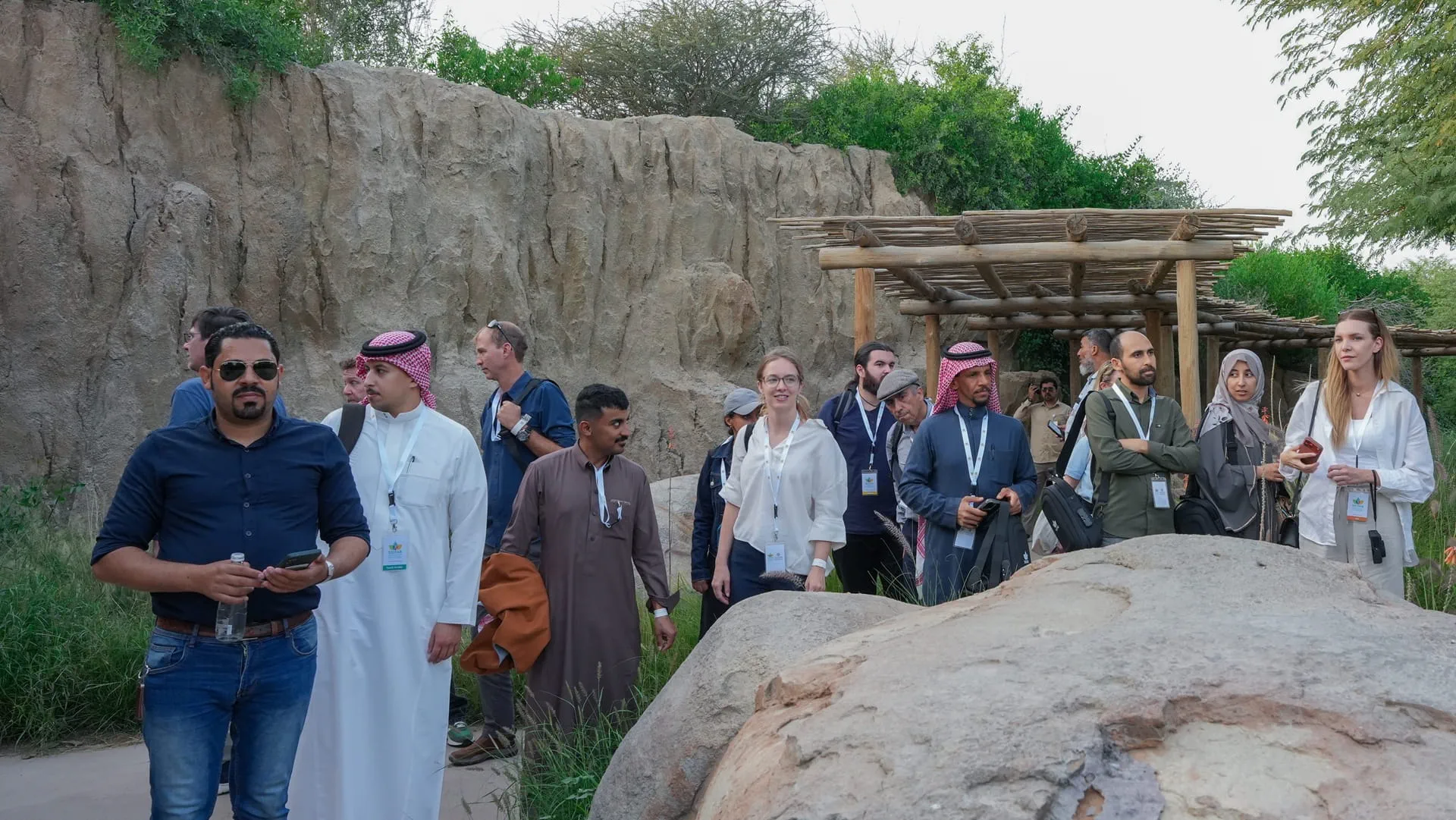
The forum concluded with a safari tour of Sharjah Safari, linking scientific discussions to practical wildlife management and protected area conservation. Collectively, the sessions underscored that effective biodiversity stewardship relies on scientific accuracy and practical skills, strengthening regional capacity to monitor, diagnose, and respond to environmental challenges across the Arabian Peninsula.

 For an optimal experience, please
rotate your device to portrait mode.