
Loading...
Loading...

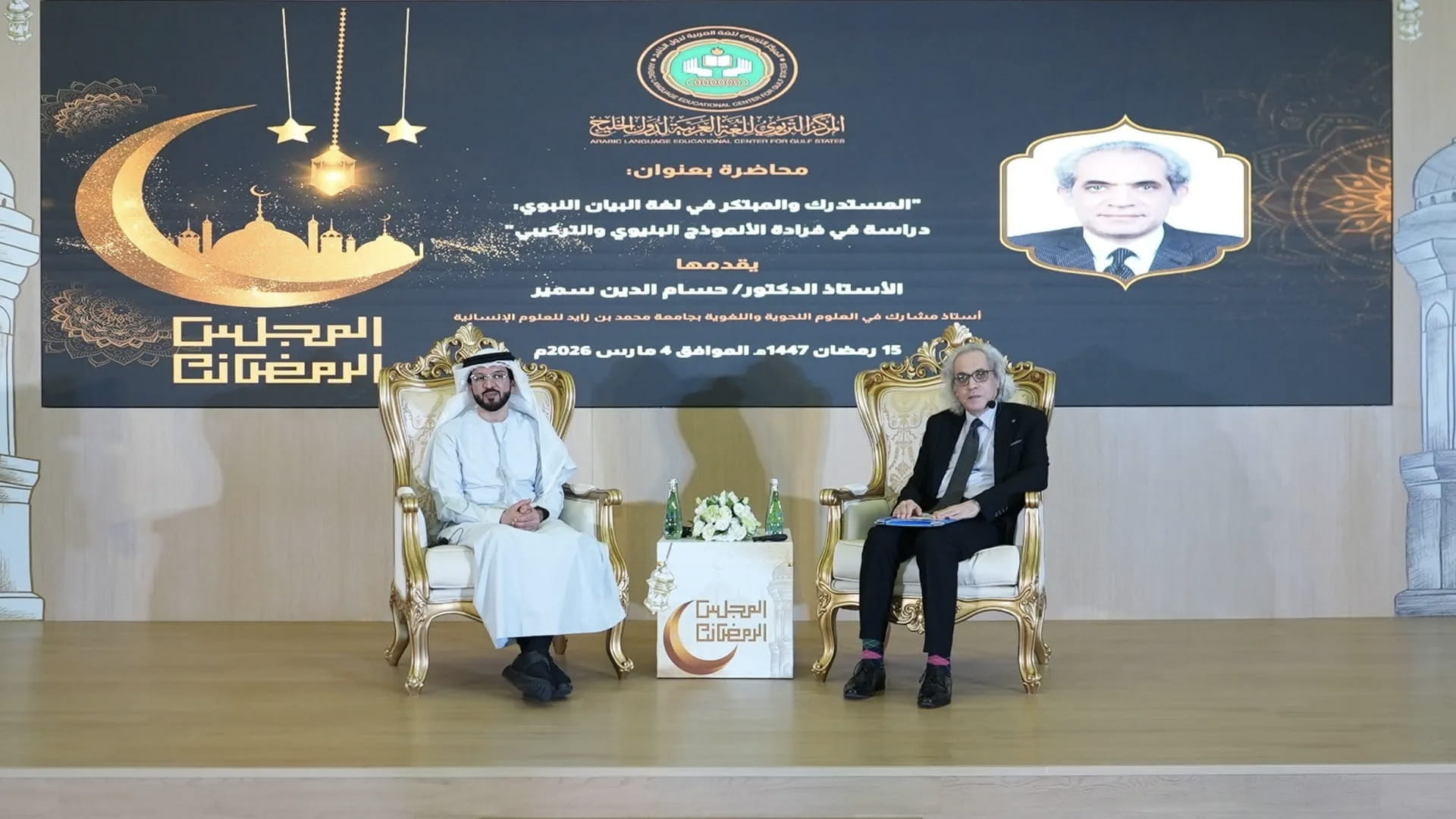
Dr Issa Al Hammadi opened the session by welcoming attendees and extending Ramadan greetings. He noted that the centre’s Ramadan council represents an academic and cultural platform aimed at encouraging intellectual dialogue on Arabic language issues and its major rhetorical sources. He added that the lecture highlights one of the most important sources of Arabic eloquence — Prophetic rhetoric — with its unique linguistic and rhetorical characteristics that have enriched linguistic and rhetorical studies throughout the centuries.
During the lecture, the speaker presented several academic themes offering an analytical reading of the language of the noble Prophetic traditions. He reviewed the methodological and conceptual foundations related to the study’s key terms, including “al-Mustadrak”, “innovation”, and “Prophetic rhetoric”.
He also highlighted the distinguished linguistic status of the Prophetic hadith as one of the most important sources of linguistic evidence after the Holy Quran, given its eloquence, rhetorical richness and expressive depth. He explained that Arab scholars have given considerable attention to hadith in the fields of interpretation, rhetoric, literature and linguistics, while their views varied regarding its use as evidence in grammar and morphology due to the precision required in these disciplines.
The lecture also addressed the technical concept of hadith and its relation to the terms “khabar” (report) and “athar” (narration). It explained that in hadith scholarship the term refers to what is attributed to the Prophet Mohammed (peace be upon him), whether in word, action, approval or description.
The speaker also reviewed how the companions transmitted these traditions through direct hearing, observation or narration from one another, emphasising their great care in preserving and accurately conveying them across generations.
The lecture further focused on what are known as short hadith — concise sayings consisting of one or two sentences that convey a complete meaning. The speaker explained that such narrations are among the most precise in verbal transmission and are highly valuable for linguistic analysis due to their brevity and ease of memorisation.
He noted that conciseness is one of the most prominent features of the Prophet’s language, where brief expressions convey deep meanings. Many sayings have consequently become widely used proverbs in Arabic, such as “The upper hand is better than the lower hand” and “Exchange gifts and you will love one another.”
The speaker concluded that the study of the language of Prophetic traditions goes beyond rhetorical analysis, revealing distinctive structural and compositional features in Arabic sentence construction. He added that the uniqueness of Prophetic rhetoric lies in its ability to combine linguistic precision, depth of meaning and strong influence on the listener.
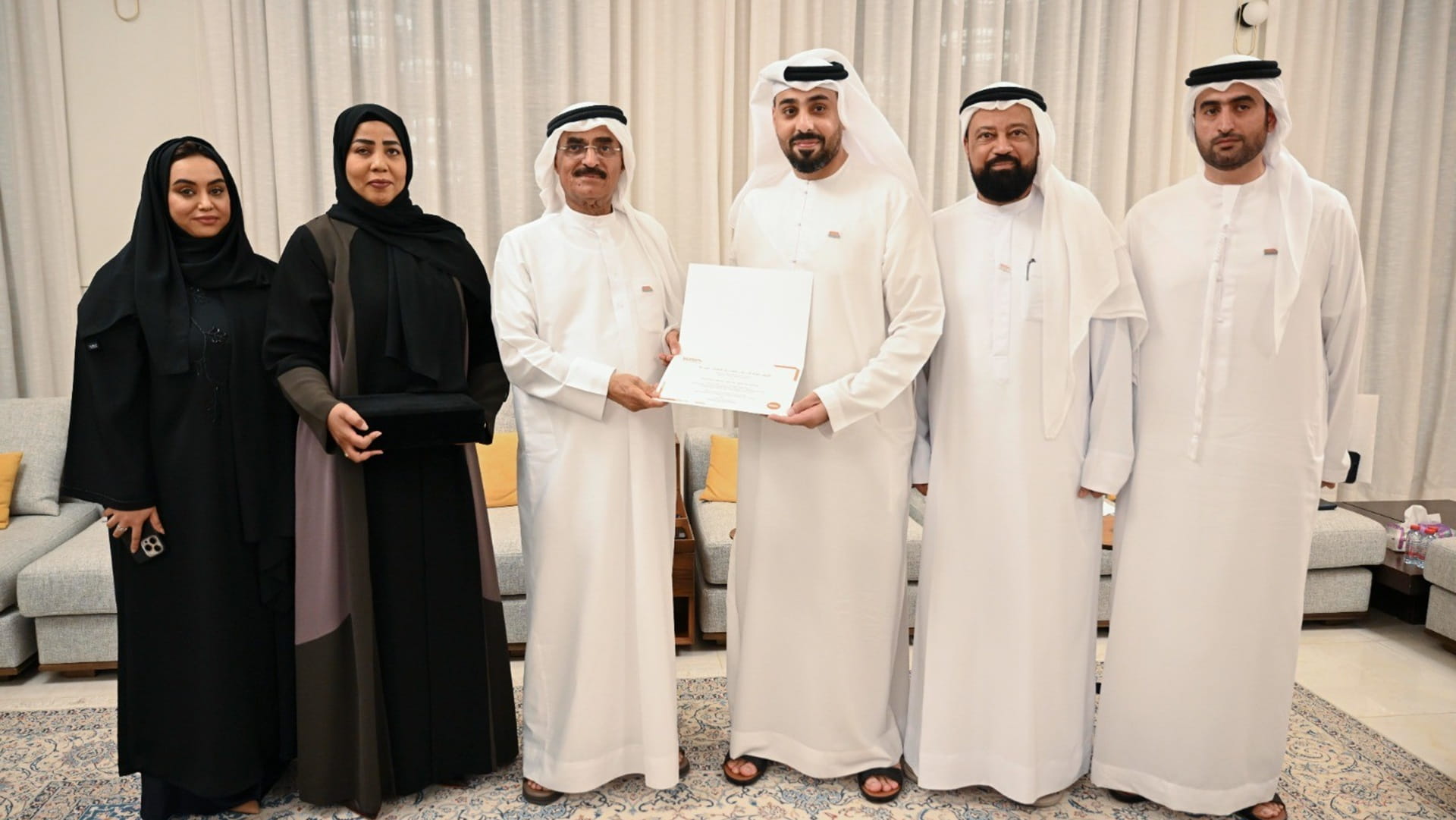
At the end of the Ramadan council, Dr Issa Al Hammadi expressed appreciation to the attendees for their engagement with the lecture. He praised the academic contribution of Dr Hossam El-Din Abdel Aal and affirmed the centre’s commitment to organising similar scholarly gatherings that combine academic research with cultural dialogue in support of the Arabic language. A commemorative shield was also presented to the lecturer in recognition of his contribution.

 For an optimal experience, please
rotate your device to portrait mode.