
Loading...
Loading...

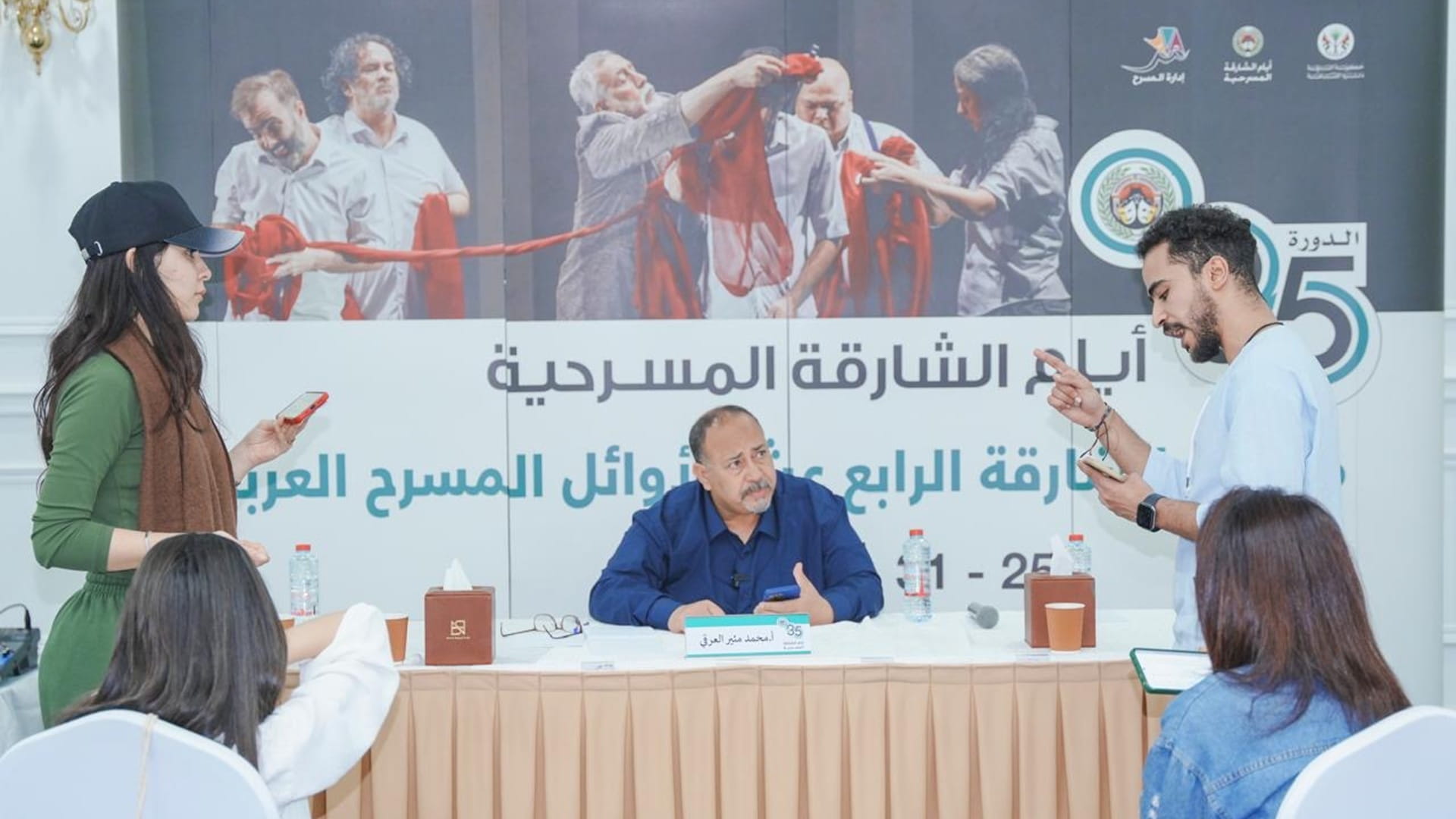
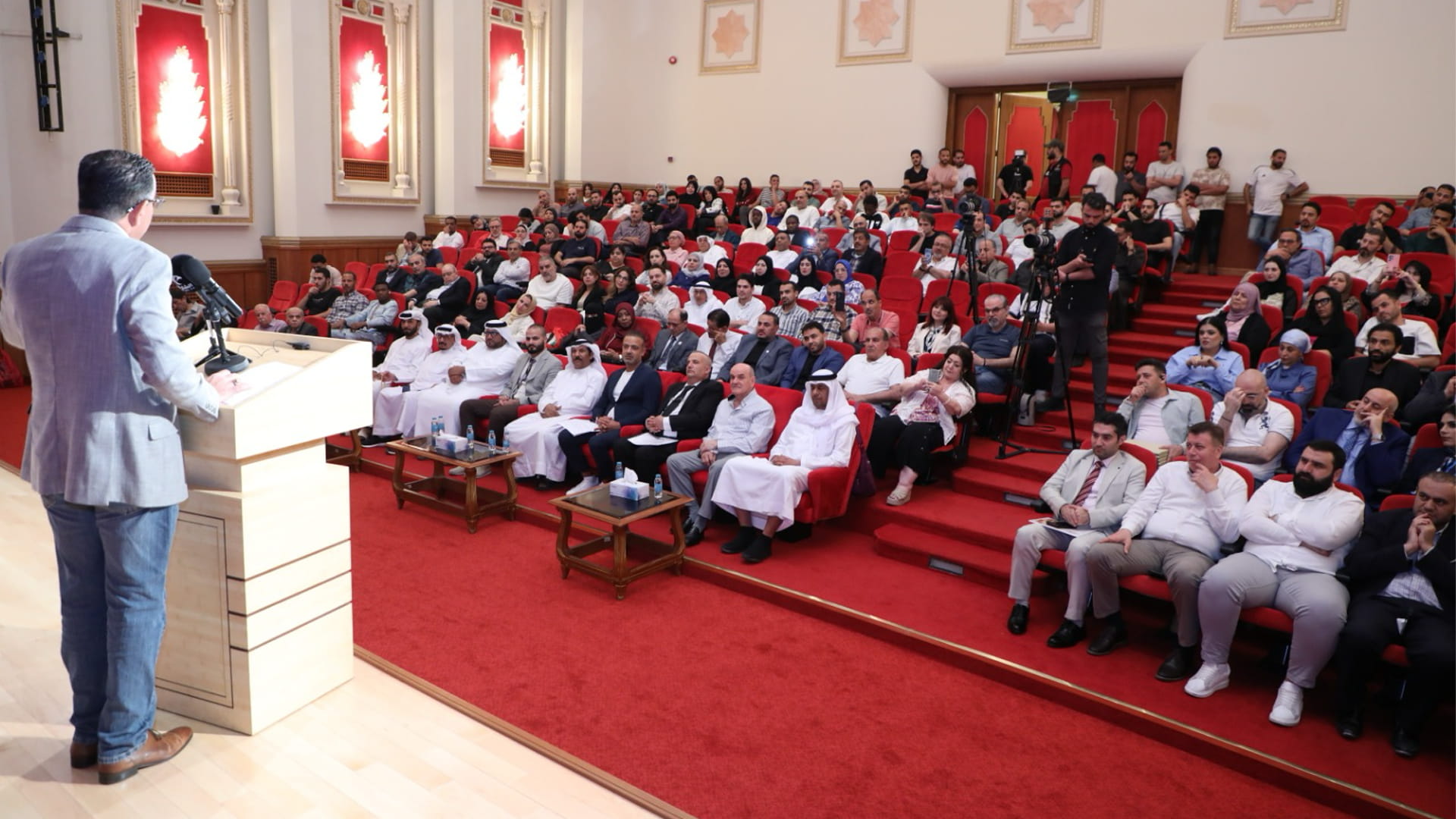
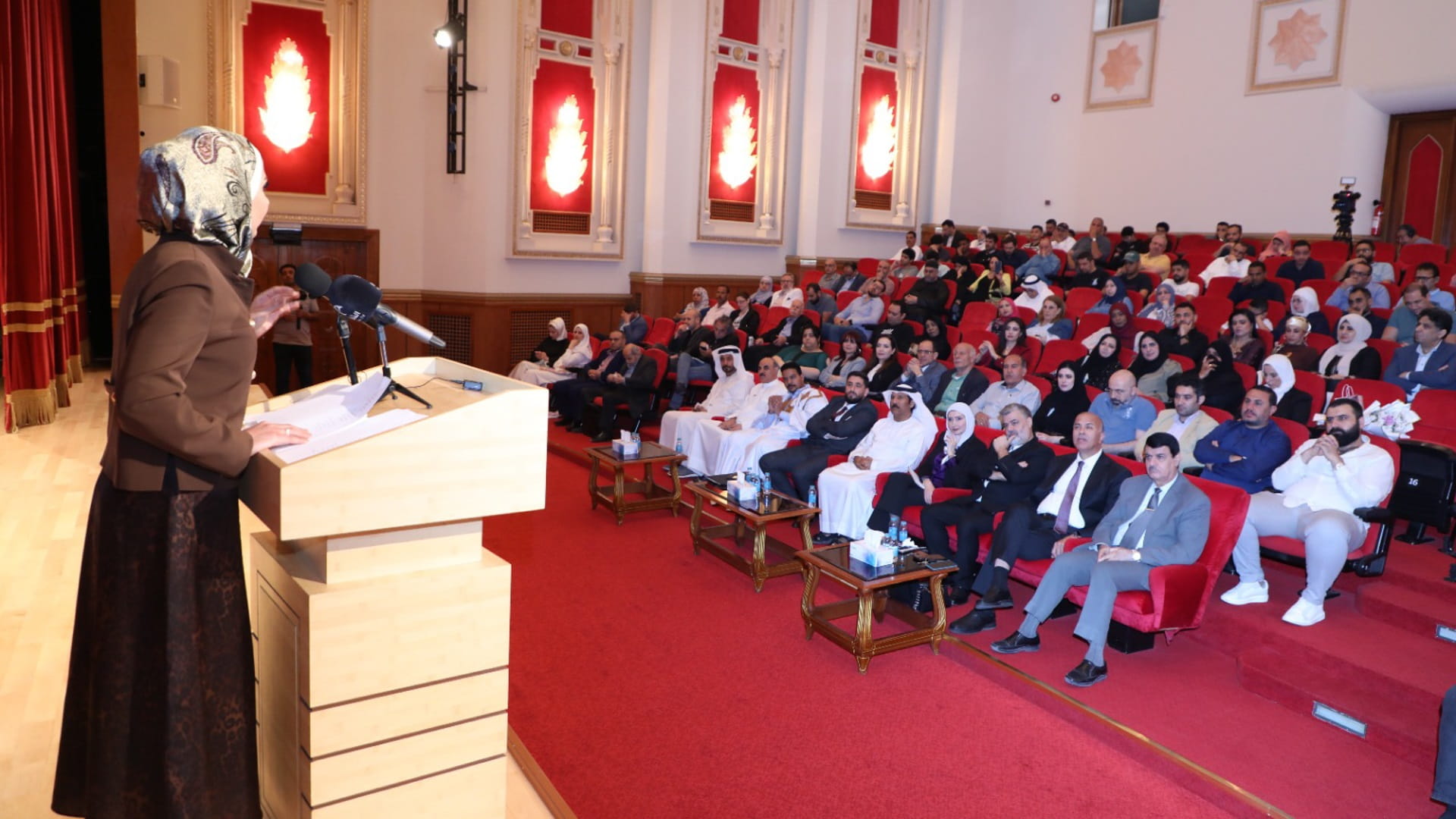
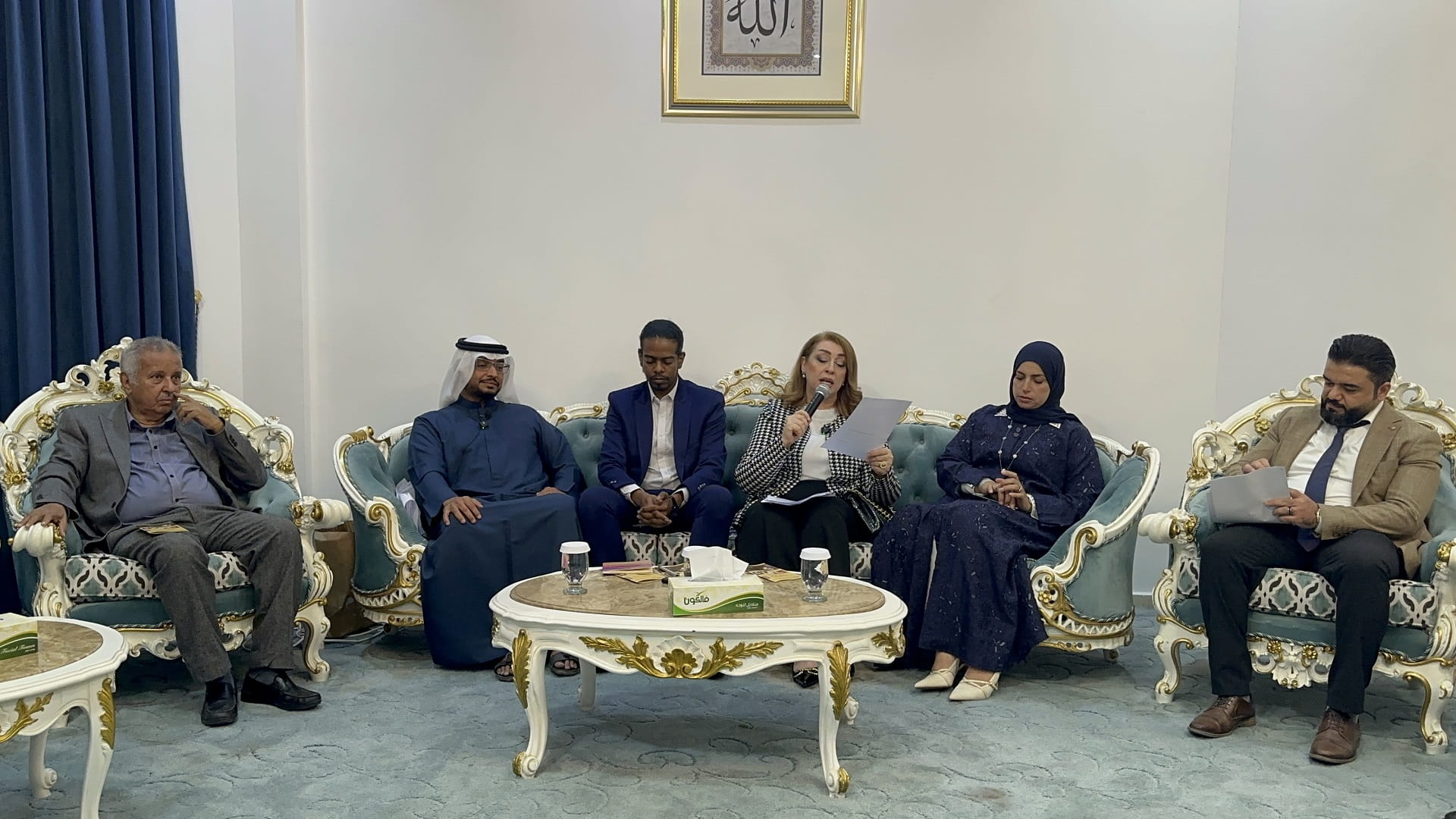
Al Araqi began his lecture by emphasizing the importance of developing cognitive skills to enhance theatrical art, moving beyond the rigid methodology of memorization and rote learning, and focusing on exploring the origins of the theatrical text and understanding deeper human themes. Al Araqi encourages open dialogue and discussion with the audience, noting that his approach is not based on delivering a complete lesson from A to Z, establishing a shared understanding of the text and discussing its various stages, from the initial reading to analysis and practical application, thus deepening their awareness of the literary and human dimensions of theatrical work.
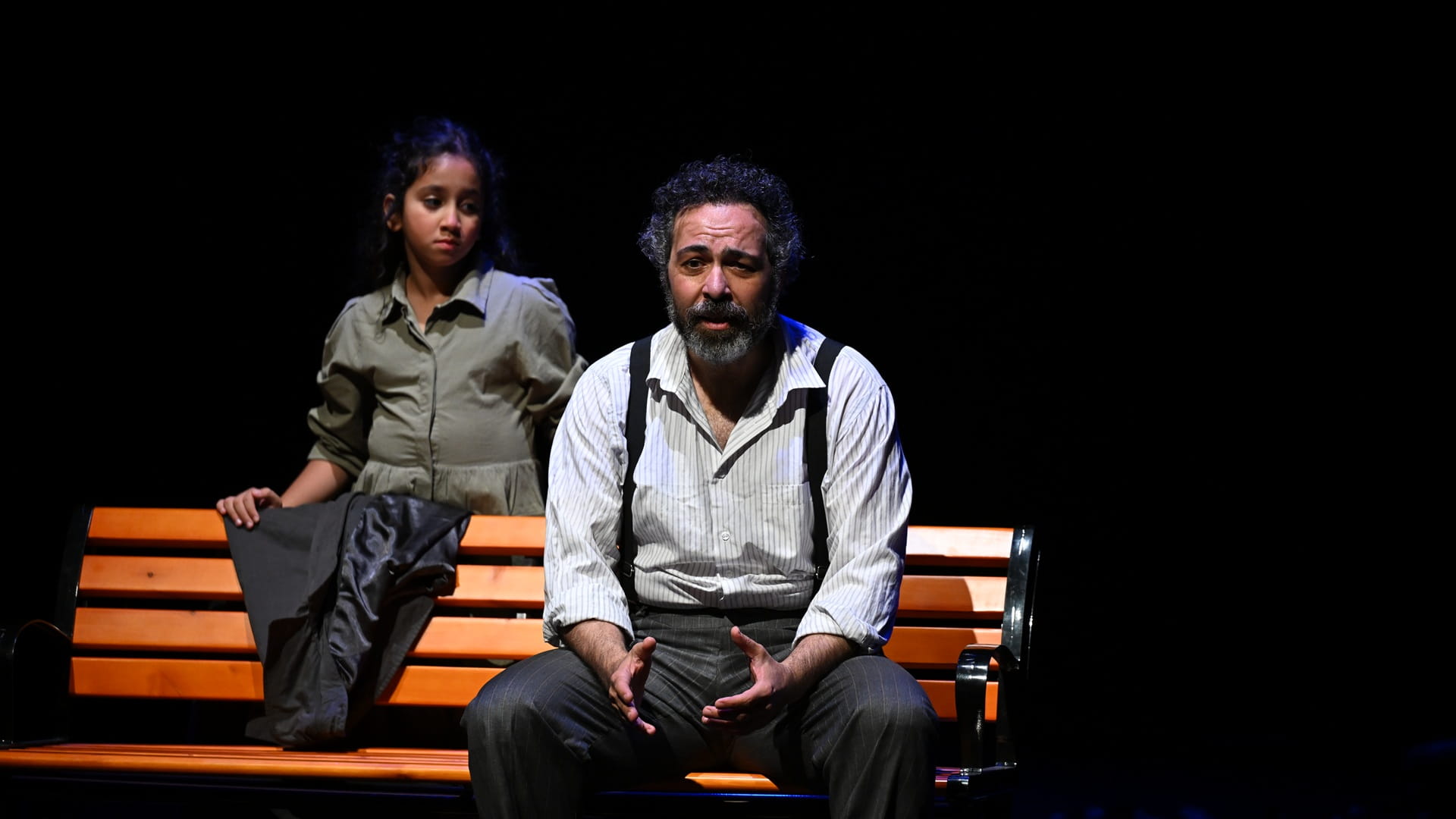
Al Araqi explained that the practical stage, which table reading includes, has three main stages: first, getting familiar with the script via reading; second, analysing the text to understand it better; third, actual reading to bring the words to life on stage. After that, he shared a play with the audience, called “Ibn Al-Aghlab…” by the Tunisian writer Abdelkader Latifi, so that ‘table reading’ could be applied to it.
During the readings, Al Araqi helped guide the participants to dig deep into the script and analyze the characters. He then instructed them on how to transform the text into a show on stage, using his interactive method to teach them how words become actions and movements, and how relationships between characters are built to form a complete theatrical language. He highlighted that reading a script is not just about understanding the words, but more about imagining the space where the actors perform and acknowledging the moments where creativity is needed. This creates a vibrant theatrical experience that integrates theoretical analysis with artistic application, empowering participants to move from simply reading the text to a complete performance on stage.

 For an optimal experience, please
rotate your device to portrait mode.