
Loading...
Loading...

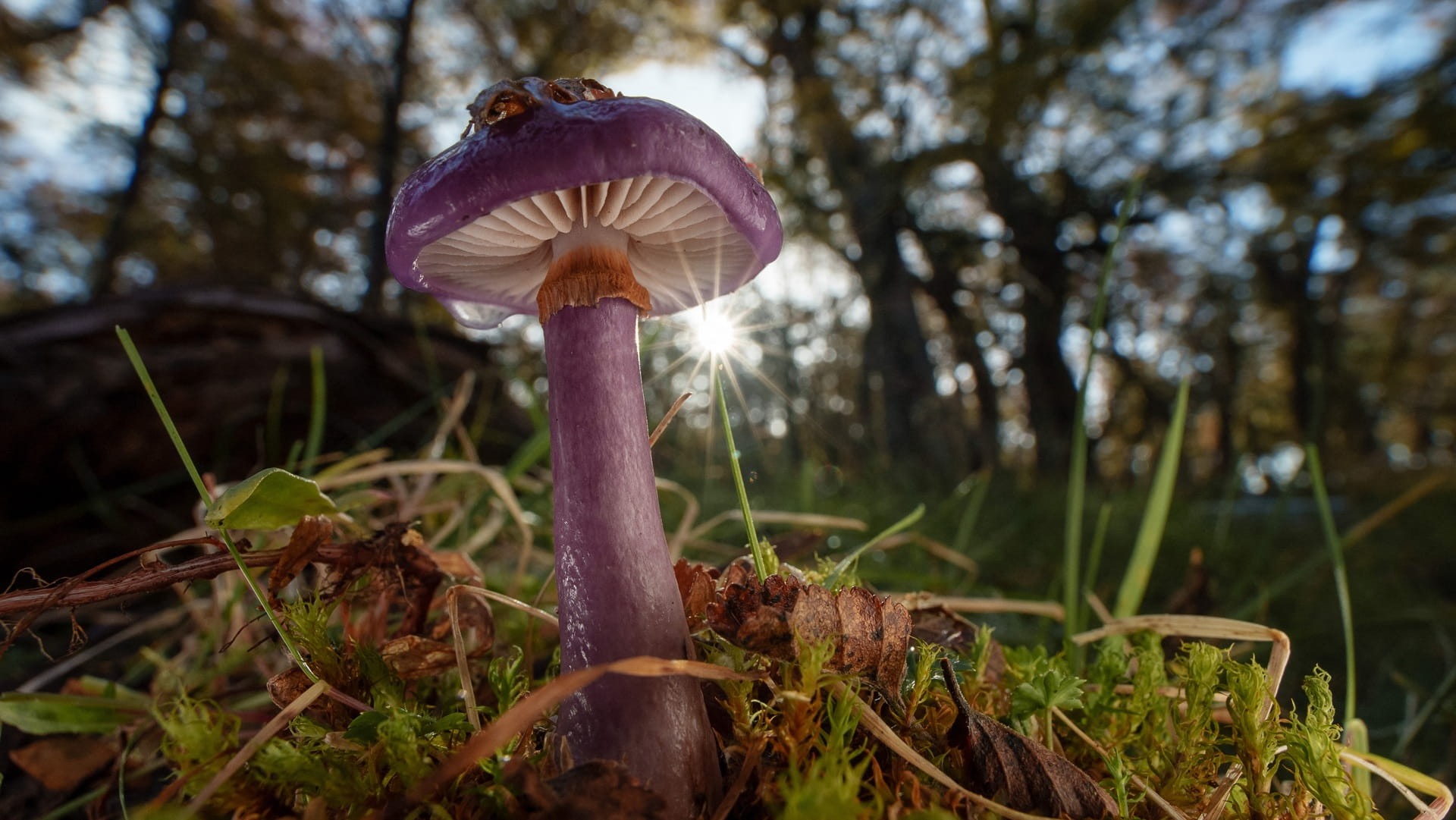
These “mycorrhizal networks” were long underestimated, once viewed merely as plant helpers rather than as one of Earth’s most essential life-support systems.
American evolutionary biologist Toby Kiers has now been awarded the Tyler Prize for Environmental Achievement, often described as the “Nobel for the environment,” for her groundbreaking work in uncovering and explaining this hidden ecosystem.
By leading the development of a global Underground Atlas of mycorrhizal fungi, launched last year, Kiers and her team have revealed the vast biodiversity beneath the soil — knowledge that can directly inform conservation strategies to protect critical carbon reserves.
Plants send surplus carbon underground, where fungi absorb approximately 13.12 billion tons of carbon dioxide, equivalent to nearly a third of global emissions from fossil fuels.
“People use words like ‘dirtbag’ to describe soil negatively. But a bag of soil contains a galaxy.”
Kiers’ fascination with fungi began at age 19 after she earned a place on a scientific expedition to Panama’s rainforests. There, she became curious about the invisible processes occurring beneath towering trees in one of the world’s most diverse ecosystems.
She recalls the awe of seeing an arbuscule for the first time under a microscope — a tiny tree-like fungal structure that penetrates plant cells and facilitates nutrient exchange — describing it as “beautiful.”
In a landmark 2011 study published in Science, Kiers demonstrated that fungi behave like strategic traders within a “biological marketplace,” making calculated exchanges based on supply and demand.
Through extremely fine filaments, fungi transport phosphorus and nitrogen to plants in return for sugars and fats derived from carbon. Laboratory experiments revealed that fungi actively redirect nutrients from areas of abundance to areas of scarcity, securing more carbon in return. Plants, in effect, pay a higher “price” for scarce resources.
Remarkably, fungi can even hoard nutrients to increase demand — behavior that mirrors economic tactics used in financial markets.
This raises a deeper scientific mystery: how organisms without brains or nervous systems process information. Some researchers believe the answer may lie in electrical signals travelling through fungal networks.
Kiers and her collaborators recently advanced the field further through two major studies published in Nature. One introduced a robotic imaging system that allows scientists to observe fungal networks growing, branching, and redistributing nutrients in real time. The other mapped the global distribution of fungal species.
The findings were concerning: most regions rich in underground fungal diversity fall outside protected conservation zones.
In response, Kiers co-founded the Society for the Protection of Underground Networks (SPUN), an initiative dedicated to mapping fungal biodiversity and advocating for its legal and environmental protection.
Alongside the Tyler Prize, which includes a $250,000 award, SPUN is launching an “Underground Advocates” programme this week to train scientists in legal tools for protecting fungal ecosystems.
Kiers hopes her work will change how humanity views life on Earth — encouraging people to look not just at the surface, but beneath it.
“Life as we know it exists because of fungi,” she explained, noting that early plants could only colonise land after forming symbiotic relationships with fungi.

 For an optimal experience, please
rotate your device to portrait mode.