
Loading...
Loading...

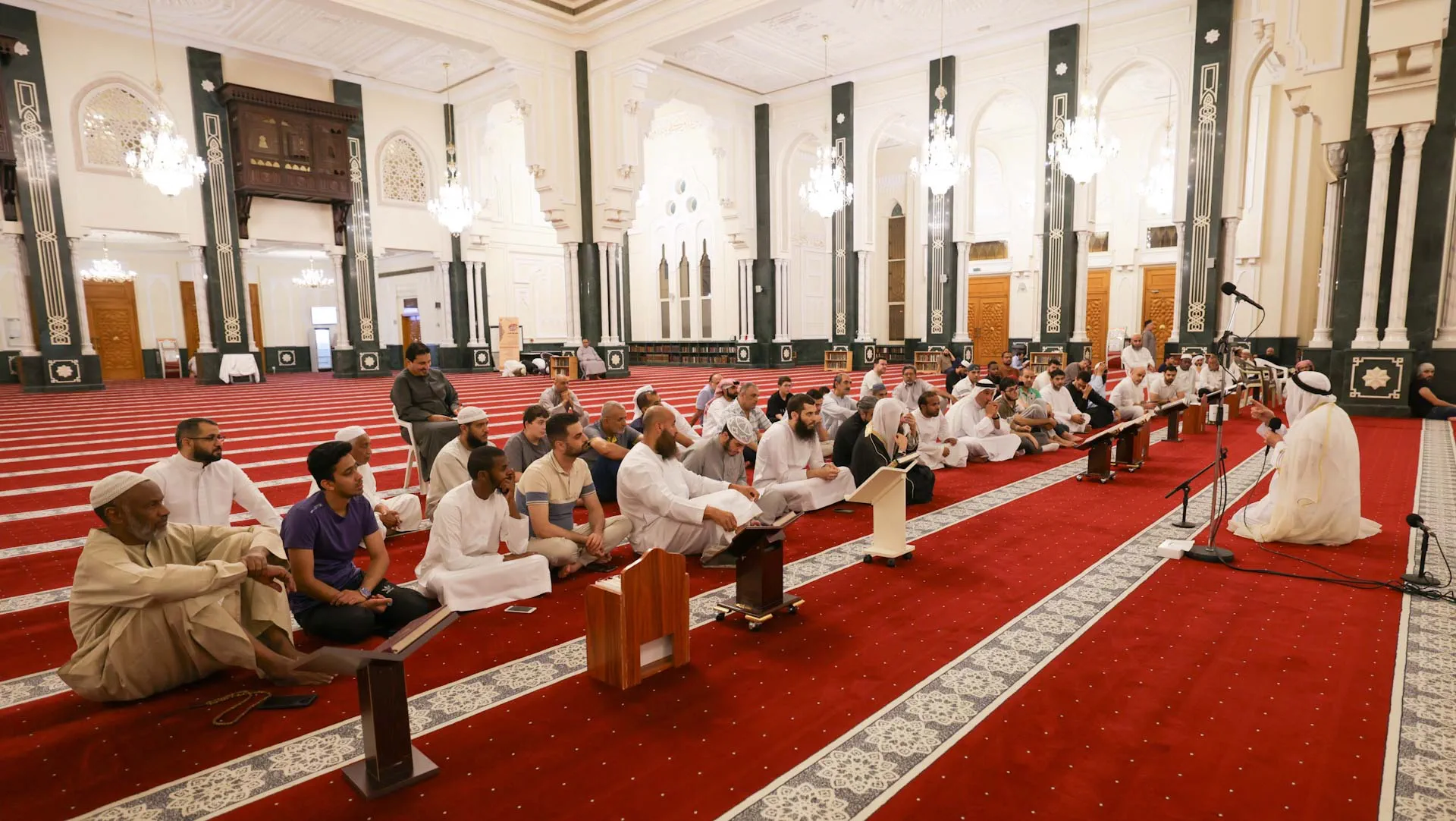
His Highness added, in a phone interview on the programme Direct Line, broadcast by the Sharjah Broadcasting Authority and hosted by His Excellency Mohamed Hassan Khalaf, Director-General of the Sharjah Broadcasting Authority, that when a person goes for Fajr prayer, they should, at the very least, wake up an hour before its time and treat the other prayers in the same way. By organising their day around prayer and observing it regularly, the time between prayers is preserved for worldly responsibilities.
Prayer times are the foundation, and the intervals are margins for worldly matters, as humans have many responsibilities. This is because God Almighty, with all His attributes and beautiful names, such as Al-Malik (The King) and Al-Jabbar (The Compeller)—takes precedence. In this world, a person truly has nothing but God Almighty, and He must be placed above all else. His Highness gave an example: when a person visits a group of people, they are taken first to the sheikh—so how much more should one prioritise the Creator of the entire universe?
His Highness continued that if a person is committed to praying on time, they gain the time in between, and first and foremost, they will feel at peace, because the soul has fulfilled its religious duty. “It is as if you were in debt and the burden has been lifted from you,” he said, adding that this is how it feels after performing the prayers. His Highness noted that when the Prophet (peace be upon him) told Bilal to call the "Iqamah" for prayer and give us comfort by it, he meant that prayer is comfort. This is his activity, he said, and thankfully, there is plenty of time and space; there is no need to pressure oneself, because the soul is at ease after performing the obligatory prayers.
His Highness revealed that after returning from Fajr prayer at the mosque, he opens the “Mabarrah” file to assist and meet the needs of those in need, as it involves mercy. He wonders whether the departments will specify whether to give this or that needy person 50 or 100, and he tells them: “Respond with what is best.” Act and manage it yourselves; it does not require my consultation.
He explained that in the morning, people in need should be given glad tidings. His Highness calls some people at dawn to bring them good news, which makes them happy and leaves a positive impact on their hearts. He recounted a citizen in Tawi Al Saman who received a call from His Highness at his doorstep after Fajr prayer, informing him that his need would be met, prompting an extremely joyful reaction. “Today is your world; it is the time you live in, not another time,” he added.
His Highness revealed that he is working on a book entitled “Existence”, which is comprehensive and covers all of existence, the sciences, and knowledge. It includes everything that has been missed by researchers, investigators, and enthusiasts. He leaves nothing untouched. His Highness has traced history in this book back to 650 BCE and intends to continue further back, covering the entirety of time. His approach is guided by the Quran. He explained that he previously focused on part of this work in his study “History of the Prophets” and then transitioned to “Existence”, as the study of the prophets’ history revealed all worldly events and their consequences.
He asked what happened in 650 BCE and answered that King Cyrus ruled Persia at the time. He noted some similarities between Sharjah and Persia at the time. King Cyrus founded the Hanging Gardens, which His Highness also accomplished in Sharjah. Cyrus is said to have established a centre for wild animals such as tigers and lions; similarly, Sharjah established a centre for predatory animals.
His Highness continued that when people came to King Cyrus at his palace, “Takht-e Jamshid” near present-day Shiraz, three Arabs arrived on camels and presented themselves. Remarkably, their names are preserved in the original historical text, showing that Arabs were mentioned as early as 650 BCE. His Highness adds facts and information in all languages to a large notebook from time to time. He urged people to learn lessons from this vast knowledge and to distinguish between what benefits humanity and what harms it, warning that people today live without identity or direction in this world.
His Highness stressed the importance of mindfulness in preparing and cooking food, noting the dangers and health risks arising from careless practices. He observed rising mortality and strange modern diseases, whose causes stem from human greed and from people whose religion, faith, and principles fail to restrain them. He emphasised that people must return to their faith and reconsider their lifestyle.
He gave an example of animals responding to danger—unlike “numb humans”—citing a mother cat carrying her kittens in her mouth while jumping from wall to wall to escape danger. “How much more should humans, endowed with reason, heed the dangers around them?” he asked, urging vigilance and caution across all aspects of life, from food to sleep to behaviour. Parents, he said, must learn to safeguard themselves first to ensure their children’s happiness.
His Highness urged reducing food and consumer waste, noting their many negative impacts. He emphasised buying only what is necessary and avoiding filling shopping carts without thought, warning that excess consumption can introduce toxins and harm the body. “Be mindful of your destruction and your end,” he said sincerely, noting that he shares this knowledge because not everyone reads his writings, but most will hear it. He encouraged people to fear God and to read, with the best reading being.

 For an optimal experience, please
rotate your device to portrait mode.