
Loading...
Loading...

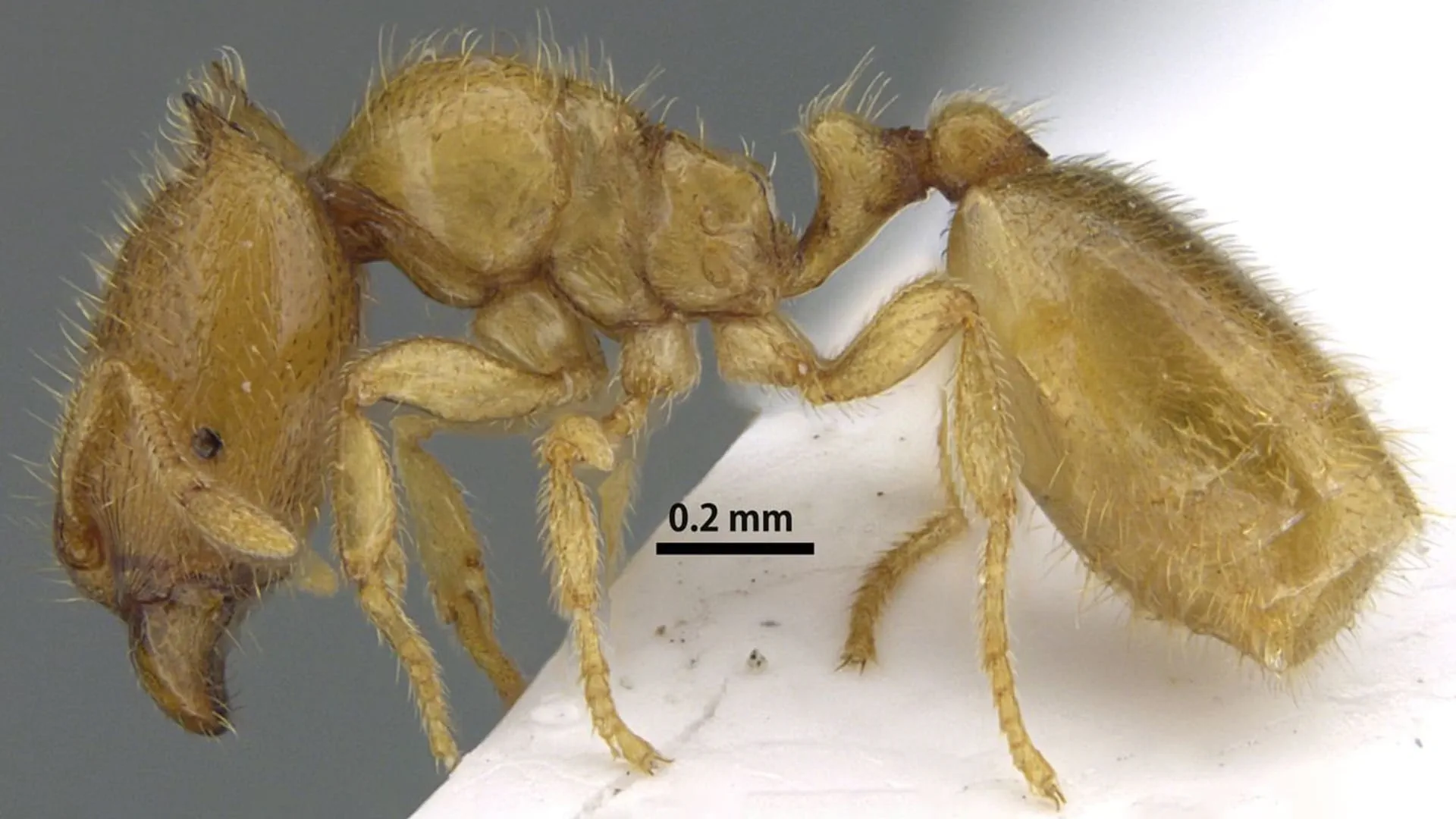
The discovery was made by scientist and Professor Dr Mustafa Sharaf from the EPAA's Al Dhaid Wildlife Centre, following meticulous field surveys in Wadi Shis.
Despite repeated visits to the site, only one specimen of this new species, belonging to the soldier ant family, was found. This indicates that these ants inhabit highly specialised habitats and lead a subterranean lifestyle, making them extremely difficult to detect. This species marks the first record of the genus *Carebara* in the United Arab Emirates and the third known species of this genus in the Arabian Peninsula.
This achievement reflects Sharjah's vision of establishing science and knowledge as the foundation for preserving biodiversity and ensuring the continuation of advanced research.
EPAA affirmed that the discovery of the Sharjah ant represents a significant step forward in the emirate's efforts to support scientific research and document the unique environmental treasures of the Hajar Mountains. This discovery reaffirms that Sharjah's environment is a rich habitat for endemic and rare species that must be preserved and protected. We commend the significant scientific efforts of the Al Dhaid Wildlife Centre team, which contribute to strengthening the emirate's position as a leading centre for biodiversity studies in the region. The Authority continues to support environmental research and surveys and works to provide the highest levels of protection for mountainous areas to ensure the sustainability of the species they harbor.
EPAA also commended the significant scientific efforts of the Al Dhaid Wildlife Centre team, which contribute to enhancing the emirate's position as a leading centre for studying biodiversity in the region. The Authority continues to support environmental research and surveys and works to provide the highest levels of protection for mountainous areas to ensure the sustainability of the species they support.
The Authority noted that this rare scientific discovery is clear evidence of the success of the environmental monitoring system in the Emirate and the competence of the specialists and researchers at the Authority's centres, who work diligently to protect the components of the local environment and document its natural richness. This achievement also reflects Sharjah's vision of establishing science and knowledge as the foundation for preserving biodiversity and ensuring the continuation of advanced research that sheds light on the species endemic to the Hajar Mountains, thus enhancing the Emirate's presence on the map of regional and global scientific discoveries.
The scientific study revealed that the "Sharjah ant" is partially similar to a species recorded in Zimbabwe, but it is distinguished by unique anatomical features, most notably the presence of well-developed lateral horns on the sides of the head, interspersed with a number of fine hairs, in addition to its uniform yellow colour and subtle structural characteristics in the head and thorax.
These features confirm that the discovered species possesses a clear uniqueness that makes it an important addition to the region's biological resources.
Researchers are continuing their scientific efforts to monitor the rest of the colony's members, including the queen, males, and workers, as initial indications suggest that this species follows a mysterious lifestyle based on living underground in the soil and among decaying organic matter.

 For an optimal experience, please
rotate your device to portrait mode.